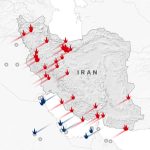
When Iranian drones struck the passenger terminal of Nakhchivan International Airport on March 5, 2026, hitting a building and landing near a village school, observers in Washington saw a potential pretext to draw Azerbaijan into the US-Israeli war on Iran. President Ilham Aliyev initially described the strikes as “cowardly” and “shameless,” placing the Azerbaijani army on “level-one mobilization”.
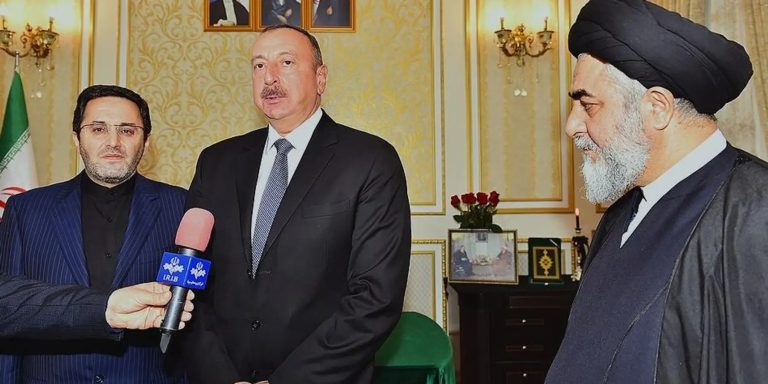
However, by March 10, 2026, the border was reopened, humanitarian aid was flowing south to Iran, and Aliyev had sent a congratulatory letter to Mojtaba Khamenei on his appointment as Iran’s new Supreme Leader.
The Four-Day Crisis
The crisis began around midday on March 5, when two drones launched from Iranian territory entered the Nakhchivan Autonomous Republic. One drone struck the airport terminal, while another fell near a school in the village of Shakarabad, injuring two civilians.
Baku’s initial response was a sharp condemnation of the “violation of international law,” followed by the summoning of the Iranian Ambassador, Mojtaba Demirchilou. Border crossings were temporarily shut, and plans were initiated to evacuate Azerbaijani diplomats from Tehran and Tabriz.
The pivot toward de-escalation followed a phone conversation on March 8 between Aliyev and Iranian President Masoud Pezeshkian. By the following day, Azerbaijan lifted cargo restrictions across its border. On March 10, Azerbaijan delivered 30 tonnes of humanitarian aid to Iran.
Why Aliyev Pulled Back
Strategic economic and diplomatic factors drove Aliyev’s restraint:
Energy Security: The Baku-Tbilisi-Ceyhan (BTC) pipeline is the economic lifeblood of Azerbaijan, with up to 80% of the country’s oil exports passing through this route. It is also critical to Israel, which received 46% of its oil imports via the BTC in early 2026. Disruption to this line would have crippled Azerbaijan’s state budget and Israel’s energy lifeline.
Turkish Diplomacy: Turkish Foreign Minister Hakan Fidan actively worked to help bring an end to the hostilities, warning that attempting to instigate a civil war in Iran would be a “historic” mistake.
Turkic Solidarity: The Organization of Turkic States (OTS) issued a statement on March 7 condemning the attacks as having been “carried out from the territory” of Iran rather than “by” the Iranian state, a careful distinction that provided Aliyev diplomatic cover to de-escalate.
The Ethnic Card That Wasn’t Played
Estimates for the number of ethnic Azerbaijanis in Iran range from 15–17 million (according to Iranian demographers) to as many as 30–40 million (according to some researchers and activists). Despite theories that this population could be mobilized to fracture Iran, they remain highly integrated into the Iranian state. Both the former Supreme Leader, Ali Khamenei, and current President Pezeshkian share this ethnic heritage.
A Warning for the Wider War
Aliyev’s decision to provide aid rather than retaliate underscores a broader regional trend: key US partners are choosing diplomatic ambiguity over direct confrontation with Tehran. While the war has already affected multiple nations, Azerbaijan’s choice to pull back from the brink may be the most significant act of regional restraint to date.
Original analysis inspired by Eldar Mamedov from Responsible Statecraft. Additional research and verification conducted through multiple sources.
By ThinkTanksMonitor