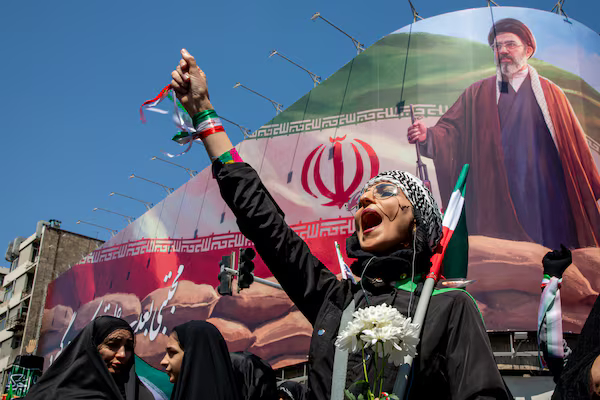
The military scorecard looks decent. Iran’s missile launch rate dropped 90% within a week of the war beginning. Roughly 50 to 80% of Iran’s ballistic missile launchers were destroyed or disabled. Senior IRGC commanders, including the Supreme Leader himself, were killed in the opening hours. By the narrow metrics of tactical air warfare, Operation Epic Fury performed better than most pre-war assessments predicted. And yet, when the ceasefire was announced on April 7, the United States appeared in a weaker position globally than when the war with Iran began. That paradox — tactical achievement, strategic setback — is the defining verdict on six weeks of conflict that achieved none of its stated objectives.
The bill is already staggering. The Pentagon burned through $5.6 billion worth of munitions during the first two days of its military assault on Iran, according to three US officials, a figure that underscores the deepening alarm among some on Capitol Hill over the speed at which the US was expending assets. CSIS senior adviser Mark Cancian estimates the total budget costs to the Pentagon at around $28 billion when you include the cost of the forces, the munitions, and the various losses to bases and aircraft. Penn Wharton Budget Model puts the full direct military cost for taxpayers at an estimated $65 billion once equipment replacement and munitions replenishment are factored in — and that figure does not include the long-term veteran healthcare costs that have historically added 30 to 40% to total war expenditure.
The Munitions Problem Nobody Wants to Talk About
The most consequential damage may not be the money spent, but the inventory depleted. These expenditures create risks in other theaters such as Ukraine and the western Pacific, as high-demand munitions are diverted to the current war with Iran, and production in FY 2026 will not fully cover usage to date, limiting the hoped expansion of inventories. The AN/TPY-2 radar system — a critical early-warning asset for ballistic missile defense — suffered particularly sharp losses. Each AN/TPY-2 has been estimated to cost about $485 million to replace, and it can take almost three years for Raytheon to produce a single unit. The company delivered its 13th such system last year, and there are no surplus units in storage, meaning filling gaps will require reshuffling military commitments elsewhere.
The big constraint isn’t money, it’s interceptor stockpiles, according to analysts. The US can sustain the financial cost for years, but munition depletion could become a serious constraint within months of high-intensity operations. That concern has direct implications for Taiwan: CSIS analyst Tom Karako said he worried that continued attrition could tempt China to undertake a military campaign to claim Taiwan, adding: “We cannot afford to keep expending these things.”
The equipment losses compound the picture. Beyond the interceptor stockpile, US losses included four F-15s, an E-3 AWACS, an AN-TPY-2 radar system, multiple MQ-9 Reaper drones, KC-135 refueling aircraft, C-130 transports, and two Black Hawk helicopters — totaling over $2.35 billion in direct hardware losses alone. A former senior US military official said much of the damage to American assets was “self-inflicted” because of the flawed use of resources.
An Energy Crisis the Administration Didn’t Plan For
The economic fallout extends far beyond the Pentagon’s procurement budget. The head of the International Energy Agency described the situation caused by the war as “the greatest global energy security challenge in history.” Oil prices surged from about $70 per barrel just before the war to an average of $103 per barrel in March — a rise that delivered a windfall for Russia, which saw an average increase of about $150 million per day in oil revenue during the same period.
For American consumers, the impact was direct and immediate. US gas prices surged at their peak by 39%, jumping from $2.98 to $4.14 per gallon. A prolonged conflict in Iran also led to shortages of nitrogen and aluminum: the Gulf states produce approximately 9% of the world’s aluminum supply, and the price of aluminum increased 8% in March. China, the largest producer of tungsten — with 80% of world production — restricted export during the conflict, and tungsten’s price surged over 50% in March 2026, more than tripling since December 2025. Tungsten is critical for armor-piercing ammunition, semiconductors, and aerospace manufacturing — a supply squeeze with direct military implications.
The fiscal arithmetic is grim regardless of how the Islamabad talks conclude. The US entered the war with a national debt already on a trajectory toward 175% of GDP by the mid-2050s under current policy. Adding $33 billion or more in unbudgeted defense spending to a fiscal year already stretched by the administration’s domestic tax agenda is not a neutral event. Congress has not yet been asked to appropriate the funds for munitions replacement or base repair — a political confrontation that is still coming.
The Strategic Costs That Can’t Be Replenished
Iran’s nuclear program remains intact in its most consequential dimension. Iran has said it does not seek a nuclear weapon, though its enrichment level is above that needed for civilian uses. The 2025 US intelligence community assessment had judged Iran was not building a nuclear weapon, and in March 2026, IAEA head Rafael Grossi said that while Iran has a “very big ambitious nuclear program,” the agency does not see a structured weapons program. But the location of Iran’s stockpile of highly enriched uranium has not been ascertained, and Iran’s new leadership — now headed by Mojtaba Khamenei, who lost his entire family in US-Israeli strikes — is expected to adopt an even more defiant posture than his father.
By destabilizing global energy markets, straining US alliances, and exposing the limits of American coercive power, Tehran has ensured that even a tactically successful campaign carries significant strategic liabilities for Washington. The alliance damage is real and measurable. The Iran war caused a new level of alarm among allies in Europe, the Middle East, and Asia — first, because of the way it began: a unilateral decision by Trump, without informing — much less consulting — any allies except Israel.
The warning in Arab Barometer’s latest data is clear: the United States and Europe are not just losing hearts and minds. They are losing the perception that they protect human rights at all. Over the last few years, most Arab publics have come to believe more than ever that the United States and Europe have failed Palestinians, failed to enforce international law, and failed to uphold a fair, rules-based order. The war in Iran will likely hurt the reputation of the United States and Israel even more.
The ceasefire has paused the killing. It has not resolved any of the underlying issues — the nuclear question, Iran’s missile program, proxy networks, the Strait of Hormuz, sanctions, or the fundamental question of what Washington will accept as a negotiated outcome. In many ways, the 2026 US-Iran war encapsulates the contradictions of contemporary geopolitics: power without resolution, dominance without control, and escalation without an endgame. America went in with overwhelming military force and came out without a single stated objective achieved — while handing Russia a $150 million daily oil windfall, depleting its Pacific deterrent stockpile, and spending $28 billion that no one in Congress voted to spend. Those are not outcomes. They are a reckoning that has only just begun.
Original analysis inspired by Damian Murphy, Allison McManus, and Andrew Miller from Center for American Progress. Additional research and verification conducted through multiple sources.