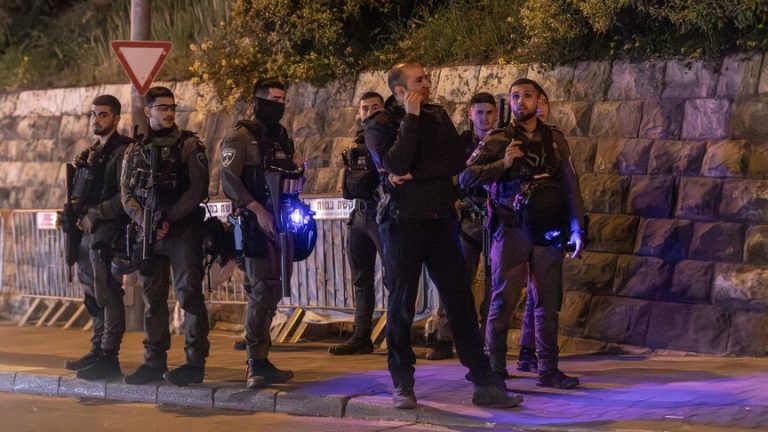
A police document submitted to Israel’s Interior Ministry reveals the criteria used to bar foreign journalists from the country: writing about Bedouin shelters, using the word “apartheid,” or covering workers’ rights violations in West Bank industrial zones. The July 2024 assessment, exposed by Haaretz this week, targeted Italian photojournalist Alessandro Stefanelli for what officials called “one-sided” coverage — a characterization that human rights groups say exemplifies the government’s systematic effort to control international media narratives.
Stefanelli had entered and exited Israel seven times over two years without incident. But when the West Bank district police’s nationalist crimes department investigated his work through Google searches, they flagged three articles as problematic: coverage of missing bomb shelters in unrecognized Bedouin villages, an analysis noting that many observers describe the West Bank situation as “apartheid,” and reporting on environmental and labor violations at the Nitzanei Shalom industrial park.
The irony is stark. The same police unit tasked with investigating Jewish extremist violence in the West Bank — a mandate at which it has spectacularly failed despite mounting video evidence and social media confessions by perpetrators — apparently has sufficient resources to compile dossiers on foreign correspondents.
The Expanding Blacklist
Stefanelli’s case is far from unique. The Committee to Protect Journalists documented at least 47 journalists denied entry or deported from Israel since October 2023, a figure that excludes the wholesale ban on press access to Gaza. The list spans major outlets: a BBC correspondent barred for tweets about civilian casualties, a Guardian photographer turned away after documenting settlement expansion, and freelancers rejected for Instagram posts questioning military tactics.
Human Rights Watch researcher Omar Shakir, expelled in 2019 for alleged BDS support, told reporters the practice has intensified dramatically. “What was once selective targeting has become systematic exclusion,” Shakir said. The organization’s latest report identifies a clear pattern: anyone documenting conditions in the occupied territories risks being labeled a security threat.
The mechanisms vary but the outcome is consistent. Some journalists face immediate deportation at Ben Gurion Airport. Others receive ten-year entry bans. Palestinian journalists with foreign passports report particular scrutiny, with several describing hours-long interrogations about their coverage plans and political views. A Reuters correspondent with Swedish citizenship was detained for six hours and asked to sign a document pledging not to enter the West Bank — a restriction she refused.
Supreme Court Backing
Israel’s High Court has largely upheld these restrictions. In a March 2026 ruling, the court rejected a petition by the Foreign Press Association to allow journalists into Gaza, accepting the state’s argument that press access would compromise military operations. The decision came despite testimonies from international outlets that their correspondents had extensive war zone experience and would accept military escorts.
The court’s deference extends to individual entry denials. Judges have repeatedly accepted vague security claims without requiring the state to present evidence. In one case involving a French photographer, the state’s entire argument was submitted in a classified file the journalist’s lawyer couldn’t access. The photographer had covered Palestinian protests against settlement construction.
Interior Minister Moshe Arbel has defended the policy as protecting national security. “Those who come to delegitimize Israel under the guise of journalism will not be granted entry,” he said in a February Knesset session. Critics note the circular logic: reporting that makes Israel look bad is inherently delegitimizing, therefore journalists who might produce such reporting must be excluded.
The Price of Silence
The strategy carries costs beyond reputational damage. By blocking independent observation, Israel has ceded the information space to unverified social media accounts and partisan sources. Fact-checking becomes nearly impossible when professional journalists can’t access conflict zones.
International news organizations have begun reassigning correspondents and canceling coverage plans. The Associated Press moved its Israel-Palestine bureau chief to Cyprus after repeated visa delays. The New York Times has relied increasingly on local stringers who face their own restrictions on movement. Several European broadcasters have suspended plans for documentaries after their crews were denied entry.
The Foreign Press Association, representing some 400 journalists, warned in a May statement that Israel risks creating an “information blackout” around its most consequential military and political actions. “A democracy that fears scrutiny,” the statement read, “has ceased to function as one.” That warning appears to have fallen on deaf ears. Last week, the Knesset advanced legislation that would formalize many ad hoc entry restrictions into law, including provisions allowing officials to bar journalists based solely on social media posts deemed “hostile to the state.”
Original analysis inspired by Haaretz Editorial Board from Haaretz. Additional research and verification conducted through multiple sources.