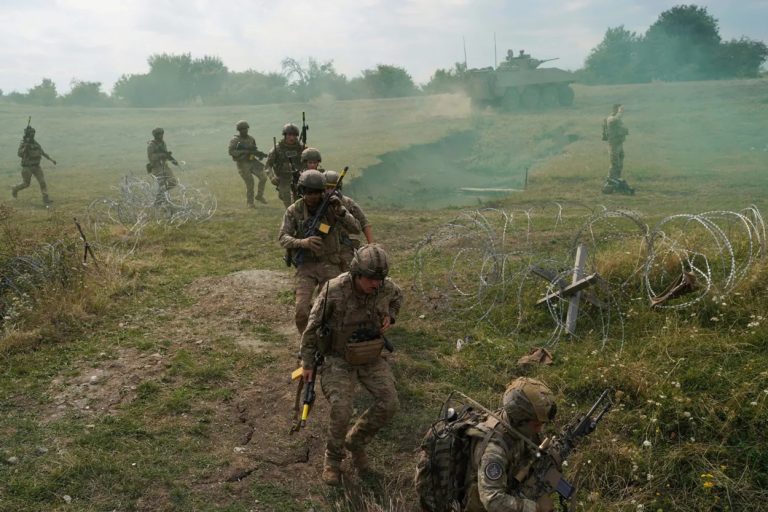
Under the current administration, the United States is actively reducing its military footprint across the European continent. Executive officials explicitly demand that allied nations assume primary responsibility for their own conventional defense capabilities. Consequently, Washington recently initiated extensive strategic reviews to justify removing substantial combat forces and advanced weaponry from allied territories. While executive planners argue that these wealthy nations can comfortably protect themselves, this rapid withdrawal ultimately endangers global stability and vital American interests.
The Risks of Strategic Retreat
This aggressive retrenchment actively weakens the fundamental command structures that previously secured continental peace. Recent directives intentionally downgraded senior American military positions while the administration canceled planned deployments of hypersonic weapons and armored brigades. Future proposals even suggest completely removing essential maritime patrol aircraft, fighter squadrons, and submarine task forces. Although allied commanders possess immense talent, they currently lack the extensive operational experience required to coordinate massive multinational formations during an active conflict. Additionally European militaries simply cannot instantly replace the highly specialized aerial refueling and submarine tracking capabilities that Washington plans to suddenly remove.
This vulnerability arrives precisely as Russian leadership intensifies its aggressive hybrid warfare campaigns against neighboring democracies. Moscow recently escalated its covert sabotage operations, employing explosive drones and incendiary devices to disrupt critical infrastructure across multiple allied borders. When American forces deliberately retreat during periods of heightened international tension, adversarial regimes interpret this withdrawal as an open invitation for further expansion. This perceived unreliability simultaneously alarms partners in the Indo Pacific region, who logically question whether Washington will actually honor its commitments in Asia if a sudden crisis erupts.
The Myth of Isolated Nuclear Deterrence
Administration officials falsely claim that retaining atomic weapons on the continent sufficiently maintains regional deterrence despite massive conventional force reductions. However, credible defense strategies require a seamless integration between conventional readiness and atomic capabilities. If adversarial powers witness Washington refusing to commit standard ground troops to territorial defense, they will logically conclude that American presidents would never risk an apocalyptic escalation over a localized border dispute. Diminishing the conventional military presence directly undermines the entire credibility of the broader security umbrella.
Legislative Action to Preserve Deterrence
To prevent catastrophic damage to international security architecture, congressional leaders must aggressively intervene and legally restrict executive actions. Lawmakers should formally prohibit any unauthorized reduction of troop levels without explicit legislative approval. Congress must also mandate continuous security assessments that clearly demonstrate how forward deployed forces actively protect the domestic homeland from distant threats.
Statutory protections must also permanently secure the supreme allied commander position for an American officer to ensure unbroken continuity over complex weapons release protocols. The legislative branch must decisively block any reckless initiatives that treat critical alliances as disposable arrangements. Only through firm congressional oversight can the nation maintain the historic partnerships that successfully prevented catastrophic global conflicts for more than seven decades.
Original analysis inspired by Franklin C. Miller, Eric Edelman, and Walter B. Slocombe from Foreign Affairs. Additional research and verification conducted through multiple sources.