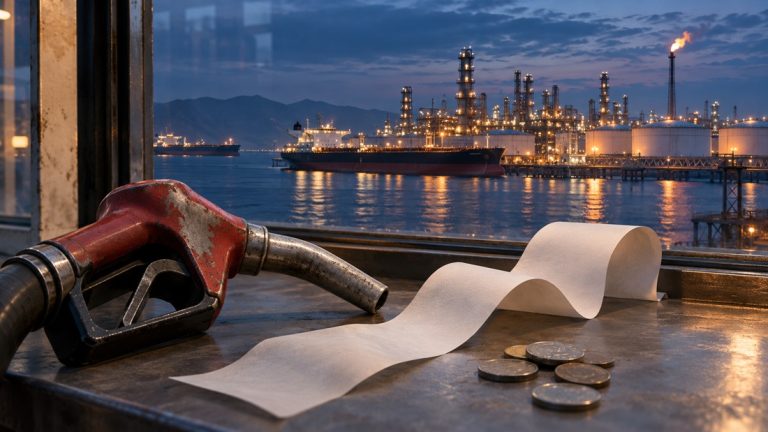
An energy crisis can reward producers while punishing the wider economy. Rising fuel costs move through freight, food production and household budgets, even when some companies report stronger earnings. The war against Iran has made the distribution of those costs a policy question that cannot be answered by watching crude prices alone.
Nine major oil producers are forecast to earn more than $95 billion in third quarter profits. The distinction between a forecast and completed financial reporting matters. A projection should not be presented as a finalized industry total, and profits at individual companies do not establish that every producer benefits equally from disrupted trade.
The physical pressure on supply is independently documented. In March, the International Energy Agency authorized access to 400 million barrels of emergency reserves in response to the conflict. The agency identified the Strait of Hormuz as a route with limited alternatives. Emergency inventories can provide time for adjustment, but they cannot permanently replace secure transport and functioning production.
By October 7, the IEA reported that approximately 325 million barrels had already been released under the collective action. Governments also supported prioritizing diesel because that market remained tight. This distinction matters for consumers: adequate crude stocks do not automatically mean that the required fuel is available at the right location.
Reuters subsequently reported ADNOC chief Sultan Al Jaber’s warning that global oil inventories had fallen by nearly a billion barrels. That figure is his assessment, not an independently audited global count. It nevertheless illustrates why industry leaders are discussing storage, refining flexibility and logistics alongside production capacity.
The policy choice extends beyond compensating households for another expensive month. Governments must decide how to share exceptional gains and how to reduce exposure to future disruptions. Any proposed windfall levy needs a clearly defined tax base, while consumer assistance should reach those most affected. Investment in efficiency and more resilient energy systems can address vulnerability over time; restoring reliable trade remains essential to immediate relief.
Original analysis inspired by Lauren Almeida from The Guardian. Additional research and verification conducted through multiple sources.