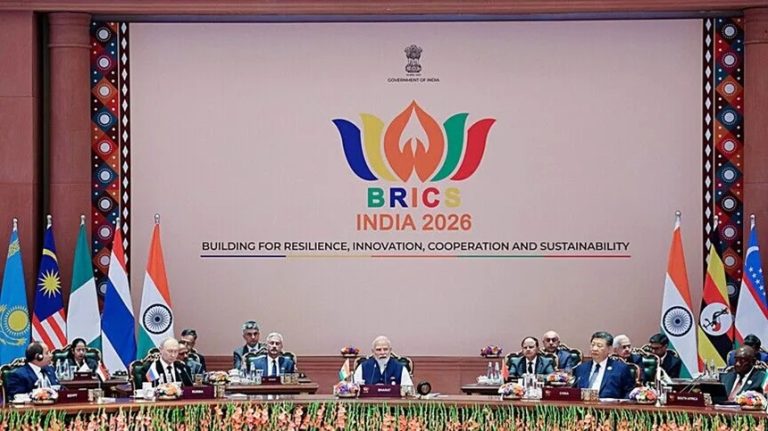
The recent BRICS Summit in New Delhi achieved an unexpected success simply by producing a unified declaration. The gathering occurred amid extraordinary geopolitical tensions, including conflict involving Iran and Israel, ongoing border friction between India and China, and the enduring war in Ukraine. Despite these profound divisions, member states successfully negotiated a consensus document. This diplomatic achievement demonstrates that the organization prioritizes practical coordination over absolute political conformity.
Evaluating this coalition against standard Western alliances like NATO or the European Union fundamentally misunderstands its purpose. A multipolar world naturally involves significant disagreements, and forcing ideological uniformity would undermine the entire project. During the summit, leaders addressed sensitive regional conflicts with deliberately cautious language, calling for immediate restraint and renewed diplomatic engagement. The resulting framework accommodated divergent national interests rather than attempting to force a fragile and artificial consensus.
Advancing Economic Pragmatism
While geopolitical issues dominate headlines, the true impact of the alliance materializes through concrete economic cooperation. In New Delhi, representatives reaffirmed their commitment to reform global financial institutions, demanding greater voting power for emerging economies within the International Monetary Fund and the World Bank. The coalition also actively opposed unilateral tariffs and coercive economic sanctions that threaten the multilateral trading system. Instead of announcing an unrealistic common currency, policymakers focused on pragmatic initiatives like expanding development financing through the New Development Bank.
Members are developing practical mechanisms to settle cross border transactions using local currencies, while actively working to connect their national payment systems. These incremental financial strategies aim to reduce transaction costs and enhance institutional autonomy without requiring member states to immediately abandon the existing global framework. Participants are simultaneously demanding a stronger voice in traditional organizations while steadily building alternative economic instruments.
The Strength of Strategic Diversity
The intricate relationship between Beijing and New Delhi perfectly illustrates this unique institutional logic. Ongoing strategic competition and close Indian ties with Washington do not prevent either nation from fully participating in the broader coalition. The organization provides a valuable alternative forum to manage inevitable friction rather than demanding immediate resolutions. Although expanding membership introduces new logistical challenges and slows consensus building, this very diversity legitimizes the group as a genuine voice for the Global South.
The New Delhi gathering proves that a multipolar international order will inevitably feature overlapping partnerships and frustrating compromises. The ultimate success of this coalition depends entirely on its ability to govern internal contradictions while preserving sufficient common purpose to act collectively. By accommodating distinct national strategies within a unified diplomatic structure, member states are actively constructing a more decentralized global system.
Original analysis inspired by Marcus Vinicius De Freitas from Anadolu Agency. Additional research and verification conducted through multiple sources.
Expert