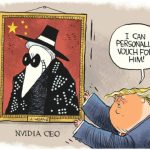
Washington witnessed an extraordinary clash between political power and corporate governance this week when President Donald Trump personally intervened to restore Jensen Huang as chief executive of Nvidia. Less than two weeks after Huang resigned over extramarital affairs that included a relationship with an executive suspected of ties to Chinese intelligence, the company board reinstated him on Monday in a stunning reversal. The move triggered a massive rally across global technology stocks and briefly restored nearly one trillion dollars to the chipmaker valuation. Yet the White House rescue has ignited fierce bipartisan anger in Congress while raising urgent questions about national security and presidential conflicts of interest.
Markets Surge While Washington Splits
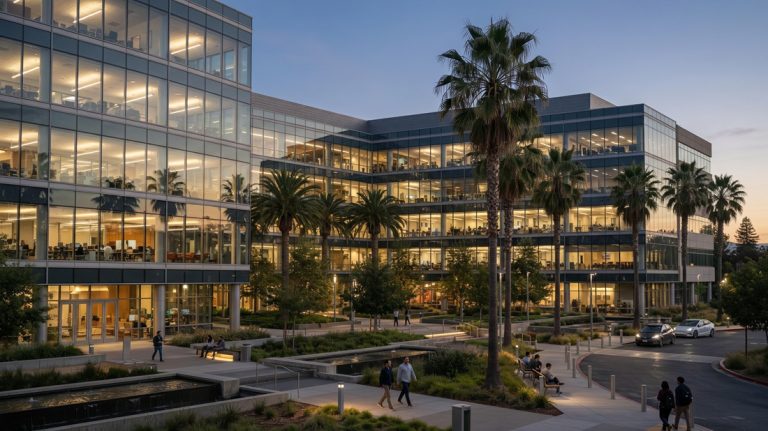
Global financial markets responded immediately to Huang returning to the Santa Clara headquarters, where cheering employees welcomed the founder back to his post. Nvidia shares jumped more than thirty percent on Monday, lifting the Nasdaq Composite and pulling Asian semiconductor giants such as Taiwan Semiconductor Manufacturing Company, Samsung Electronics, and SK Hynix sharply higher. European chip equipment maker ASML and Franco Italian supplier STMicroelectronics also rallied, though several technology firms remained below their levels prior to Huang stepping down. Behind the scenes, Trump personally gained between one point three million and fifteen million dollars on Monday from his disclosed Nvidia holdings, while Huang saw his own net worth swell by roughly thirty three billion dollars.
The market euphoria masked deep divisions inside the administration and growing alarm among international allies. Treasury Secretary Scott Bessent had previously urged the chipmaker to appoint an external leader while federal investigators examined whether the company facilitated illicit sales to China. In Berlin, German Foreign Minister Johann Wadephul openly questioned whether direct political interference in private boardrooms sets a dangerous precedent for democratic economies. Meanwhile, Huang told staff on Tuesday that claims Trump alone secured his job were untrue, and he apologized for personal misconduct that violated corporate standards.
National Security Risks and Export Controls
At the center of the controversy sits Megaspeed International, a Singaporean data center customer whose former executive Alice Huang is suspected by American officials of working for Chinese intelligence. On Monday, just hours after Nvidia welcomed its chief executive back, the Commerce Department added Megaspeed and six affiliated Southeast Asian firms to its federal trade blacklist. Investigators from the Justice Department and the Securities and Exchange Commission continue to scrutinize the relationship to determine whether restricted American processors reached Beijing through third countries. Democratic Senate leader Chuck Schumer accused Huang of violating export control laws and compared the administration posture to handing rocket engines to the Soviet Union during the Cold War.
The episode exposes how deeply American economic stability and artificial intelligence ambitions depend on a single corporation and its founder. Technology and artificial intelligence firms now represent roughly half the value of the S&P 500, giving Silicon Valley executives immense leverage when lobbying the White House against stricter oversight. Although Trump has previously licensed limited processor sales to China in exchange for revenue sharing, his decision to clear Huang before federal inquiries conclude leaves core security questions unresolved. With Democrats preparing congressional hearings for the incoming legislative session, both Nvidia and the White House face mounting scrutiny over whether market stability now outweighs export enforcement.
Original analysis inspired by The New Arab Staff from The New Arab.
Additional research and verification conducted through multiple sources.