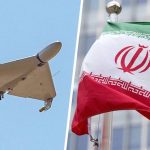
The Iranian national soccer team landed in Tijuana wearing lapel pins bearing the number “168” — a reference to the people killed when a US strike hit an Iranian girls’ primary school on February 28. FIFA declined to classify the pins as political speech. Weeks earlier, the same governing body had banned spectators from displaying Iran’s prerevolutionary flag inside stadiums — a flag the Iranian diaspora uses as a symbol of resistance to the Islamic Republic. One act of political symbolism was sanctioned. The other was not. FIFA’s definition of apolitical turned out to be political all along.
That contradiction sits at the heart of the 2026 World Cup, the most geopolitically charged tournament since fascist Italy hosted the competition in 1934. The event was always going to be complicated — co-hosted by a country that launched military strikes against one of the qualifying nations five months before kickoff, during the celebration of its own 250th birthday. What nobody quite anticipated was how efficiently hard power would hollow out the soft power story the tournament was supposed to tell.
When the Visa Line Becomes the Front Line
Sports diplomacy has a long and genuinely useful history. The most famous example remains the 1971 table tennis exchanges between the US and China, where American and Chinese players traded warm words and friendly matches that helped crack open a diplomatic freeze. The logic was simple: people connecting through sport create openings that governments can exploit. The 2026 World Cup was supposed to demonstrate something similar — America at its most open, hosting the planet at its most festive.
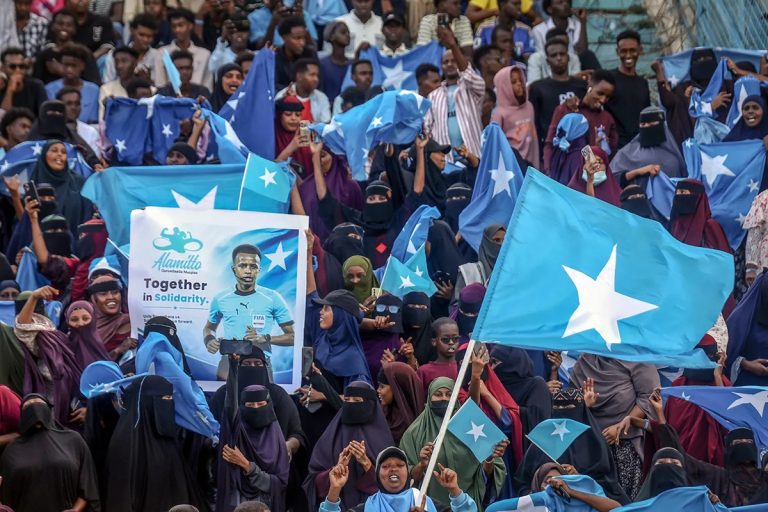
The US immigration regime had other ideas. Omar Artan, who would have become the first Somali referee to officiate at a World Cup, was turned back at Miami’s airport. Talal Salah, the Iraqi national team’s photographer, was denied entry in Chicago. Iraqi striker Aymen Hussein was reportedly held for questioning for nearly seven hours. The $15,000 bond imposed on travelers from certain countries was partially waived for team members and ticket holders after FIFA lobbied Washington — but the waiver was incomplete and inconsistently applied.
The Iranian team bore the heaviest burden. US authorities limited the team’s time in the country before and after matches and denied entry visas to some staff, forcing the squad to relocate its base to Mexico and fly back without rest breaks after each game. The result was a boomerang that surprised even the tournament’s critics: Iran received a hero’s welcome in Mexico, generated enormous sympathy for its competitive disadvantage, and successfully deflected attention from the Iranian regime onto Washington’s immigration posture. American hard power, deployed against a team, ended up producing a soft power win for the country it was meant to pressure.
What Sportswashing Actually Reveals
The tournament’s contradictions run deeper than visa policy. Countries invest billions in hosting major sporting events precisely because they believe the global spotlight improves their international image. Saudi Arabia’s sovereign wealth fund now controls English Premier League club Newcastle United. Qatar spent over $200 billion hosting the 2022 World Cup. The Gulf state’s tournament generated enormous criticism over labor rights and LGBTQ policies — and then the criticism faded, the matches were played, and the world moved on.
What sportswashing reveals is not that image management through sport is illegitimate. It is that the strategy works better for authoritarian states than for democracies precisely because democratic governments cannot fully control the narrative. The Trump administration’s approach to the World Cup — absent from matches, present at the final only for the trophy presentation — managed to combine the reputational costs of hosting with few of the soft power benefits. The US opener against Paraguay drew an average of 27.5 million US viewers, a record for a soccer broadcast in the country. That audience existed independently of any White House interest in capitalizing on it.
The Rules About Rules
FIFA’s claims to political neutrality have always been fragile. Russia was banned from the World Cup after its invasion of Ukraine — but only after several European nations threatened to boycott the 2022 Qatar tournament if Russia competed. Russian President Vladimir Putin violated the ancient Olympic truce twice — invading Georgia during the 2008 Beijing opening ceremony and seizing Crimea during the buildup to the 2014 Sochi Winter Olympics. Russia now argues that sport should be apolitical, a position its critics find difficult to take seriously.
The inconsistency is not limited to Russia. Ukrainian skeleton racer Vladyslav Heraskevych was disqualified from the 2026 Winter Olympics for refusing to remove a helmet decorated with images of Ukrainian athletes killed in Russia’s war. Seven European soccer captains planned to wear “One Love” armbands at the 2022 World Cup in support of LGBTQ communities; FIFA threatened immediate yellow cards and the players backed down. The governing body’s definition of political speech, in practice, tends to protect hosting arrangements and sponsorships rather than any coherent principle.
What Still Works
None of this means sports diplomacy is finished. The UN convened a formal session on the subject in June, with business leaders and academics examining how athletic competition can create openings that traditional diplomacy cannot. The evidence from this tournament is mixed rather than uniformly bleak. Secretary of State Marco Rubio held a meeting with Paraguayan President Santiago Peña on the sidelines of the US-Paraguay match in Los Angeles — exactly the kind of quiet diplomatic contact that a global sporting event uniquely enables.
And the spontaneous, unscripted moments remain genuinely powerful. Jesse Owens at the 1936 Berlin Olympics made a political argument without speaking a word. The Democratic Republic of Congo’s team arriving in their bold leopard-print custom suits generated real warmth and coverage. Norwegian fans bringing their “Viking Row” tradition to North American streets illustrated something that diplomatic cables cannot manufacture: the genuine pleasure of encountering a culture you had never thought about before.
The 2026 World Cup has not killed sports diplomacy. It has stripped away the pretense that the concept operates independently of everything else happening in the world. When the host country is simultaneously fighting a war, tightening its immigration enforcement, and accepting a FIFA Peace Prize from the governing body it was pressuring over entry visas, the gap between sports as unifying mythology and sports as contested geopolitical terrain becomes impossible to ignore. That is probably an honest reckoning. And honesty, even uncomfortable honesty, is a better foundation for diplomacy than theater.
Original analysis inspired by J. Alex Tarquinio from Foreign Policy. Additional research and verification conducted through multiple sources.