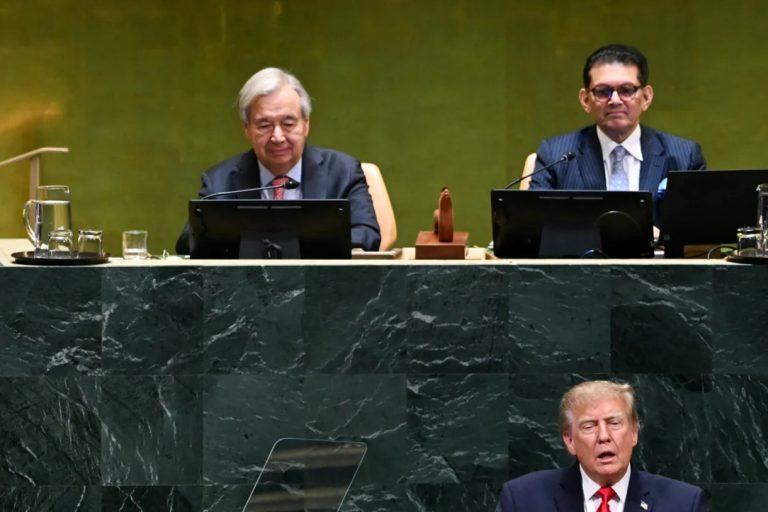
During his fifth appearance at the United Nations General Assembly, President Donald Trump delivered an address defined as much by what he omitted as what he proclaimed. The president approached the international forum emphasizing American military deterrence and transactional diplomacy. His rhetoric veered between threatening the annihilation of hostile adversaries and suggesting that those same adversaries are waiting to negotiate favorable deals.
Despite the administration’s fierce criticisms of globalist institutions, Washington demonstrated it has no intention of completely abandoning the world body. In a strategic maneuver just weeks before the summit, the White House authorized the transfer of a massive financial payment to the United Nations. By clearing a portion of its outstanding arrears—including a massive transfer specifically earmarked for regular dues and peacekeeping operations—the United States successfully maintained its crucial voting rights within the General Assembly.
The president used his platform to highlight his vision of international cooperation, which strictly prioritizes state-centric peace and security over broad humanitarian efforts. Noticeably absent from his remarks was any mention of the United Nations’ critical development and humanitarian missions. For instance, the president omitted the fact that an American agricultural official was recently appointed to lead the World Food Program, despite the United States historically acting as the largest financial contributor to the agency.
Furthermore, the administration’s approach to human rights and global regulatory affairs remains highly combative. Following its controversial decision to withdraw from the UN Human Rights Council for a second time, Washington continues to distance itself from multilateral bodies it views as fundamentally flawed or biased. The president also explicitly criticized international regulatory efforts during his speech, boasting about his administration’s successful intervention to block the International Maritime Organization from establishing a global carbon tax on the shipping industry.
Ultimately, the address reflects a selective engagement strategy. By funding specific security mechanisms while actively undermining regulatory and human rights agencies, the current administration seeks to forcefully reshape the global order to align exclusively with its immediate national interests.
Original analysis inspired by Esther Brimmer from Council on Foreign Relations. Additional research and verification conducted through multiple sources.