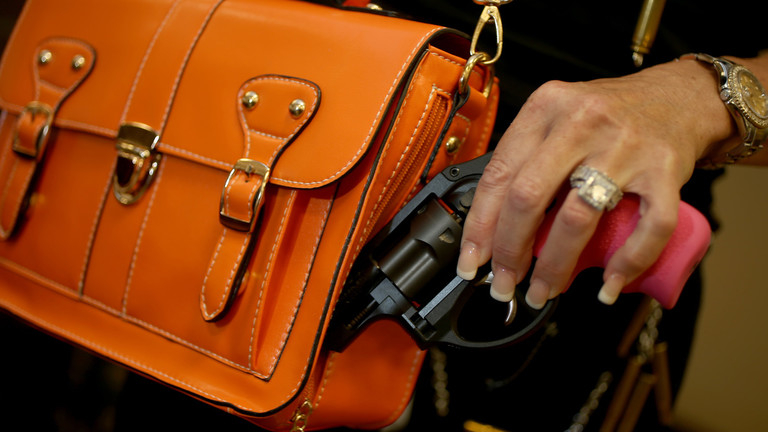
Across the United States, a compelling statistical story is unfolding: violent crime is falling, in some areas to historic lows. This encouraging trend coincides with another significant development—an increase in the number of Americans choosing to carry firearms for personal protection. This parallel has ignited a national conversation about the relationship between gun ownership and public safety, especially following a pivotal Supreme Court decision that reshaped gun laws nationwide.
The legal landscape for carrying firearms was fundamentally altered by the Supreme Court’s 2022 ruling in New York State Rifle & Pistol Association, Inc. v. Bruen. This landmark decision affirmed a constitutional right to bear arms in public for self-defense. It effectively struck down restrictive “may-issue” licensing systems in states like New York, California, and Maryland, which had given local authorities broad discretion to deny concealed carry permits. In their place, these states were compelled to adopt “shall-issue” systems, where permits must be granted to any applicant who meets objective criteria, such as passing a background check. This ruling, combined with a growing number of states adopting “constitutional carry” laws that require no permit at all, has significantly expanded the ability of citizens to carry firearms.
Correlation or Causation?
In the years following the Bruen decision, many of the states forced to loosen their gun laws have reported significant drops in violent crime. In New York City, murders and shooting incidents fell to their lowest levels in recorded history for the first five months of the year. California’s homicide rate in 2024 returned to near-historic lows, with dramatic decreases in cities like Oakland. Maryland also saw homicides plummet, with Baltimore recording a 58% drop between 2022 and 2025. These figures are part of a broader national trend that has seen homicides fall sharply since the spike experienced during the COVID-19 pandemic.
Gun rights proponents argue these trends are connected, suggesting that a more broadly armed, law-abiding populace can deter potential criminals. The primary reason most gun owners cite for having a firearm is protection. With an estimated 400 to 500 million privately owned firearms in the country, the equivalent of nearly two guns for every adult, the argument is that criminals are less likely to target individuals they believe may be armed.
However, many criminologists and public health experts caution against drawing a direct causal link. They point to a complex web of other factors that could be driving down crime. These include the normalization of society after the disruptions of the pandemic, the return of pre-COVID employment levels, and targeted community-based violence intervention programs. Experts note that crime has also fallen in areas without significant changes to gun laws, suggesting that broader societal forces are at play.
The debate over the role of firearms in American society remains deeply polarized. While crime rates are falling, the reasons for this decline are multifaceted and intensely debated. The expansion of public carry is an undeniable reality, but whether it is a primary driver of increased public safety or merely a concurrent trend is a question that continues to shape the nation’s approach to law and order.
Original analysis inspired by Robert Bridge from RT. Additional research and verification conducted through multiple sources.
By ThinkTanksMonitor
Watch this New York City public safety announcement to see local leaders detail the recorded drops in citywide violent crime trends.