Category: Weekly Highlights

An overhead view of Israeli police using a water cannon on a crowd of Orthodox Jewish protesters in a city street.

Netanyahu’s “Mr. Security” Brand Is Cracking

As Israel heads toward elections scheduled for late 2026, Prime Minister Benjamin Netanyahu faces the most precarious political environment of his career. This analysis examines the erosion of his “Mr. Security” brand following the prolonged conflicts in Gaza, Lebanon, and Iran. With recent polling showing the opposition gaining a potential majority and critical fissures forming within his coalition—most notably over the ultra-Orthodox military service exemption—the article explores how a combination of voter fatigue, internal social polarization, and strained relations with Washington has created an unprecedented challenge to his long-standing dominance.

Read More »
A U.S. F-16 fighter jet in flight, representing military power and global base presence.

America’s Empire of Bases Is Starting to Cost Its Hosts Too Much

This analysis examines the growing strategic liability of the U.S. “empire of bases” in the Middle East. As the ongoing conflict with Iran reveals the vulnerability of host-nation infrastructure—exemplified by the devastating June 3 attack on Kuwait International Airport—we explore how the proliferation of low-cost, high-impact drone and missile technologies has fundamentally inverted the security guarantee the U.S. once provided. We assess whether the increasing risk of hosting U.S. forces will lead to a systemic denial of access, potentially forcing a retraction of American global reach and fundamentally altering the future of U.S. military power.

Read More »
Crowd waving Iranian flags at a public gathering during a geopolitical event.

Iran Is Not Trying to End This War — It Is Trying to Win the Peace

This analysis explores Iran’s strategic shift from a policy of survival to one of active conflict management. By examining the consolidation of hard-line domestic power, the effective weaponization of global energy markets through the closure of the Strait of Hormuz, and the cynical use of negotiations as a tactical delay, we assess how Tehran is positioning itself as a dominant pole in a new, multipolar regional order—regardless of the devastating domestic economic costs.

Read More »
A man holding a microphone in front of a massive building mural depicting a fist gripping the Strait of Hormuz and maritime shipping lanes.

Iran’s Strategic Ascent and the Collapse of US Gulf Dominance

This analysis examines the profound geopolitical shifts following three months of US-Iran hostilities. By exploring the closure of the Strait of Hormuz, the failure of traditional military strategies, and the rise of a new regional diplomatic architecture, we assess how Iran’s strategic ascent signals the end of the long-standing American-led order.

Read More »
Close-up profile shot of Tulsi Gabbard with soft-focus bokeh lighting in the background.

Gabbard’s DNI Exit: When Truth Became a Liability

This report examines the resignation of Tulsi Gabbard as Director of National Intelligence, analyzing the turbulent 18-month tenure that marked her time in the Trump administration. By detailing the fundamental clashes over Iran policy, her marginalization from key decision-making circles, and her controversial transparency initiatives, the article explores the broader institutional challenges of maintaining objective intelligence in a politically charged environment.

Read More »
Naftali Bennett and Yair Lapid standing together at a podium with Israeli flags.

Israel’s Election Will Exclude Millions It Governs

This analysis examines the democratic paradox inherent in Israel’s upcoming elections, where political representation remains systematically inaccessible to millions of Palestinians living under military rule. Drawing on recent findings from the ICJ and UN human rights bodies, we explore how current annexationist policies and the exclusionary nature of the electoral process further entrench a dual-regime system, challenging the foundations of political legitimacy in the region.

Read More »
Close-up portrait of Keir Starmer looking downward with a serious expression.

Left Unity Emerges as Antidote to Farage Threat

The UK’s recent local elections have delivered a major blow to Keir Starmer’s leadership, with voters defecting to the Greens and Nigel Farage’s Reform UK. Driven by discontent over domestic austerity and the government’s stance on Gaza, this electoral fragmentation suggests that only a unified progressive coalition can counter the rising populist right.

Read More »

Why Lebanon Needs a Marshall Plan Now

Lebanon’s latest conflict has deepened an already severe economic and political crisis. With billions needed for reconstruction, experts argue only a large-scale international recovery plan can restore stability. Strengthening state institutions, rebuilding infrastructure, and creating jobs may be the best chance for lasting peace.

Read More »
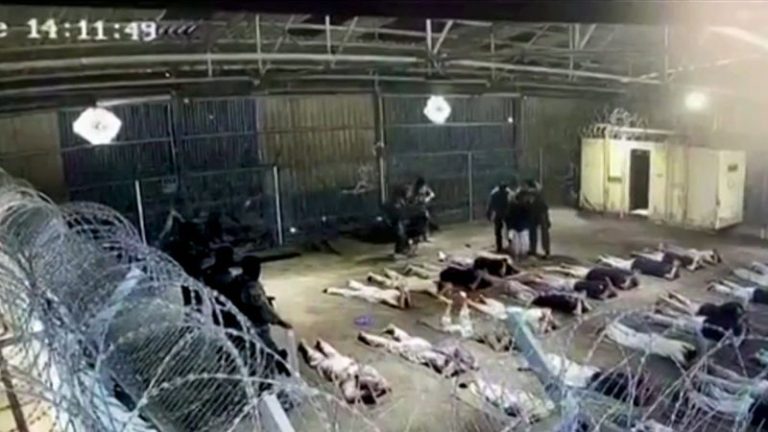
Itamar Ben-Gvir and Israeli security officials standing in a detention facility while several detainees lie face down on the floor with their hands restrained behind their backs.

Garbage Truck Incident Exposes Palestinian Desperation

The discovery of dozens of Palestinian men hiding in a garbage truck to cross into Israel for work has sparked international outrage. This incident serves as a stark symbol of the severe economic hardship and movement restrictions in the West Bank, forcing laborers to endure dehumanizing conditions to provide for their families.

Read More »
Spanish Prime Minister Pedro Sánchez shaking hands with Chinese President Xi Jinping in front of national flags.

Spain Courts Beijing: Sánchez Bets on China as Transatlantic Ties Fray

In a strategic response to fraying Transatlantic ties, Spanish Prime Minister Pedro Sánchez has solidified a pragmatic partnership with Beijing. By securing high-quality investments from Chinese giants like Chery and CATL—conditioned on local job creation and technology transfer—Spain is positioning itself as a vital manufacturing hub and a diplomatic bridge between China and a fragmented Europe. This report analyzes how Madrid is navigating U.S. pressure to secure its green transition and economic sovereignty.

Read More »
Two chess kings, one silver and one black, standing on a chessboard with the blurred flags of the United States and Iran in the background.

Iran War Erodes US Appetite for Middle East Role

As the conflict enters its third month, domestic opposition to U.S. military engagement in the Middle East has reached a critical tipping point. Driven by rising energy costs and economic anxiety, a majority of Americans now disapprove of the ongoing campaign. With the 60-day War Powers Resolution deadline approaching, the administration faces a defiant Congress and a public increasingly weary of open-ended regional commitments.

Read More »