Category: Weekly Highlights

A street in Lebanon showing the aftermath of a military strike with smoke rising from damaged buildings and emergency responders on site.

Netanyahu’s Lebanon Gamble Is Threatening the Entire Ceasefire

The fragile US-Iran ceasefire faces an immediate collapse following Israel’s massive air campaign in Lebanon. While President Trump has urged Netanyahu to be “low-key” to save the Iran talks, the fundamental clash remains: Israel demands Hezbollah’s disarmament without a ceasefire, while Lebanon and Tehran insist on a total halt to hostilities as a precondition for any direct negotiations.

Read More »
A crowd of people, including women and children, waving Iranian flags during a nighttime demonstration.

The US-Iran Ceasefire: A Pause in the War, Not the End of It

A Pakistan-brokered ceasefire has pulled the Middle East back from the brink, suspending 40 days of US-Israeli strikes on Iran. While global markets reacted with relief and oil prices slid to $103, the 14-day truce remains fragile. Major hurdles persist in Islamabad negotiations, including Iran’s 10-point plan, the status of US regional bases, and the unresolved conflict in Lebanon.

Read More »
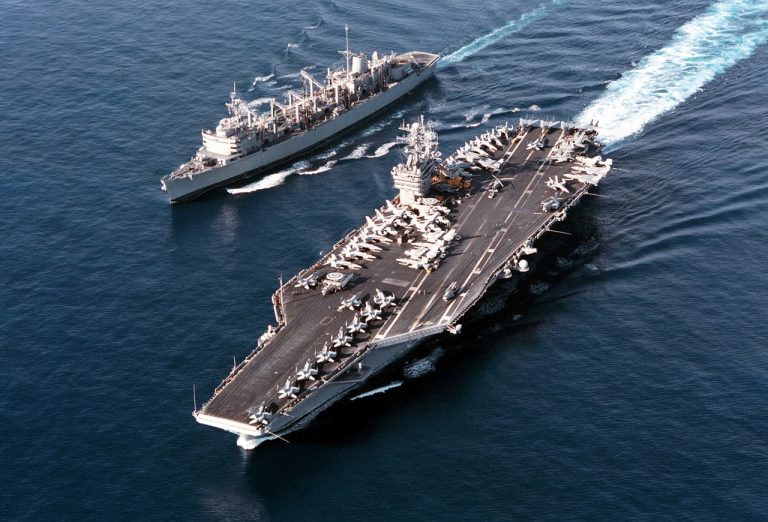
A deck crew member in a yellow safety vest signaling to a fighter jet pilot on an aircraft carrier.

Striking Iran’s Grid Won’t Win the War, It’ll Expand It

The strategic calculus in the Persian Gulf has shifted from a “nuclear denial” mission to a high-stakes “infrastructure ultimatum.” With President Trump’s 8:00 PM ET deadline only hours away, the threat to “decimate” Iran’s power plants and bridges carries risks of regional contagion that far outweigh the intended military benefits.

Read More »
Satellite view of the Strait of Hormuz, Persian Gulf, and Gulf of Oman.

Iran’s Masterplan for the Strait of Hormuz

The shift in the Strait of Hormuz from a traditional military chokepoint to a formalized “Sovereign Toll Zone” represents the most significant change in maritime law since the 1982 UNCLOS. Tehran is moving to institutionalize what was once a temporary blockade into a permanent economic engine designed to bypass Western sanctions forever.

Read More »
Large oil tankers and cargo ships docked at a major industrial port with storage tanks and green mountains in the background.

Beijing’s Iran Dilemma: Too Big to Ignore, Too Risky to Lead

On March 31, 2026, the diplomatic landscape of the Iran war shifted toward Beijing as Pakistani Deputy Prime Minister Ishaq Dar arrived in China to formally launch a joint five-point initiative for a ceasefire. This move represents China’s first major departure from a month of “muted” detachment, positioning it as a potential guarantor for any future peace deal—a role Tehran has reportedly made a prerequisite for talking to the White House.

Read More »
A yellow Komatsu excavator clearing rubble from a heavily damaged multi-story residential building.

How the Iran War Became America’s Ukraine

The U.S. strategy in Iran has devolved into a grinding war of attrition mirroring Russia’s quagmire in Ukraine, as initial hopes for a swift “decapitation strike” fail against Iran’s geographic leverage. With the Strait of Hormuz blockade triggering the largest energy disruption in history and U.S. precision munition stockpiles depleting at an unsustainable rate, Washington faces a strategic stalemate with no viable ground option and no clear path to a decisive victory.

Read More »
A large oil tanker ship sailing on choppy ocean waters under a hazy sky with other vessels in the distance.

Israel Invades Lebanon as Iran Drone Shuts Down Dubai Airport

Israel’s push deeper into Lebanon, Iran’s drone strike that shut Dubai’s airport, and a still‑closed Strait of Hormuz show a war widening on every axis. With Gulf capitals under fire, oil above $100, and sacred sites hit by falling debris, Day 17 underscores a conflict accelerating faster than any effort to contain it.

Read More »
Donald Trump pointing forward confidently while speaking at a rally with an American flag background.

The Rules-Based Order Is Dead. Trump Just Buried It.

Trump’s 78‑day cascade of abductions, assassinations, tariffs, and an unauthorized war has shattered what remained of the post‑1945 rules‑based order. With the UN Charter sidelined and sovereignty treated as optional, the Global South bears the brunt — from tariffs to aid cuts to oil shocks — as a multipolar, power‑driven world accelerates into view.

Read More »
Protester holding a sign that says "NO MORE WAR CRIMES" with a skull illustration during a street demonstration.

The World War III Has Already Gone Global

The assault on Iran is accelerating a broader collapse of the post‑1945 legal order. From Ukraine to Gaza to Tehran, major powers are bypassing the UN system, normalizing unilateral force, and eroding sovereignty norms. As institutions weaken and nuclear incentives rise, the world drifts toward a multipolar landscape defined less by rules than by raw power.

Read More »
Donald Trump standing under a large waving American flag with construction cranes in the background.

A War Without an Endgame and Americans Know It

Public support for Trump’s Iran war is eroding as the administration cycles through shifting justifications with no defined endgame. Polls show most Americans doubt Iran posed an imminent threat, oppose escalation, and don’t trust Trump’s judgment. With objectives unclear and munitions draining, the conflict risks drifting without a political destination.

Read More »