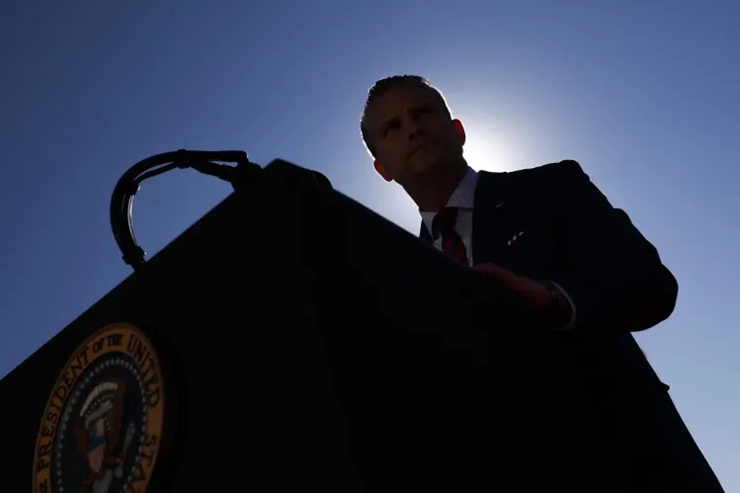
The Defense Department intends to execute former Army Major Nidal Hasan by firing squad on December 3 and broadcast the event live. Hasan was convicted in 2013 for the 2009 shooting at Fort Hood that killed 13 people and wounded more than 30 others. Defense Secretary Pete Hegseth has stated that the public should be able to watch so that the consequences of such acts are clear. A Pentagon official confirmed the livestream plan after Hegseth’s remarks.
No widely reported public execution has occurred in the United States since 1936. The military last used a firing squad in 1945 and has not carried out any execution since 1961. The proposed broadcast would therefore mark a sharp departure from the longstanding practice of conducting capital punishment behind closed doors with limited witnesses. Army regulations normally restrict attendance to family members, media representatives, and certain officials. Officials within the service learned of the public component only after Hegseth’s interview, according to reports.
Criticism has come from both parties and from religious leaders. Republican Senator Thom Tillis called the livestream decision “beyond disgusting” and compared public executions to practices in authoritarian states. The head of the US Conference of Catholic Bishops described the plan as a barbaric promotion of a culture of death. Other lawmakers and commentators have argued that broadcasting the death risks inspiring further violence or undermining the dignity of the process, even among those who support the death penalty for Hasan.
Vice President JD Vance indicated uncertainty about whether the livestream will proceed. Hasan’s attorneys may still file challenges in federal court that could delay the date for years, although he has exhausted the military appeals process. President Trump approved the firing squad method on Hegseth’s recommendation and has said he understands the desire for a public example, while stating that he was not involved in the decision to stream it.
The episode highlights ongoing divisions over how the United States administers the death penalty. Supporters of the plan argue that transparency and deterrence require visibility. Opponents contend that public spectacle reduces the state to the level of regimes it criticizes and serves little legitimate purpose once a sentence has been imposed. Whether the livestream occurs as announced will test how far the current administration is prepared to move beyond established norms of capital punishment.
Original analysis inspired by Cameron Peters from Vox. Additional research and verification conducted through multiple sources.