Competition among Gulf and Middle Eastern powers has transformed the African shore of the Red Sea into a high stakes geopolitical arena. Smaller coastal polities, including Somaliland, Puntland, and Eritrea, now attract intense diplomatic and military courtship because they sit beside one of the world’s busiest maritime chokepoints. As regional wars in the Middle East disrupt traditional energy corridors, Saudi Arabia has rerouted roughly four million barrels of oil daily through the Red Sea, elevating the strategic value of every African port across from Yemen. For local leaders in the Horn of Africa, foreign patronage promises infrastructure, revenue, and security, yet those same partnerships threaten to pull fragile territories into conflicts that are not their own.
Port Politics and Fractured Sovereignty
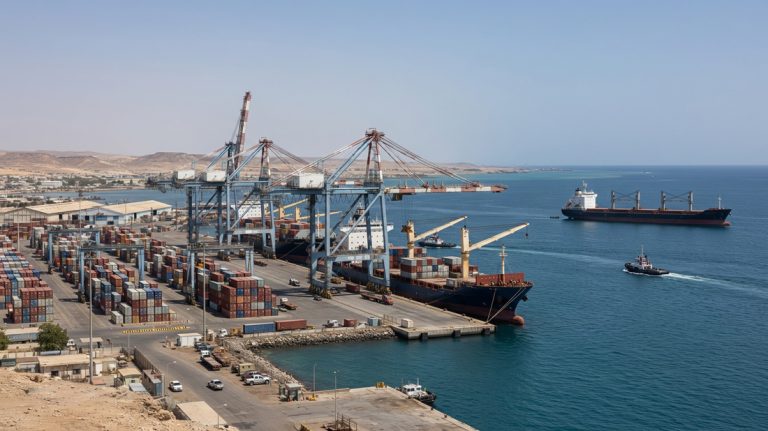
Nowhere is the collision between local autonomy and external ambition sharper than across northern Somalia. After Israel formally recognized breakaway Somaliland in December 2025, security ties between Hargeisa and Jerusalem deepened rapidly around the strategic port of Berbera, where Dubai based logistics giant DP World already operates a major terminal. Mogadishu viewed this alignment, alongside Emirati backing for autonomous regions, as a direct assault on Somali territorial integrity. In January 2026, Somalia’s federal government annulled its port and defense agreements with Abu Dhabi, and in November 2026, Mogadishu expelled the Emirati ambassador within 72 hours while recalling its own envoy.
Regional administrations in Somaliland, Puntland, and Jubaland immediately rejected the federal decree, insisting their commercial and security arrangements with the United Arab Emirates remain intact. This institutional deadlock has turned coastal infrastructure into a weapon of internal political competition. In July 2026, federal forces and Puntland troops clashed near the port city of Bosaso amid disputes over federal military appointments and Turkish maritime ambitions along the Gulf of Aden. Rather than consolidating state authority, foreign port deals have hardened constitutional rifts between central governments and peripheral capitals.
Competing Blocs Across the Strait
Across the wider Red Sea basin, Middle Eastern powers have sorted themselves into two rival camps that map directly onto local African disputes. Shaken by regional hostilities and uncertain American security guarantees, Gulf capitals have hedged their bets through divergent African strategies. Abu Dhabi relies on agile port concessions, security partnerships, and ties with subnational actors in Somaliland, Puntland, and Sudan, while working more closely with Israel and landlocked Ethiopia. Riyadh, by contrast, champions central state institutions, aligning with Egypt, Turkey, and Somalia’s federal government to contain both Iranian proxies and Emirati reach.
In July 2026, Saudi Arabia hosted 14 countries that formed a Multinational Maritime Defence Alliance, deliberately excluding both the United Arab Emirates and Ethiopia. Meanwhile, Houthi advances along Yemen’s coast near the Bab el Mandeb Strait have raised the cost of maritime insecurity for everyone on the African shore, boosting piracy and weapons smuggling between Yemen and Somalia. Eritrea sits squarely inside this crossfire, courted by Cairo and Riyadh as a coastal counterweight to Ethiopia even as border clashes in Tigray raise fears that fighting could spill toward the port of Assab.
For Somaliland, Puntland, and Eritrea, the arrival of Middle Eastern rivalries offers rare diplomatic leverage in a region long ignored by global powers. Small polities can extract port investments, military training, and political recognition by playing competing external patrons against one another. Yet bilateral bargains carry steep hidden costs when foreign sponsors treat African coastlines as forward operating zones for distant wars. Unless coastal governments coordinate through regional frameworks like the African Union to set shared rules for foreign basing and investment, today’s windfall of attention could quickly harden into tomorrow’s proxy battlefield.
Original analysis inspired by Biruk Terrefe from Foreign Policy.
Additional research and verification conducted through multiple sources.