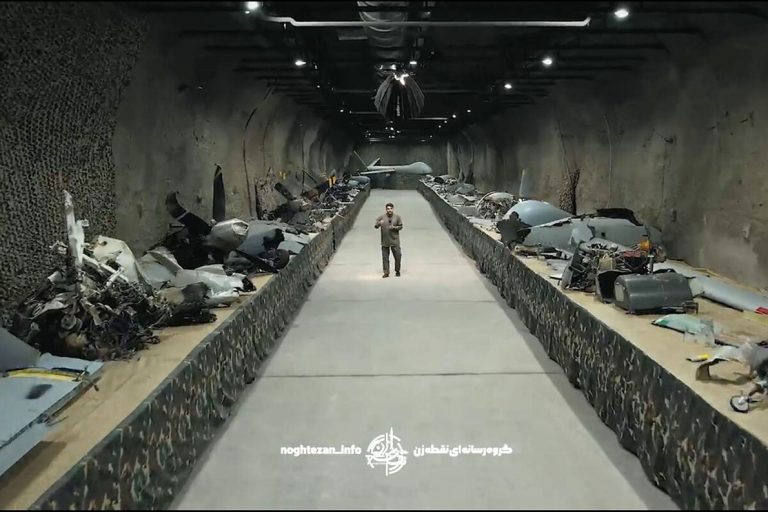
The military conflict involving the United States and the Islamic Republic enters a dangerous new phase as leadership in Tehran adopts an aggressive offensive posture. Following a prolonged period of intense hostilities, Iranian commanders now seek to permanently alter the regional security architecture. Instead of merely responding to foreign strikes, the nation increasingly deploys preemptive tactics designed to force a withdrawal of foreign troops, lift crippling economic sanctions, and secure unchallenged control over global energy transit routes.
Recent diplomatic exchanges at the United Nations General Assembly highlight this deepening standoff. President Donald Trump publicly threatened overwhelming destruction if Iranian officials refused his demands. In response, President Masoud Pezeshkian emphatically dismissed the ultimatum, asserting that foreign pressure only strengthens national resolve. Shortly thereafter, Iranian diplomats proposed a temporary cessation of hostilities that would reopen the Strait of Hormuz, essentially attempting to revive a previous framework that collapsed earlier this summer.
Escalating Battlefield Engagements
To reinforce its diplomatic demands, Tehran actively expands the geographical scope of its military operations. Recent ballistic missile salvos deliberately targeted an American aircraft carrier and numerous military installations situated in Jordan. By utilizing sophisticated projectiles equipped with multiple warheads, Iranian forces successfully forced defending units to expend dozens of highly expensive Patriot and THAAD interceptors. State media outlets continuously broadcast footage of underground facilities filled with captured drone wreckage, intending to project strength and demoralize adversaries.
Military commanders also warn that any further escalation will prompt attacks across the Red Sea and the Indian Ocean. A recent documentary produced by the Islamic Revolutionary Guard Corps explicitly celebrates this asymmetric advantage. The broadcast detailed how a remarkably inexpensive explosive drone destroyed an advanced airborne early warning radar plane valued at hundreds of millions of dollars. These tactical shifts demonstrate a clear intention to overwhelm conventional defense systems through sheer volume and unexpected technological capabilities.
The Mounting Financial Toll
The economic burden of this protracted engagement continues to heavily impact the American defense budget. A recent assessment conducted by the Pentagon inspector general calculated the total war expenditures at tens of billions of dollars through the end of June. That staggering figure includes massive equipment losses, accounting for dozens of destroyed aircraft and severe structural damage inflicted upon hundreds of buildings across various regional bases.
As the financial and material costs multiply, Iranian strategists hope the sheer expense of maintaining a forward presence will eventually exhaust their primary adversary. By consistently targeting logistical hubs and vital military infrastructure, Tehran aims to permanently diminish the American footprint across the Persian Gulf. However, while the immediate objective involves establishing a durable deterrence, the long term sustainability of this high stakes military gamble remains entirely unpredictable.
Original analysis inspired by Scott Peterson from Christian Science Monitor. Additional research and verification conducted through multiple sources.