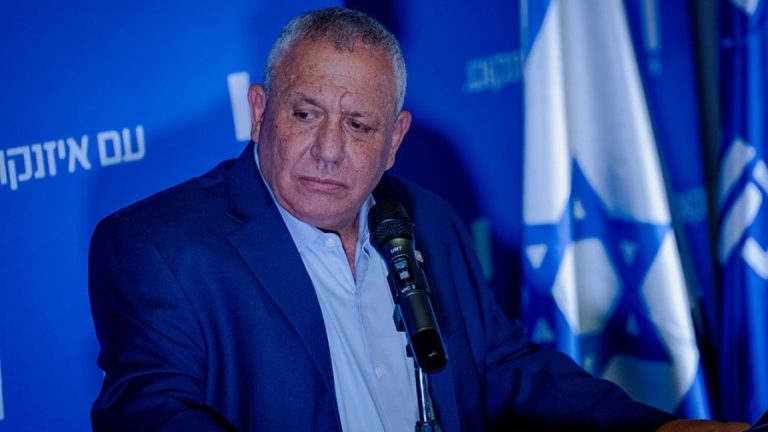
As Israel prepares for upcoming Knesset elections, the political landscape is solidifying with 38 parties officially submitting their candidate lists. While familiar names dominate the rosters, the emergence of a new primary challenger to Prime Minister Benjamin Netanyahu has reshaped the race. Gadi Eisenkot, a former army chief of staff who founded the centre-right Yashar party in 2025, has successfully outpaced other opposition figures, including the B’Yachad alliance formed by Naftali Bennett and Yair Lapid.
Eisenkot’s campaign deliberately contrasts his image with that of the incumbent. Where Netanyahu is often portrayed by critics as an elite, career politician, Eisenkot is pitched as a straightforward, blue-collar military man. His campaign frequently highlights his personal sacrifices, noting his son’s death during the ongoing military operations in Gaza, drawing a sharp contrast with Netanyahu’s son, Yair, who has largely remained in Miami. However, political analysts argue that despite these stark differences in public persona, the fundamental security and territorial policies of the two leaders are remarkably similar.
Consensus on Military Strategy
Observers note that beneath the intense campaign rhetoric, both candidates share identical core objectives regarding the Palestinian territories. According to analysts, Eisenkot remains a staunch supporter of the settlement enterprise and the continuation of the current military offensive in Gaza. Furthermore, during his tenure as head of the northern command in 2006, Eisenkot was the primary architect of the controversial Dahyieh Doctrine—a military strategy deployed in Lebanon that involves the disproportionate targeting of civilian infrastructure, which international legal bodies have widely condemned.
Consequently, critics assert that the upcoming election does not represent a choice between war and peace, but rather a contest over which leadership can more effectively manage the ongoing military campaigns. The political consensus ensures that a change in the prime minister’s office would likely not alter the broader trajectory of the conflict.
Fractures within the Right-Wing Coalition
The intense electoral competition has also exposed deep fractures within Netanyahu’s current governing coalition. Hardline figures have deployed highly controversial campaign tactics on social media to energize their base. Finance Minister Bezalel Smotrich recently released an AI-generated video mocking Palestinians and advocating for the Judaization of regions with large Arab populations. Simultaneously, Internal Security Minister Itamar Ben Gvir posted an AI video depicting political prisoners on an industrial conveyor belt—a post that garnered millions of views before being removed.
Despite these shared aggressive tactics, unity among the far-right has deteriorated. Ben Gvir recently refused to form an electoral alliance with Smotrich’s faction, potentially jeopardizing Smotrich’s ability to cross the necessary electoral threshold. Additionally, Ben Gvir has publicly accused Netanyahu of secretly negotiating a future coalition with Eisenkot, highlighting the fragility of the current political alliances.
Intelligence Failures and Defamation Claims
Netanyahu’s political survival also faces significant hurdles stemming from investigations into the intelligence failures leading up to the October 7 attacks. A recent explosive report published by Haaretz revealed that United Arab Emirates President Mohammed bin Zayed personally warned Netanyahu during a 45-minute phone call about a major operation being planned by Hamas leadership. According to the exposé, Netanyahu dismissed the warning, mistakenly believing the primary threat was contained to the West Bank.
Following the publication, the Prime Minister’s office vehemently denied the allegations and filed a defamation lawsuit against the newspaper. Despite the severe political damage caused by these revelations and his fractured coalition, Netanyahu has historically demonstrated a remarkable ability to survive political crises, largely due to a persistently divided opposition.
Original analysis inspired by Yara Hawari from The New Arab. Additional research and verification conducted through multiple sources.