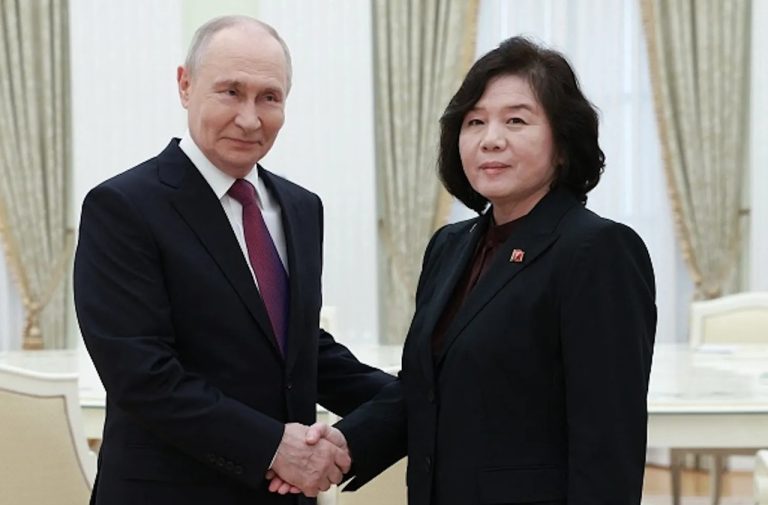
The recent reduction of joint military exercises between Washington and Seoul exposes a critical flaw in American defense planning. As the United States attempts to shift regional security responsibilities onto its allies, authoritarian adversaries are actively sharing military expertise across different continents. The growing military cooperation between Russia and North Korea demonstrates that modern threats no longer remain confined to specific geographic zones.
North Korean military forces are currently gaining unprecedented combat experience on European battlefields. By deploying thousands of troops to the Russian Kursk region and supplying Moscow with advanced ballistic missiles, Pyongyang is actively testing its arsenal against modern Western air defense systems. This live combat feedback allows North Korean engineers to rapidly improve their weapons and refine their tactical doctrines. The tactical knowledge acquired during these European engagements will directly influence any future conflict on the Korean Peninsula.
The current American national strategy relies heavily on delegating regional defense to local allies. Defense planners in Washington expect European nations to manage Russian aggression while asking South Korea to assume primary responsibility for deterring Pyongyang. However, this compartmentalized approach fails when adversaries actively collaborate across these designated boundaries. By abruptly scaling down the recent Ulchi Freedom Shield exercises, the American administration prioritized immediate diplomatic and political goals over preparing for this rapidly evolving interconnected threat.
South Korean leadership faces a delicate diplomatic balancing act as these international crises merge. While defense officials recognize the absolute necessity of assuming greater security responsibilities, they remain hesitant to completely sever ties with Moscow or abandon hopes for peaceful dialogue with Pyongyang. Direct military intervention in European conflicts could permanently destroy billions of dollars in bilateral trade with Russia and eliminate any remaining leverage over North Korean diplomacy. Consequently, Seoul must manage a deteriorating security environment while dealing with an increasingly unpredictable American security guarantee.
Effectively countering this unified authoritarian bloc requires a fundamental rethinking of international defense networks. Washington can no longer simply assign distinct geographic zones to its various allies and withdraw from active management. Instead, the United States must serve as a reliable conduit for vital [suspicious link removed] between European and Asian partners. Transferring data regarding North Korean missile performance and electronic warfare tactics from the Ukrainian front lines is absolutely essential for preparing allied forces in the Pacific.
This new era of global security demands absolute predictability and reliable coordination among democratic nations. Strategic compartmentalization cannot solve the reality of adversaries moving weapons, troops, and military technology across multiple theaters simultaneously. When rival nations connect their military operations across the globe, the United States must ensure its allies are equally connected and prepared to respond to these intertwined challenges.
Original analysis inspired by Donggak Heo from Foreign Policy. Additional research and verification conducted through multiple sources.