The United States recently marked 250 years of independence, an occasion that should have ignited nationwide celebration. Instead, the milestone arrived wrapped in a palpable sense of national melancholy. Recent polling captures a striking collapse in public confidence: while many remain proud to be American, nearly half of the country feels that the principles upon which the nation was founded have become a distant memory. A significant majority fear that their democratic system itself is in peril. The national mood suggests something far deeper than typical political fatigue; it points to a fraying social contract.
This disillusionment mirrors ideological exhaustion seen in other eras of historical transition. The promise that disciplined labor inevitably yields prosperity has broken down. For younger generations, the economic math simply fails to add up. They have inherited mounting student debt, increasingly expensive housing markets, and stagnant wages. The notion that hard work guarantees a better life than one’s parents enjoyed now rings hollow to a demographic trapped in an increasingly precarious economic reality.
The Economic Roots of Disillusionment
For decades, the American Dream functioned as society’s central organizing principle. Citizens accepted systemic flaws because they believed upward mobility was guaranteed. That assumption has evaporated. While previous generations accrued wealth through homeownership and stable employment, millennials and Gen Z find themselves navigating gig economy instability and a housing market that priced out average earners entirely.
The political class amplifies this frustration. Voters cycle through administrations only to discover the underlying administrative machinery remains largely unchanged. When citizens watch elected officials fail to address basic structural decay, the concept of democratic freedom begins to feel decorative rather than substantive. This institutional stagnation breeds a cynicism that erodes faith in the entire governing apparatus, leaving the public to grapple with a sense of lost agency.
Divergent Visions for Survival
With the old consensus shattered, two distinct ideological camps are competing to redefine the future. The populist right initially rallied behind Donald Trump, seeking a total dismantling of the entrenched establishment. Yet, his administration has frequently struggled to articulate a coherent post-liberal vision, leaving many conservative voters searching for a more effective vehicle for their grievances against the status quo. Supporters who anticipated a definitive policy shift often found the reality to be inconsistent with their expectations.
The progressive left is actively experimenting with radical economic alternatives. Urban centers are becoming testing grounds for this political shift. New York’s recent mayoral cycle demonstrated this drift, as voters elected Zohran Mamdani, a democratic socialist who built his campaign around aggressively addressing housing affordability and wealth inequality. His victory signals that frustrated urban populations are willing to risk untested ideological solutions when they perceive that practical governance has failed to protect their interests.
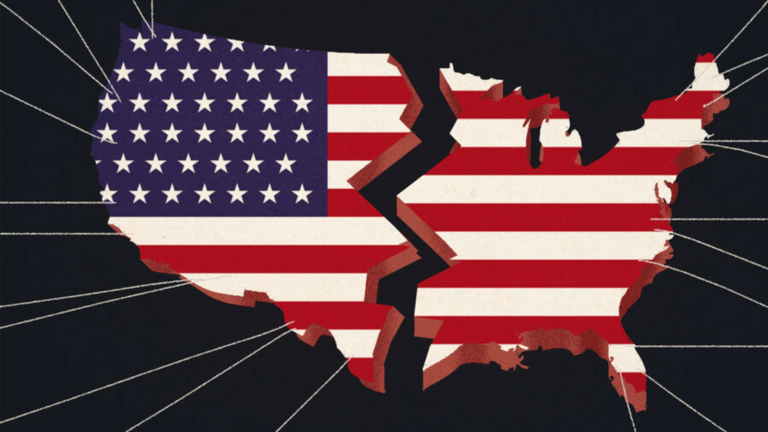
The primary existential threat is not foreign competition but internal balkanization. The nation is splitting into distinct societies with incompatible visions for the future. Whether the United States survives another 250 years as a unified political entity depends on whether any faction can construct a new national promise that convinces enough people to believe in the system again.
Original analysis inspired by Nikolai Gastello from RT. Additional research and verification conducted through multiple sources.