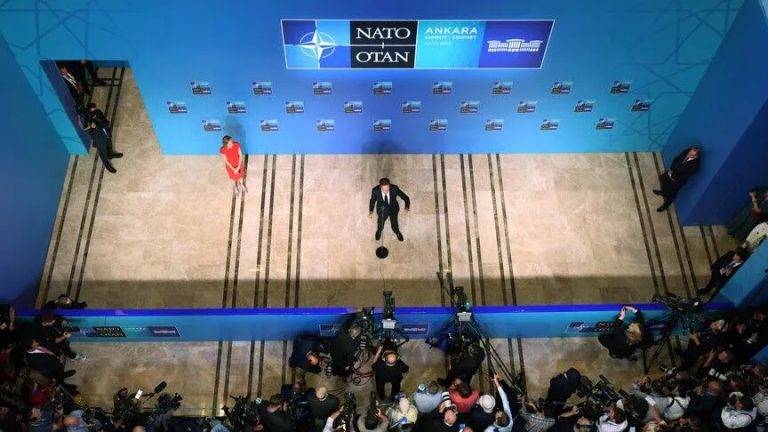
The recent US-Iran war served as a brutal wake-up call for the Arab Gulf states, shattering the long-held illusion that their immense wealth could buy absolute security. For decades, the region’s defense architecture has been built on a foundation of bilateral agreements with the United States, a model that has now revealed its inherent vulnerabilities. As the dust settles, the upcoming NATO summit in Ankara has become a critical juncture, a moment to determine if the Western alliance can evolve from a peripheral partner into a core component of a new Gulf security order.
The traditional security model, where Gulf monarchies acted as clients to a dominant American patron, is under severe strain. While Washington has long designated key partners like Saudi Arabia, Qatar, and the UAE as Major Non-NATO Allies, the recent conflict proved that this status does not confer immunity. The reality is that the region’s security has been “imported,” leaving it dependent on external powers. In response, states like the UAE and Saudi Arabia have been aggressively diversifying their partnerships and investing billions to build domestic defense industries, signaling a clear desire to move beyond sole reliance on Washington.
NATO’s Unfulfilled Promise
NATO’s own engagement in the region has a patchy and underwhelming history. The primary vehicle for this engagement, the Istanbul Cooperation Initiative (ICI), was launched in 2004 to foster security cooperation. However, its progress has been hamstrung from the start. Two of the Gulf’s most significant players, Saudi Arabia and Oman, have remained outside the initiative, a reflection of the deep political fissures that have long plagued the Gulf Cooperation Council (GCC).
This lack of a unified regional approach has meant that less than 15% of proposed NATO-ICI activities have ever been implemented. Recognizing this challenge, NATO shifted its strategy in 2009 toward developing Individual Cooperation Programs (ICPs) with willing nations. This piecemeal approach has seen some success, with the UAE emerging as an enthusiastic partner and Kuwait hosting a regional NATO center. Yet, it underscores a fundamental problem: NATO has been engaging with a collection of individual states, not a cohesive security bloc. This has been further complicated by NATO’s own strategic priorities, which have been overwhelmingly focused on its eastern flank since the war in Ukraine began.
A Path Forward in Ankara?
The Ankara summit offers a chance to reset this relationship. A special session with the four Gulf members of the ICI is on the agenda, providing a forum to address these long-standing issues with a new sense of urgency. The most promising area for tangible progress is maritime security. The recent conflict exposed the extreme vulnerability of shipping in the Strait of Hormuz and the Red Sea, a threat that affects the entire global economy.
NATO possesses extensive experience in maritime operations and could play a crucial role in helping Gulf states institutionalize a more robust, multilateral security architecture for these vital waterways. Supporting the existing, but limited, GCC maritime operations center in Bahrain with NATO expertise and operational frameworks could be a significant first step. Such a move would help transform the current reliance on the US Navy into a more durable, internationally supported deterrence framework. The question now is whether the political will exists on both sides to move from symbolic gestures to substantive burden-sharing. The Ankara summit will provide the first real answer.
Original analysis inspired by Betul Dogan Akkas from Anadolu Agency. Additional research and verification conducted through multiple sources.