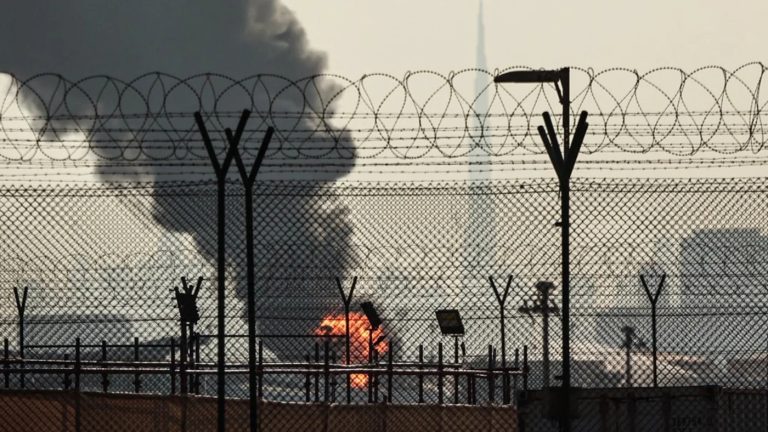
Weeks after a fragile ceasefire took hold, residents across the Gulf still scan the skies with unease. Iranian missiles and drones reached targets from Riyadh to Doha during the recent conflict, disrupting airports, energy facilities, and daily routines in ways few anticipated. For decades, these nations invested heavily in Western alliances precisely to avoid such scenarios, yet the fighting laid bare how quickly those safeguards can unravel when larger powers set the agenda.
The presence of American bases across Qatar, Bahrain, the UAE, Kuwait, and Saudi Arabia had long formed the cornerstone of regional defense thinking. These installations, paired with massive arms deals and diplomatic courtship in Washington, created the perception of an effective deterrent. In practice, they became priority targets once hostilities erupted on February 28, leaving civilian infrastructure and populations exposed as Iranian retaliation intensified.
Gulf officials had lobbied for advance coordination and timely warnings that never fully materialized. As American personnel evacuated key positions, local governments faced the brunt of missile barrages and economic fallout, including disrupted shipping and heightened risk premiums for investors. The asymmetry of the partnership stood out sharply: partners absorbed enormous costs while broader strategic objectives, shaped heavily by the Trump administration, took precedence.
Public discourse reflects deeper frustration. Commentators have noted how Gulf societies often appear in external calculations mainly as strategic assets—sources of energy, hosts for bases, or pieces on a larger geopolitical board—rather than communities with their own legitimate security needs. Extensive soft power initiatives, ranging from cultural exchanges to international events, generated limited solidarity when civilian areas came under direct threat.
All six GCC members experienced strikes, activating defenses in a largely ad hoc manner that highlighted both shared vulnerabilities and differing reflexes. The UAE adopted a more forward-leaning posture alongside Washington, while others like Oman emphasized diplomatic channels. This variety of responses, combined with the strain on air defense munitions and energy infrastructure, has accelerated discussions about practical self-reliance.
Pathways to Greater Autonomy
The shared shock is already prompting fresh thinking on layered security arrangements. Analysts point to opportunities for tighter GCC coordination on missile defense, joint early-warning systems, and resilient infrastructure such as alternative pipelines and rail links that reduce dependence on vulnerable chokepoints. Some states are exploring additional partnerships with European suppliers and Asian powers for technology and training, aiming to diversify without severing core American ties.
As recovery proceeds and a tenuous calm settles, Gulf capitals appear determined to avoid repeating past assumptions. True stability will likely require balancing external relationships with stronger regional mechanisms and domestic resilience measures that place local populations at the center of planning. The recent conflict stripped away comforting myths, leaving policymakers with both the necessity and the opportunity to shape a more autonomous approach suited to the region’s own priorities and realities.
Original analysis inspired by Hind Al Ansari from Middle East Eye. Additional research and verification conducted through multiple sources.