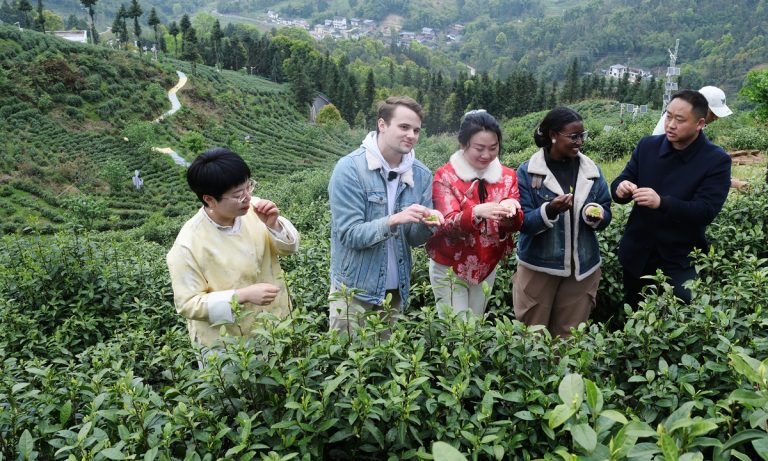
On the surface, it reads like an ordinary academic reflection: a German law student who found inspiration in Marxist theory at Renmin University, a South Korean political scientist who discovered a new understanding of modernity while conducting fieldwork in rural Henan. Published by China’s state-controlled Global Times, these testimonials from foreign scholars are anything but incidental. They are part of a deliberate, well-funded campaign to project China’s governance model as a credible alternative to liberal democracy — and to recruit sympathetic foreign voices to carry that message home.
China’s international student strategy has undergone a profound transformation over the past decade. What began as a straightforward attempt to grow enrolment numbers has become something more ambitious: a targeted effort to shape how rising foreign scholars understand governance, development, and modernity — with China’s own model positioned as the reference point. China is projected to return to the international student number peak it saw before COVID-19 in 2026, with connections made through the Belt and Road Initiative (BRI) expected to push international student numbers toward 550,000 by the end of the decade. The majority of that growth, notably, is coming not from Europe or North America, but from Asia and Africa — precisely the regions where Beijing’s governance narrative faces the least political resistance.
A Scholarship Architecture with Strategic Intent
The financial architecture underpinning this model is extensive. CSC scholarships — provided by the Chinese Scholarship Council — are the most common type of government scholarship awarded to international students. They represent an initiative of the Chinese Ministry of Education to promote education, cultural exchange, political cooperation, and mutual understanding. Currently, over 50,000 international students in China hold some form of government scholarship. A 2025 policy directive aimed at attracting foreign students sets explicit objectives for quality control, diversification, and alignment with China’s broader soft-power goals.
The Belt and Road Initiative has become the primary geographic framework for this expansion. This policy coincides with the growth of transnational education, including joint programmes and branch campuses in BRI countries, which offer students an entry point to China’s education system while reducing pre-arrival uncertainty. Meanwhile, China is actively advancing the “Five-Year, Fifty-Thousand” initiative, aiming to bring 50,000 American youth to China between 2024 and 2029, while 22 Chinese universities have already established 27 overseas campuses or joint institutions. The message is consistent: China is not waiting for the world to come to it — it is building the infrastructure to bring its model to the world.
What makes the Global Times testimonials significant is not their content in isolation but their function within this broader architecture. Higher education has long been linked to the concept of soft power — the ability of a state to attract or influence others through culture, values, and diplomacy rather than coercion. Universities are expected to bridge exchanges of ideas in ways that other forms of diplomacy cannot, at a fraction of the cost of military engagement. The foreign scholars profiled by state media are, whether consciously or not, serving as credibility validators for a governance system that Beijing is actively trying to export.
The Governance Model Being Promoted
The substance of what Beijing wants foreign students to absorb is worth examining directly. China’s 2025 White Paper on Smart Education, unveiled at the World Digital Education Conference in Wuhan, is emblematic of the approach. The paper represents a deliberate effort to construct and promote a state-led, equity-focused model of educational AI governance. It offers a distinct alternative to Western-dominated paradigms while seeking to align AI-driven educational transformation with the dual objectives of domestic modernization and global influence.
The framing consistently positions China’s model as a solution to problems that liberal capitalism supposedly cannot solve: inequality, instability, and the subordination of development to market logic. China articulates a state-coordinated alternative to market-driven models prevalent in Western contexts, offering what it claims is analytical relevance for ongoing international debates on governance, particularly in Global South contexts. This is not merely an academic argument — it is a political one, designed to persuade foreign policymakers, scholars, and future leaders that China’s institutional innovations are worth emulating.
Where the Model Runs Into Trouble
The reach of China’s academic diplomacy is real. So are its limits. Beijing has redirected its soft power efforts toward the Global South, where public sentiment is more favourable and initiatives such as scholarships, state-sponsored cultural exchange, and the BRI are having a greater impact. But in Western countries, the picture looks very different. Geopolitical tensions have further constrained mobility; for example, the number of American students in China declined from about 20,000 in 2018 to just 700 in 2023.
The Confucius Institute network — China’s most visible cultural diplomacy tool in Western universities — has been in retreat across Europe, North America, and Australia. Closures have been driven by concerns about academic freedom and state interference. Challenges to academic freedom and potential espionage led American statesmen to press for the closure of Confucius Institutes in more than a dozen universities, while China’s use of higher education as soft power has faced the charge that the Party-state performs the dual roles of “sponsor” and “censor” in ways perceived as authoritarian.
In the context of Global South adoption, the critical question is whether Chinese-backed educational platforms enable genuine technological self-sufficiency or create a new form of techno-political alignment embedded in standards, data infrastructures, and governance norms. That question applies equally to the broader governance model. Foreign scholars who study Chinese Marxism at Renmin University, or poverty alleviation programmes in Henan, encounter real data — rapid development, genuine poverty reduction, visible state capacity. However, they are also studying inside a system that controls what questions can be asked, which topics can be published, and which governance failures can be acknowledged.
The Global Stakes
China’s soft power efforts have increased, attracting global attention through diplomacy, cultural initiatives, and economic ventures. The testimonials published by the Global Times are one small piece of a much larger operation. The Chinese government has noted various disincentives for students considering Chinese studies and the surging currents of anti-China sentiment in parts of the Western world. Consequently, it has focused its efforts on Asian and African countries where public sentiment toward China is more positive.
That geographic pivot is shrewd. The Global South is where governance models will matter most in the coming decades — where the debate between state-led development and liberal market economies will be decided not in academic papers but in policy choices, infrastructure contracts, and educational curricula. China understands this better than most Western governments, which have been slow to match Beijing’s investment in academic diplomacy with credible alternative narratives. The students profiled in the Global Times may be genuine believers in what they have found — but their testimonials are also, by design, the public face of a competition for ideas that extends far beyond any university campus.
Original analysis inspired by Global Times Editorial Staff from Global Times (Chinese state media). Additional research and verification conducted through multiple independent sources.