Crude oil fell roughly 13% the day the ceasefire was announced. Markets celebrated. The relief was understandable and, in some narrow sense, justified — the worst-case scenario of a complete, permanent destruction of Gulf energy infrastructure had been avoided. But despite a tenuous, Pakistani-brokered ceasefire aimed at halting the direct kinetic exchange between Washington and Tehran, energy markets have refused to retreat to pre-conflict levels, with WTI crude continuing to trade stubbornly above $100 per barrel, reflecting a market that is pricing in a permanent war premium rather than a return to normalcy. The guns have paused. The economic damage has not.
The 2026 Iran war, including the closure of the Strait of Hormuz, has led to what the International Energy Agency has characterized as the largest supply disruption in the history of the global oil market, echoing the 1970s energy crisis through acute supply shortages, currency volatility, inflation, and heightened risks of stagflation and recession. That comparison is not rhetorical: the outbreak of the 2026 Iran War is the largest geopolitical oil supply disruption in history — between two and three times as large as the largest previous geopolitical oil supply disruptions in 1973 and 1979.
The Strait Is Still Not Open
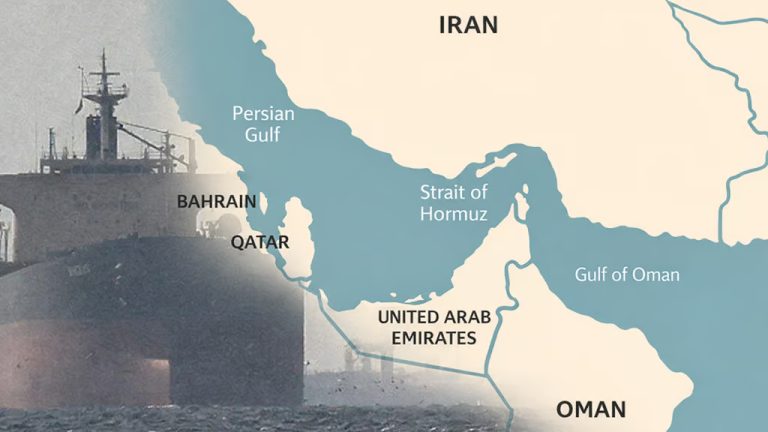
Three days after the ceasefire was announced, the reopening of the Strait of Hormuz was not happening, and without a reopening, the shock to the global energy system will deepen and affect the global economy. RSM US chief economist Joe Brusuelas noted that confidence-building measures in coming days are going to be key to restoring shipments, adding that insurance for tankers will need to be reestablished — and that means figuring out the specific conditions Iran may impose, which remain murky.
Those conditions are the problem. Shipping insurers, charterers, and operators are likely to remain cautious, meaning commercial normalization may lag political agreements — and traffic through the strait remains virtually zero. Shipping companies and independent tanker operators are facing insurance premiums that have skyrocketed by over 400%. War-risk coverage was cancelled when the IRGC declared the strait closed, and war risk insurance covers losses caused by war and terrorism, which are explicitly excluded from standard marine policies — and in practice, ocean-going commercial ships do not sail without insurance, making marine insurance a central pillar of global shipping.
Even if ships can technically transit, the economics may still make it unviable. The issue is not only whether Iran can formally close the strait in a legal sense — it is whether Hormuz can become commercially unusable. A soft closure can inflict much of the same damage as a declared blockade: if shipowners face congestion, repeated identification demands, electronic interference, drone and missile risks, and uncertain insurance conditions, many will stop sailing before any official closure is announced.
The Price Trajectory Nobody Wants to Acknowledge
The ceasefire market rally obscures a deeply uncomfortable arithmetic. Energy and commodity markets are likely to remain on a structurally higher floor regardless of the ceasefire outcome, as governments hoard and restock in anticipation of renewed conflict, keeping oil and gas prices elevated well above pre-war levels even in a scenario where shipping resumes.
The Dallas Fed’s modelling is stark: a cessation of oil exports from the Persian Gulf lasting one quarter would raise the average WTI price to $110 per barrel; an outage lasting two quarters would cause WTI to peak at $132 per barrel in July 2026, and a three-quarter outage would push it to $167 by October 2026. If Brent averages $100 per barrel in 2026, global economic growth would slow to 1.7%, down from pre-war forecasts of 2.5%; in the case of $200 oil, a global recession is inevitable.
The damage already done to Gulf LNG infrastructure compounds the timeline problem. Parts of the world’s biggest LNG plant have sustained missile damage, which owner QatarEnergy warned will take up to five years to repair. Brusuelas predicts it will take three to six months to fully reach pre-war levels of regional production and refining — while damage to liquefied natural gas exporting infrastructure in Qatar may take years to fully repair.
The Gulf Is Not a Single Economy — And the War Proved It
Arab states of the Persian Gulf as well as Iran itself rely on the Strait of Hormuz for their energy exports and grocery imports, with only Saudi Arabia and the UAE having alternative, albeit limited, routes — and the war has caused a systemic collapse of the Gulf Cooperation Council economic model.
The food dimension has received far less coverage than oil prices, but its consequences may be equally severe. The maritime blockade triggered a concurrent grocery supply emergency across GCC states, which rely on the strait for over 80% of their caloric intake — by mid-March, 70% of the region’s food imports were disrupted, forcing retailers to airlift staples, resulting in a 40–120% spike in consumer prices. The Gulf region also produces nearly half of the world’s urea and 30% of ammonia, with about one-third of the world’s fertilizer passing through the strait — urea prices increased 50% since the start of the war. Unlike oil, the fertilizer sector does not have internationally coordinated strategic reserves, making supply disruptions far harder to manage.
Iran’s New Strategic Asset
The single most important economic legacy of the conflict may not be the damage Iran suffered. It may be the instrument Iran discovered. The current inability to unilaterally stop the Tehran Tolls suggests a shift toward a more fragmented maritime order — one in which Iran has established, in practice if not in law, a degree of sovereignty over the most important energy chokepoint on the planet.
Iran is reportedly finalizing a joint maritime protocol with Oman to institutionalize coordinated management of tanker traffic through the strait, which could embed Iranian authority over the crucial energy artery into a standing bilateral agreement. That formalization would convert what began as a wartime tactic into a permanent feature of the global energy architecture — and it would give Tehran leverage in every future negotiation, not just the current one.
This has massive policy implications for the Federal Reserve, which had previously been signaling interest rate cuts for the summer of 2026 — plans that are now on ice, with FOMC minutes suggesting that hikes may be back on the table to combat the long tail of energy-led inflation. The European Central Bank has warned that a prolonged conflict will likely trigger a period of stagflation and push major energy-dependent economies, including Germany and Italy, into technical recession by the end of 2026.
The ceasefire gives negotiators two weeks to resolve disputes that have been building for decades. The oil market is watching — not with hope, but with the cold logic of risk pricing. Recovery will depend not on declarations, but on sustained, observable change in transit behavior, enforcement, and risk conditions, Windward analysts noted. Declarations are what Islamabad can produce. Observable change is a much harder thing to manufacture in two weeks.
Original analysis inspired by Doron Peskin from Ynet News. Additional research and verification conducted through multiple sources.