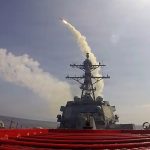
Less than two hours before Trump’s self-imposed deadline to launch “the most powerful bombs ever made” against Iranian civilian infrastructure, a deal arrived — from Islamabad. The US and Iran reached a ceasefire deal on Tuesday, less than two hours before the deadline President Trump imposed for Iran to meet his demands or else face wide-scale destruction. The agreement, brokered by Pakistan, stopped forty days of US-Israeli strikes on Iran and pulled the region back from an abyss it had been staring into since late February. But the relief in global markets and foreign ministries should not be mistaken for resolution. What was agreed on Tuesday is a pause, with almost every fundamental question still unanswered.
A two-week ceasefire has halted 40 days of US-Israeli attacks on Iran that had pushed the region to the brink of a wider war, following fierce exchanges of air strikes, missile attacks and threats that saw unprecedented strikes on Gulf nations, disrupted global shipping routes and heightened fears of a prolonged confrontation. Oil prices plunged after Trump announced the suspension, with US crude sliding 8% to around $103 per barrel, after having traded as high as $117 earlier that day. The market reaction captures both the scale of relief and the scale of damage the preceding weeks had already done.
What Each Side Actually Agreed To
The terms are straightforward on the surface, contested underneath. Trump said the US and Israel would suspend bombing Iran for two weeks, subject to Iran following through on its commitment to reopen the Strait of Hormuz for safe passage during the ceasefire period. Iran’s Foreign Minister Araghchi said safe passage through the Strait of Hormuz would be possible in coordination with Iran’s Armed Forces, and that the decision was taken in light of Trump’s acceptance “of the general framework of Iran’s 10-point proposal as a basis for negotiations.”
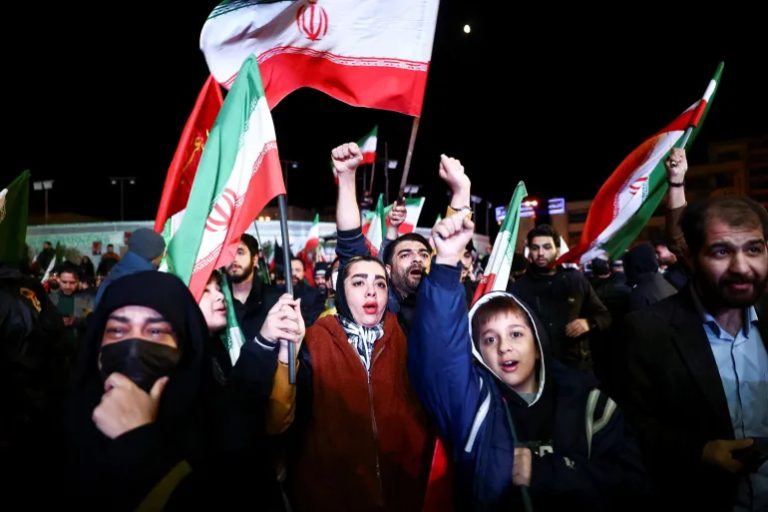
That phrase — “general framework as a basis” — is doing enormous work. Ending the war will depend on the US accepting the demands Iran outlined in a 10-point statement given to the US via Pakistan, and Iran’s Supreme National Security Council emphasized: “This does not mean the end of the war, and Iran will only accept the end of the war when, in addition to accepting the principles outlined in the 10-point plan, the details are finalized in negotiations.” Tehran’s statement celebrated the truce as a victory, not a concession. Iran’s Supreme National Security Council declared: “We convey glad tidings to the great nation of Iran that nearly all of the war’s objectives have been achieved, and your valiant sons have driven the enemy into a state of historic helplessness and enduring defeat.”
Washington’s framing was the mirror image. The White House insisted: “President Trump and our powerful military got Iran to agree to reopening the Strait of Hormuz, and negotiations will continue.” Trump told Sky News that Iran’s publicly released 10-point plan was not the same document actually under negotiation and that “most of them have been fully negotiated.” Neither side is telling quite the same story — which is precisely why the Islamabad talks carry so much weight.
Tehran’s Ten Points and Washington’s Silence
Iran’s 10-point proposal, leaked to Al Jazeera through diplomatic channels, contains demands that Washington has not publicly acknowledged, let alone accepted. According to Iran’s National Security Council, the proposal calls for Iranian dominance and oversight of the Strait of Hormuz — granting it “a unique economic and geopolitical position” — as well as the withdrawal of all US combat forces from bases in the Middle East. The plan also demands the lifting of all primary and secondary sanctions, the release of all frozen Iranian assets, full compensation for war damages funded through transit tolls on the strait, and binding ratification of the entire arrangement through a UN Security Council resolution.
Iran did not define what it meant by “combat forces,” potentially giving wiggle room for those bases to remain — but any step-down in troop levels in the region would likely anger the Gulf Arab states that have suffered through weeks of war. The missile issue is equally fraught: senior Iranian regime figures have repeatedly voiced their reluctance to trust the US in negotiations, pointing out that Iran had been attacked while it was negotiating with Washington when the war began.
Pakistan’s Unexpected Role
The country that made Tuesday’s deal possible was not a great power. Pakistan has positioned itself as a peace broker, leveraging its stable ties with Tehran and Washington. It shares a long border and cultural and religious ties with Iran, and is home to the largest population of Shia Muslims outside of that country. Unlike Gulf states, it does not host any US military bases, and has not been targeted by Iranian missiles and drones — making it a credible neutral venue in a region where almost every other country has been drawn into the conflict on one side or another.
Vice President Vance is likely to lead the US delegation in Islamabad, a signal of the seriousness Washington is attaching to the talks. But Netanyahu, along with the leaders of Saudi Arabia and the UAE, and political allies like Senator Lindsey Graham, had urged Trump to reject any proposal unless Iran made major concessions — a reminder that the political coalition behind the war is far from united behind a negotiated exit.
The Lebanon Fault Line
One of the most immediate contradictions in the ceasefire concerns Lebanon. Pakistan’s prime minister said the ceasefire would take effect immediately and includes “Lebanon and elsewhere.” Yet Netanyahu’s office said the ceasefire doesn’t include Lebanon, despite Pakistan’s claim to the contrary. Hezbollah had entered the war in retaliation for Israel’s killing of Ayatollah Khamenei on February 28, as well as Israel’s near-daily violations of a November 2024 ceasefire. At least 1,497 people have been killed since the war erupted, including 57 health workers.
The world has broadly welcomed the pause. French President Macron described the ceasefire as “a very good thing,” while German leadership hailed it and thanked Pakistan for its mediating role, calling on both sides to negotiate a “lasting end to war” through diplomatic channels. Russia, meanwhile, said the approach of “a one-track, aggressive, unprovoked attack” against Iran had suffered a “crushing defeat.”
The ceasefire is real, and the relief it brings to energy markets and civilian populations across the region is real too. But Iran’s Supreme National Security Council was unambiguous in its statement: “It is emphasized that this does not signify the termination of the war.” The council added: “Our hands remain upon the trigger, and should the slightest error be committed by the enemy, it shall be met with full force.” The Islamabad talks beginning Friday will test whether two sides with incompatible victory narratives can find enough common ground to make this pause permanent — or whether the guns simply resume in two weeks.
Original analysis inspired by Usaid Siddiqui from Al Jazeera. Additional research and verification conducted through multiple sources.