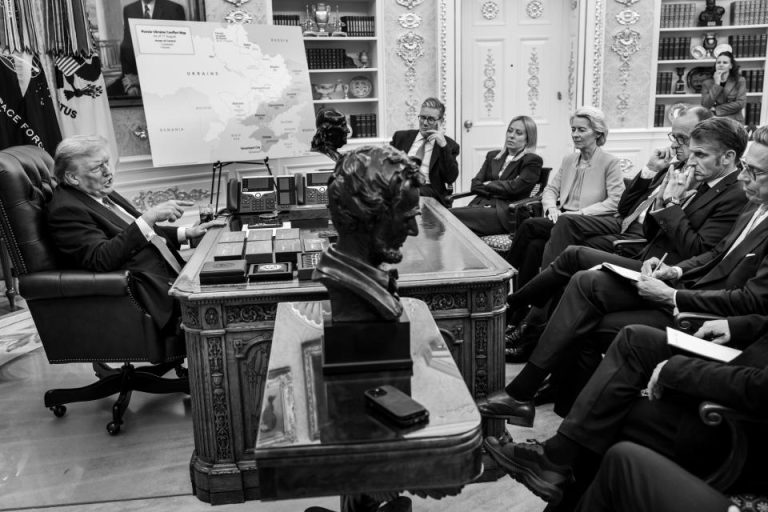
The aggressive transformation of Washington’s foreign policy has fundamentally altered transatlantic relations. By weaponizing long-standing security and economic dependencies, the current US administration extracts unprecedented concessions from its traditional allies. This transactional pressure, characterized by explicit diplomatic extortion, is forcing European capitals to urgently reassess their geopolitical vulnerabilities and fast-track their independence.
The most striking example of this coercive approach materialized during the recent diplomatic standoff over Arctic territory. In early 2026, the Oval Office threatened to impose 10 percent blanket tariffs on several European nations unless Denmark surrendered sovereignty over Greenland. When allied nations dispatched military personnel for routine northern security exercises, Washington immediately retaliated with promises of severe economic penalties. Although the White House later softened its immediate trade threats at a global summit, the incident demonstrated a willingness to leverage the massive American consumer market to achieve unrelated territorial ambitions.
This transactional strategy systematically links separate policy domains to maximize leverage. American negotiators frequently use the umbrella of the NATO alliance as a bargaining chip to extract favorable regulatory environments and massive procurement contracts. By threatening to withdraw security guarantees or restrict access to crucial supply chains, Washington leaves European governments with few immediate alternatives. Consequently, member states find themselves forced into lopsided bilateral agreements that prioritize American commercial interests over equitable partnership.
Redefining Transatlantic Security
In response to this coercive environment, the continent is rapidly accelerating its push for genuine strategic autonomy. Policymakers recognize that true sovereignty requires a fully integrated, self-sufficient defense industrial base capable of operating without transatlantic reliance. Initiatives aimed at pooling defense procurement and expanding local manufacturing capabilities are gaining unprecedented political traction across member states. Rather than simply increasing military budgets to satisfy foreign demands, leaders are actively directing investments toward domestic innovation and continental supply networks.
To further insulate themselves from unpredictable executive actions, European diplomats are actively diversifying their international partnerships. Building stronger economic ties with other global democratic powers helps dilute the impact of potential future trade barriers originating from North America. Simultaneously, foreign ministries are deepening direct engagement with the US Congress, attempting to bypass the increasingly transactional nature of the Oval Office.
The transatlantic alliance will likely never return to its previous state of unconditional trust. While short-term vulnerabilities remain, the heavy-handed tactics employed by Washington have provided the necessary catalyst for a more independent, self-reliant Europe. As governments build the infrastructure required to deter external coercion, the fundamental mechanics of western diplomacy are shifting toward a more balanced, albeit fractured, multipolar reality.
Original analysis inspired by Rem Korteweg and Diederick van Wijk from Clingendael Institute. Additional research and verification conducted through multiple sources.