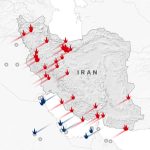
The U.S. military has done almost everything right in Iran by conventional tactical metrics. Roughly 90% of Iran’s declared missile capacity has been destroyed. Iranian offensive launches against American targets have dropped sharply since the campaign’s opening weeks. Naval and air supremacy over Iranian territory has been established and maintained. Defense Secretary Pete Hegseth describes the results as “decisive” and “devastating,” and on the narrow question of battlefield performance, he is not wrong.
None of that is the same as winning.
Retired Army Colonel Pete Mansoor, a professor of military history at Ohio State University who served as executive officer to General David Petraeus during the Iraq War, reaches for a story that has circulated in American military academies for decades. At the Paris Peace Accords, a U.S. colonel told his North Vietnamese counterpart: “You know, we never lost a battle.” The Vietnamese colonel replied: “Well, that may be true, but it is also irrelevant.” The exchange, drawn from Colonel Harry Summers’ analysis of Vietnam strategy, has become a touchstone for exactly the situation now unfolding in the Persian Gulf. “We’re winning tactically and operationally,” says Mansoor. “But strategically, I’m not so sure.”
One Card, Played Well
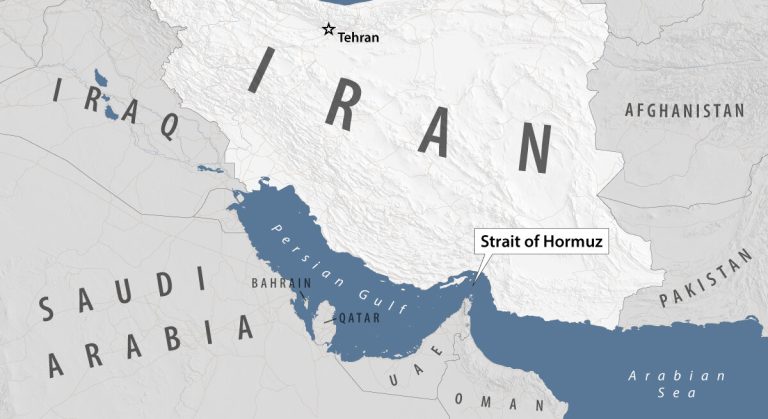
Iran entered this war with its nuclear capabilities already severely degraded by last year’s 12-day Israeli campaign. Its conventional military has been systematically dismantled over four weeks of American and Israeli strikes. By almost any traditional measure of military power, Iran should have been neutralized. Instead, it retains the one asymmetric asset that has made every other variable secondary: control of the Strait of Hormuz.
Iran has laid mines, launched precision strikes on roughly 20 vessels, and created enough threat environment that commercial insurers have effectively withdrawn coverage for Gulf shipping — a result that required neither a large fleet nor advanced technology. “It didn’t really hit a lot of ships, but it hit enough of them,” Mansoor notes. The Hormuz strategy didn’t need to be militarily overwhelming. It needed to be economically unbearable, and it has been.
Retired Colonel Mark Cancian, a defense analyst at the Center for Strategic and International Studies, draws the comparison directly: “Iran has done to the U.S. what the Ukrainians did to the Russians in the Black Sea.” Ukraine, without a navy, used drone boats and missile attacks to disable roughly a third of Russia’s Black Sea fleet and deny Russia the waterway it expected to dominate. Iran has replicated that playbook at scale, using a combination of mines, anti-ship missiles, and drone attacks to close a waterway far more consequential to global energy markets than the Black Sea ever was.
What Victory Would Actually Require
There are two plausible definitions of an American win in Iran, and both carry serious costs:
Unconditional Reopening: Getting Iran to unconditionally reopen the strait. The problem is that the strait is Iran’s last source of strategic leverage; surrendering it without concessions on sanctions or security guarantees is a move no Iranian government could survive politically.
Regime Change: Virtually every serious military analyst agrees this requires ground troops, sustained occupation, and a post-war political plan that does not currently exist.
The history of air power as a tool of political transformation is not encouraging. T.R. Fehrenbach’s “This Kind of War,” a foundational text at U.S. military academies, is direct: you can bomb a country into rubble, but to change who governs it, you must do it “on the ground… by putting your young men into the mud.”
The 82nd Airborne deployment now being finalized — roughly 3,000 paratroopers capable of reaching the region within 18 hours — suggests the administration is at minimum preserving that option. However, paratroopers are rapid-reaction forces built for seizure, not long-term occupation.
Trump has announced talks with Tehran and suggested a deal is close. Iran has denied any negotiations are occurring. The U.S., facing midterm elections in November, rising fuel prices, and a military stretched thin, has far less tolerance for a “survivable but costly” stalemate than Tehran. The Vietnamese colonel’s observation from Paris was not a boast; it was a strategic assessment that deserves the same seriousness today.
Original analysis inspired by Anna Mulrine Grobe from The Christian Science Monitor. Additional research and verification conducted through multiple sources.