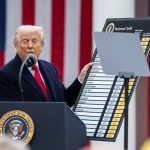
Donald Trump described his Iranian adversaries on March 7 as “very smart players — high, very high-IQ people.” It was an unusual concession for a president who has spent four weeks insisting victory is already secured. But the candor was revealing. Acknowledging the caliber of your opponent while simultaneously reviving a peace proposal that opponent already rejected a year ago suggests something more than strategic confidence. It suggests a search for an exit.
The 15-point plan delivered through Pakistani intermediaries — offering full sanctions relief in exchange for nuclear dismantlement, missile caps, and severance from Iran’s proxy network — is a rehashed framework from May 2025. Tehran examined it then, dismissed it as coercive, and moved on. Reintroducing it now, from a position of diminishing international support and rising economic strain, reinforces Iran’s public framing: Washington is “negotiating with itself.”
The Legitimacy Problem No Military Strike Can Fix
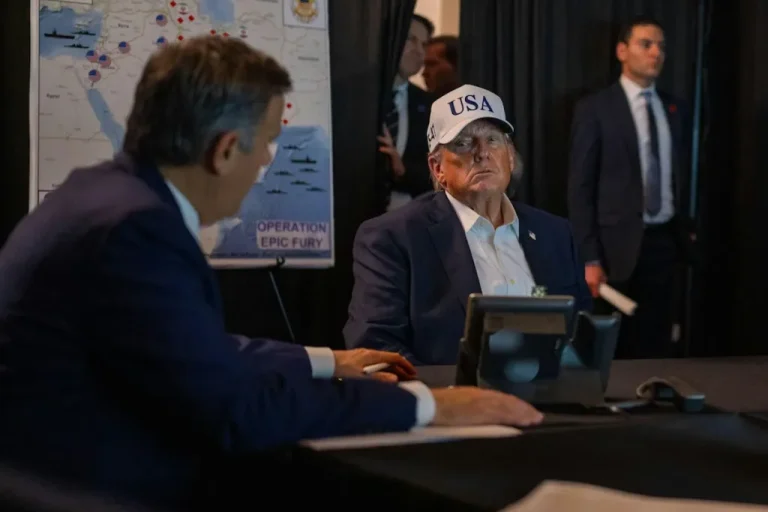
The war, dubbed Operation Epic Fury, was launched on February 28 without UN authorization and without a congressional declaration. The justification for the conflict effectively collapsed in real time when Joe Kent, Director of the National Counterterrorism Center, resigned on March 17. In a scathing resignation letter, Kent stated that Iran “posed no imminent threat” and that the administration was deceived by a “misinformation campaign.”
These are not peripheral concerns. Legitimacy is a strategic asset. The U.S. has spent that asset at an accelerating rate: first in Gaza, and now in Iran, where reports of civilian casualties have deepened international alienation. While the U.S. claims to have killed the former Supreme Leader and dismantled 90% of Iran’s ballistic missile capacity, the strategic cost is mounting.
Asymmetric Logic: Winning by Not Losing
Iran does not need to defeat the United States militarily. The logic of asymmetric conflict is straightforward: the weaker power wins by not losing. On that measure, the first month has gone better for Tehran than Washington anticipated.
Maritime Chokehold: Iran has effectively closed the Strait of Hormuz to U.S.-linked shipping, sending Brent crude prices surging past $110 per barrel (peaking at $126).
Ammunition Depletion: The U.S. has burned through over 6,000 munitions in 16 days. Estimates suggest that at this rate, critical stockpiles of ATACMS and PrSMs could be depleted within a month, leaving the U.S. vulnerable in other theaters like Taiwan.
Political Cohesion: Rather than fracturing, the Iranian regime has consolidated under a new hardline leadership. The appointment of Mohammad Bagher Zolghadr, a veteran IRGC commander, to lead the Supreme National Security Council signals a move toward “managed confrontation” rather than compromise.
The Costs Are Not Waiting for a Peace Deal
For Gulf states, the assumption that American military power guarantees security is under active revision. Goldman Sachs projects GDP contractions of up to 14% for Qatar and Kuwait this year. Abu Dhabi’s market capitalization has shrunk by more than $77 billion since hostilities began.
The U.S. may be “winning” on the battlefield — sinking over 30 Iranian navy ships and obliterating enrichment sites — but it is losing the broader strategic contest. The reintroduction of a rejected peace plan, the mobilization of 2,000 paratroopers for a potential ground invasion of Kharg Island, and the search for a credible negotiating channel are not signs of a strategy in control. They are signs of a strategy looking for a door. Iran, for now, holds the key.
Original analysis inspired by Bamo Nouri and Inderjeet Parmar from Asia Times. Additional research and verification conducted through multiple sources.