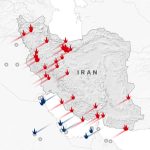
Three weeks into a war it did not start, Iran is attempting to turn the Strait of Hormuz from a vulnerability into a weapon — not just militarily, but legally. Tehran is drafting legislation to impose transit fees on ships passing through the strait, while a senior adviser to Supreme Leader Mojtaba Khamenei declared that the war must end with “a new regime” for the waterway that would transform Iran “from a sanctioned country to an enhanced power in the region and the world.”
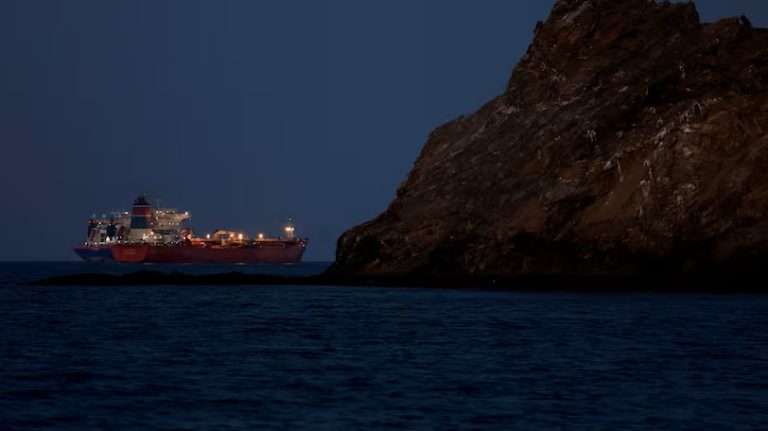
The proposals, reported Thursday by Iranian state media, represent Tehran’s most ambitious attempt yet to convert its geographic leverage into permanent strategic advantage. If implemented, they would challenge the foundational principle of modern maritime law — freedom of navigation through international straits — and reshape the economics of global energy transport at a chokepoint through which roughly 20% of the world’s oil and a quarter of its liquefied natural gas normally flows.
What Iran Is Proposing
The initiative has two components. First, Iran’s parliament is considering legislation to levy tolls and taxes on countries whose ships use the strait, according to the Iranian Students’ News Agency. The fees would function as what Mohammad Mokhber, a senior adviser to the supreme leader, explicitly described as sanctions in reverse — targeting “those domination-seeking arrogant powers” that have sanctioned Iran for decades.
Second, and more consequentially, Mokhber outlined a vision for a post-war “new regime” governing the strait. “So far, the domination-seeking powers would sanction and limit us,” he said. “But at the end of the current imposed war, with drawing a new regime for the Strait of Hormuz, Iran will turn its position from a sanctioned country to an enhanced power.”
The language is deliberate. “Regime” in international law refers to the framework of rules governing a particular domain — in this case, the legal status of the strait under the UN Convention on the Law of the Sea. Iran is signaling that it intends to renegotiate the terms under which the world’s most important energy corridor operates.
What International Law Actually Says
The Strait of Hormuz is governed by Part III of the UN Convention on the Law of the Sea, which establishes the right of “transit passage” through straits used for international navigation. Under this framework, all ships — including warships and commercial vessels — enjoy the right of continuous and expeditious passage. States bordering the strait may regulate traffic for safety and environmental purposes, but they cannot suspend, impede, or tax transit passage.
Iran signed UNCLOS in 1982 but has never ratified it — a legal ambiguity Tehran has occasionally exploited. Even so, the right of transit passage through international straits is widely considered to reflect customary international law, binding on all states regardless of treaty membership. Imposing transit fees would directly contradict these norms and set a precedent that could be replicated at other chokepoints — from the Strait of Malacca to the Turkish Straits to the Suez Canal.
Legal scholars at the Stockton Center for International Law have previously warned that any attempt to impose tolls on transit passage would constitute a violation of established maritime norms and could justify countermeasures under international law. But enforcement is the crux: with the strait already effectively closed and the US Navy unable to guarantee safe passage, the gap between legal rights and physical reality has never been wider.
The Economics of Chokepoint Control
Iran’s gambit is not as fantastical as it may sound. The country controls the strait’s northern shore and the islands of Abu Musa and the Tunbs — disputed territories that give it tactical dominance over the narrowest sections of the waterway. Before the war, approximately 21 million barrels of oil and petroleum products transited the strait daily. At even a modest fee of $1 per barrel, Iran would generate over $7 billion annually — more than enough to offset a significant portion of lost oil revenue from sanctions.
The real leverage, however, is not financial but political. By framing transit fees as Iran’s own sanctions regime, Tehran is attempting to invert the power dynamic that has defined its relationship with the West for four decades. The message to Gulf states, Asian importers, and European consumers is clear: the country you tried to isolate now controls the corridor your economies depend on, and passage will come on its terms.
ADNOC CEO Sultan al-Jaber called Iran’s attacks on Gulf energy sites “acts of global economic warfare” — a characterization that applies equally to the proposed transit fees. Rachel Ziemba of the Center for a New American Security warned before the war that any sustained disruption to Hormuz traffic would “restructure global energy trade patterns for a generation.” Iran appears to be positioning itself to do exactly that — not as a temporary wartime measure, but as a permanent feature of the post-war order.
Europe Says No to Trump’s Naval Demand
The proposals landed as European leaders gathered in Brussels on Thursday and collectively rejected Trump’s pressure to send warships to help reopen the strait. EU leaders agreed to extend the mandate and operational area of the European naval force currently operating in the Red Sea to cover the Gulf of Oman but stopped short of deploying forces into the strait itself. French President Macron insisted the mission would be “strictly defensive” and would not constitute participation in the US-Israeli war.
Britain’s Starmer reiterated that the UK “will not be drawn into the wider war” and offered only mine-hunting drones already deployed in the region. Germany’s foreign minister said the strait could only be reopened through negotiation, not force. Japan and Australia repeated that they had no plans to participate.
The refusals leave Washington increasingly isolated. The only country to signal potential willingness to join a multinational escort force is the UAE — and even Abu Dhabi’s offer came with conditions. The US Navy says escort operations could begin by the end of March, but military analysts warn that mine countermeasures alone could take weeks, and that sustained convoy operations would stretch an already overextended fleet beyond its capacity.
What Comes After
Iran’s proposals may never be implemented. They may be bargaining chips for eventual negotiations, or propaganda designed to rally domestic support during wartime. But they reveal something about Tehran’s strategic thinking that Washington appears not to have anticipated: Iran is planning for the post-war order, not just the war itself.
If the Islamic Republic survives this conflict — and its institutional design, as multiple analysts have argued, was built precisely for this kind of crisis — it will emerge with a demonstrated ability to shut down global energy markets at will. The question of who controls the strait, and on what terms, will be at the center of any ceasefire negotiation. Iran is staking its claim now.
Crude prices remained elevated Thursday, with Brent hovering near $105. The strait has been effectively shut for three weeks. The IEA has declared the disruption “the largest in the history of the global oil market.” And Iran — battered, bombed, and besieged — is writing legislation to tax the ships that can’t get through. In the grammar of asymmetric warfare, it is a sentence that reads: you may have the bombs, but we have the geography. And geography doesn’t run out of ammunition.
Original analysis inspired by The National News Staff from The National. Additional research and verification conducted through multiple sources.