Tag: Nuclear Negotiations

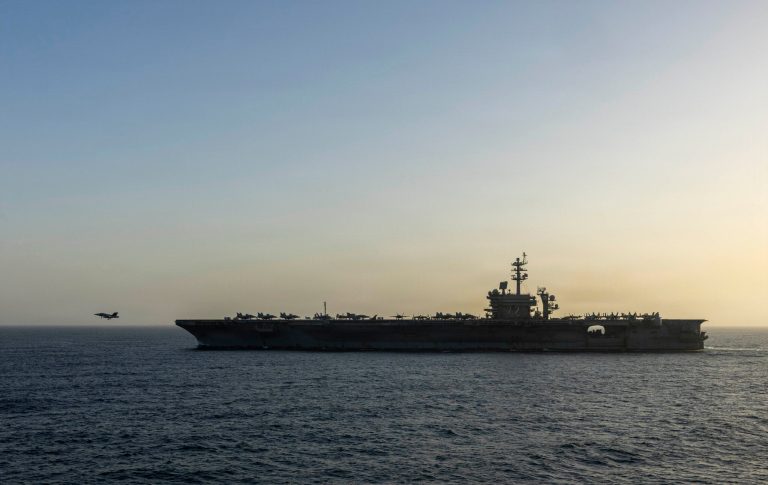
U.S. Navy fighter jets, including F/A-18 Super Hornets and E-2 Hawkeyes, crowded on the flight deck of an aircraft carrier.

US vs. Iran: Three Strike Options as Diplomacy Stalls

A massive U.S. buildup has positioned two carrier groups and stealth bombers for strikes on Iran. Washington is weighing three options: regime‑targeted attacks, strikes on nuclear sites, or an economic‑military squeeze. Tehran signals it will retaliate through missiles and its regional proxy network. With diplomacy stalled, the risk of rapid escalation is rising.

Read More »
A side-by-side portrait of Xi Jinping on the left in front of a red and gold flag, and Ali Khamenei on the right with his hands raised in prayer, separated by a thin white vertical line.

Beijing’s Calculus in the US-Iran Standoff

Beijing views the US‑Iran standoff as both a threat to its energy security and an opportunity to portray Washington as unstable. China sees Trump’s shifting deadlines, dual‑carrier deployments, and stalled diplomacy as politically driven escalation. With Iran reliant on Chinese oil purchases, Beijing expects prolonged tension that drains US focus without triggering a regional war that disrupts Chinese trade.

Read More »
A triptych image featuring three U.S. Presidents: Donald Trump on the left holding a telephone, George W. Bush in the center speaking, and Bill Clinton on the right speaking behind microphones.

America’s Iran Buildup: A 30-Year Pattern of Strategic Failure

The U.S. has deployed its largest force near Iran since 2003, but Washington lacks a clear objective. Trump’s shifting demands, stalled diplomacy, and massive military buildup create momentum toward conflict. After decades of failed interventions, Iran’s hardened defenses and great‑power involvement raise the risk of escalation. The core question remains unanswered: what happens after the strikes?

Read More »
A conceptual digital illustration of a gray world map background with two large puzzle pieces in the center; the left puzzle piece displays the blue flag and yellow stars of the European Union, and the right piece displays the stars and stripes of the United States flag.

US and EU in the Middle East: Allies With Different Playbooks

Washington and Brussels still share the same core goals in the Middle East: prevent nuclear proliferation, avoid regional war, stabilize energy flows, and suppress jihadist networks. But they now pursue those goals with different playbooks, shaped by diverging political cultures, institutional habits, and strategic priorities.

Read More »
A close-up portrait of Donald Trump raising a clenched fist, wearing a dark coat and a bright red tie, with a blurred American flag featuring red and white stripes in the background.

The Negotiation Asymmetry: Can Iran’s Concessions Match the Scope of American Demands

U.S.–Iran talks are unfolding under extreme imbalance. Washington negotiates with overwhelming military and economic leverage; Tehran negotiates under domestic strain, regional setbacks, and limited great‑power backing. But asymmetry does not guarantee capitulation. It creates a narrow, unstable space where both sides must decide whether compromise or confrontation better protects their core interests.

Read More »