Tag: Hamas

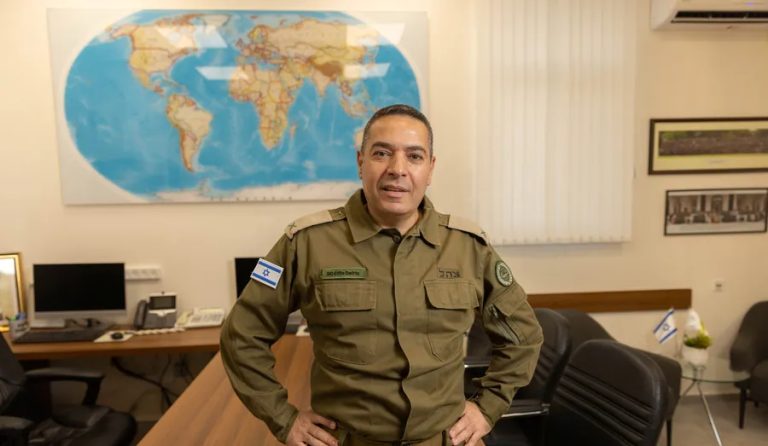
An Israeli military official in uniform standing in an office in front of a world map.

Israel’s Military PR Machine Is Breaking Down Where It Matters Most

This article examines the breakdown of the IDF Spokesperson’s Unit under Brigadier General Effie Defrin. By analyzing the decline in military transparency, the misuse of media controls, and the shift in international public opinion, we assess how retreating from difficult truths is undermining the credibility of Israel’s strategic communications.
Read More »
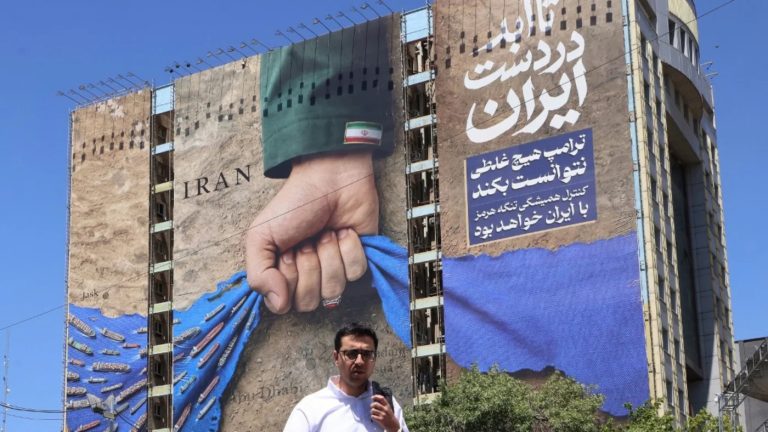
A man holding a microphone in front of a massive building mural depicting a fist gripping the Strait of Hormuz and maritime shipping lanes.

Iran’s Strategic Ascent and the Collapse of US Gulf Dominance

This analysis examines the profound geopolitical shifts following three months of US-Iran hostilities. By exploring the closure of the Strait of Hormuz, the failure of traditional military strategies, and the rise of a new regional diplomatic architecture, we assess how Iran’s strategic ascent signals the end of the long-standing American-led order.

Read More »
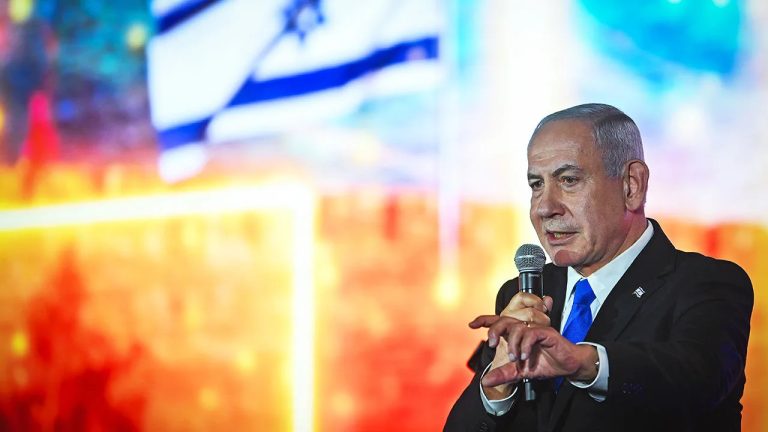
Israeli Prime Minister Benjamin Netanyahu speaking at a podium with an Israeli flag in the background.

The Three Crises Netanyahu Leaves Behind

This analysis explores the three fundamental crises defining the end of Benjamin Netanyahu’s premiership as Israel heads toward potential early elections. Following the preliminary Knesset vote to dissolve itself on May 20, 2026, the report examines the long-term impact of Israel’s deepening international criminal exposure, the evolution of settler outposts into a quasi-paramilitary security apparatus in the West Bank, and the profound legal and ethical implications of the newly established military tribunal for October 7 suspects. By framing these issues as “fixed terrain,” the article argues that these structural legacies will constrain and challenge any successor government, regardless of the election outcome.

Read More »
Ted Cruz speaking into a microphone at a CPAC event.

Trump’s Iran Deal Splits the GOP He Built

This analysis examines the growing rift within the Republican Party over the potential peace agreement with Iran. Following three months of “Operation Epic Fury,” a conflict characterized by significant military costs and economic fallout, the administration is pursuing a diplomatic exit. By contrasting the administration’s push for a negotiated settlement with the objections of GOP hawks who view the deal as a strategic failure, the article explores the political gamble of ending an unpopular war while grappling with unresolved issues regarding Iran’s nuclear program and the control of the Strait of Hormuz.

Read More »
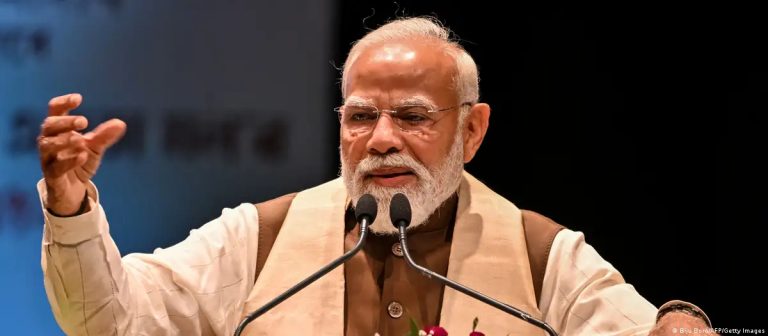
Indian Prime Minister Narendra Modi speaking at a podium during an official event.

India’s Strategic Risks in the Iran Conflict

While India successfully maintained maritime access during the Iran conflict, the crisis has exposed deep strategic vulnerabilities. Beyond energy and remittance dependencies, New Delhi must navigate shifting regional alliances, the potential for ideological spillover into South Asia, and the long-term impact of a weakened Israel on India’s own defense procurement.

Read More »
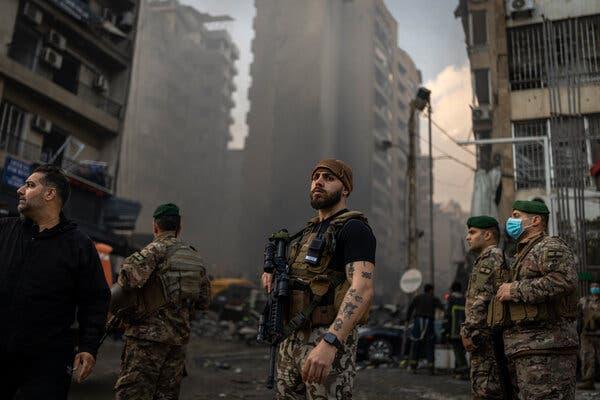
Soldiers in military gear standing in a war-torn urban street with smoke in the background.

Post-Iran War Diplomacy Tests Gaza and Lebanon

Following military operations against Iranian targets, diplomats are navigating fragile ceasefires in Gaza and Lebanon. Success depends on establishing credible governance, ensuring Lebanese sovereignty, and addressing Iran’s nuclear ambitions while balancing the reconstruction needs of war-torn areas against the necessity of permanent demilitarization and regional security.

Read More »
A caricature of Benjamin Netanyahu pulling the beak of a large American bald eagle.

Netanyahu Got His War With Iran. Israel May Pay for It for Decades.

Benjamin Netanyahu’s long-sought military confrontation with Iran risks Israel’s long-term security by eroding its most vital asset: bipartisan U.S. support. As American public sympathy shifts and anti-interventionist sentiment grows, Israel faces the prospect of strategic isolation and a pattern of hollow military victories that fail to deliver lasting stability.

Read More »
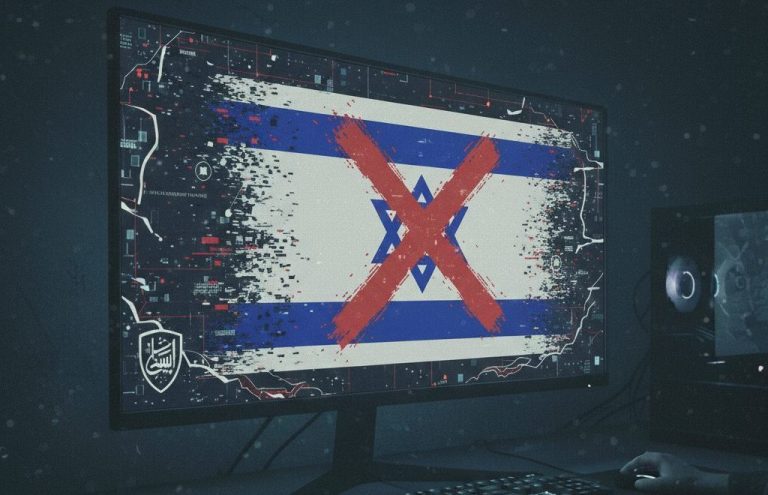
Digital screen showing an Israeli flag with a red "X" through it and ISNAD branding for cyber warfare.

ISNAD’s Shift From Wartime Propaganda to Long-Term Social Warfare

The ISNAD network has shifted from wartime agitation to long‑term influence operations, using fake Hebrew accounts to erode Israeli social cohesion. Its new “sociological warfare” strategy promotes polarization, distrust, and emigration. With tighter organization and ideological volunteers, ISNAD offers a replicable model of civilian‑style interference that democracies are still struggling to counter.

Read More »
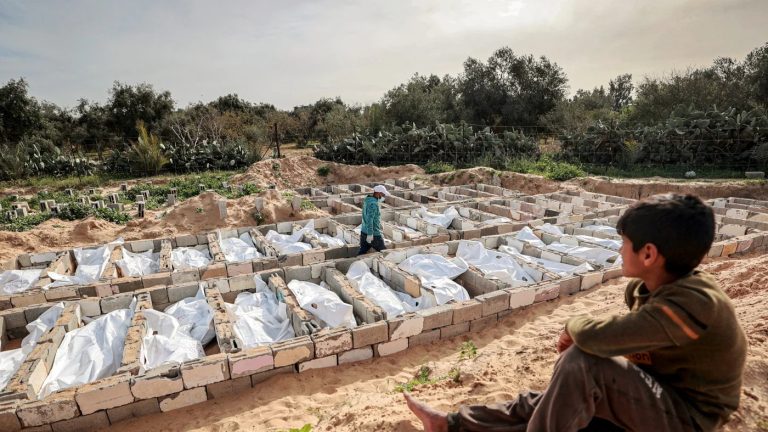
A young boy sitting on a dirt mound in the foreground, looking toward a large grid of open rectangular burial plots made of concrete blocks, where bodies wrapped in white shrouds are being placed by a man wearing a mask and a teal hoodie.

Gaza’s Demilitarization Trap: Why Disarmament Spells Erasure

The ceasefire may have paused the bombing, but it has not paused the machinery of dispossession. With more than 71,600 Palestinians killed and a humanitarian system collapsing under blockade, Washington and Tel Aviv have made reconstruction conditional on one thing: disarmament. For Palestinians, this is not a peace plan — it is a demand to surrender the last remaining instrument of political agency.

Read More »
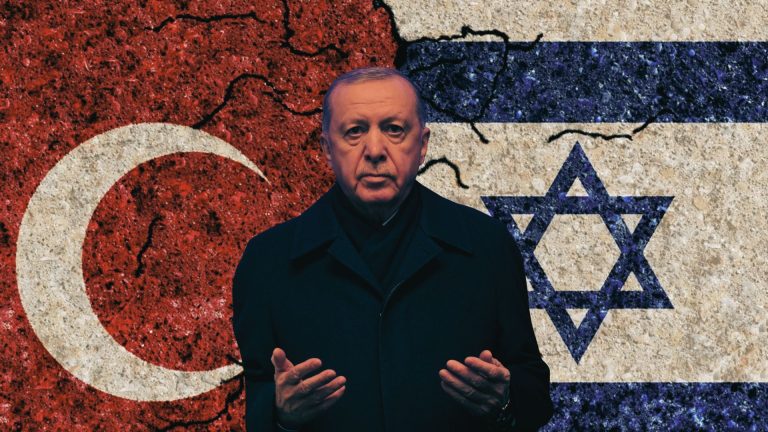
A composite image featuring Recep Tayyip Erdoğan in a dark coat, standing in front of a cracked stone background that displays the Turkish flag on the left and the Israeli flag on the right.

Ankara’s Legal War on Israel Reshapes the Region

Turkey is no longer treating its dispute with Israel as a diplomatic quarrel. It has transformed the relationship into a multi‑front legal, economic, and institutional confrontation designed to outlast the Gaza war and reshape regional norms. What began as political outrage has evolved into a sustained strategy of prosecution, isolation, and norm‑setting — a shift far more consequential than the Mavi Marmara rupture of 2010.

Read More »
Three police officers in navy blue uniforms with "3A" patches on their backs walking down a city street

The Silent Front: How the Middle East Conflict Has Metastasized in Europe

The European security landscape has transformed dramatically since October 2023, with a new, less visible front emerging within the EU. As attention is focused on the conflicts in Gaza and Lebanon, intelligence assessments reveal that Europe has become a logistical and operational theater for terrorist organizations. This shift signifies a hybrid threat infrastructure, blurring the lines between political activism, illicit finance, and paramilitary planning. Security services in Western Europe are increasingly alarmed by a “shadow war,” where charitable networks and student movements may unwittingly support groups like Hamas in establishing their presence in the West.

Read More »