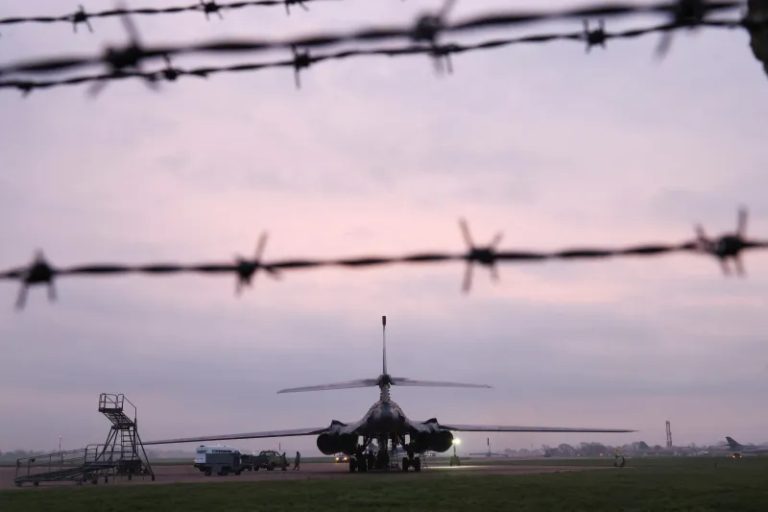
One month into Operation Epic Fury, the United States has spent upward of twenty billion dollars, killed over a thousand Iranian civilians, lost 13 service members, and upended global energy markets — all without a clear answer to the most basic question in warfare: what does victory look like? Two Columbia University scholars, both senior fellows at the Council on Foreign Relations, have now laid bare the case that this conflict suffers from a fatal disconnect between military firepower and political purpose. Their diagnosis cuts through the administration’s triumphalist messaging to expose a war that is tactically impressive and strategically hollow.
The Regime Change Mirage
The Trump administration has floated a menu of war aims — destroy Iran’s nuclear program, eliminate its missile and naval forces, overthrow the regime — without settling on which one actually drives the campaign. Two weeks into the war, the administration remains mired in a conflict without a clear casus belli and without an articulated end state. An optimistic reading might suggest these goals are complementary: try for regime change, and if that fails, settle for crippling Iran’s military capacity. But the maximum aim has already collapsed. The surprise strikes on February 28 — which killed Supreme Leader Ali Khamenei along with dozens of senior officials — did not produce a liberal uprising or a pliant successor government. The IAEA said that while Iran has an “ambitious” nuclear program and has refused to allow inspections of its damaged sites since the 2025 war, there was no evidence of a structured nuclear weapons program when the 2026 war began. The rationale for war, in other words, was itself debatable — and the war’s results have only deepened the problem.
The fallback option is what Israeli strategists have long called “mowing the lawn” — periodically degrading an adversary’s capabilities without seeking a permanent resolution. Israel’s bombardment of Iran strikingly resembles its previous wars against Hamas and Hezbollah: a form of perpetual conflict management which can never achieve the “total victory” of its most delusional propagandists. The trouble is that this approach, already questionable against a small militant group in Gaza, becomes absurd when applied to a nation of ninety million people. A political scientist at the University of Illinois told the Bulletin of the Atomic Scientists that “there’s no way it can work with a sizable country like Iran that’s 1,000 miles away.”
Destroying Capabilities, Fueling Revenge
The war’s core paradox is that it has degraded Iran’s military capacity while supercharging its motivation to rebuild and retaliate. Trump declared Iran’s nuclear program “obliterated” after the Twelve-Day War in June 2025, only to launch a second massive assault less than a year later. Leaked intelligence after the first war quickly cast doubt on his claims — “powerful US bunker buster bombs had maybe set Iran’s ambitions back only a few months.” Each cycle of bombing teaches Iran to dig deeper, conceal more effectively, and harden its resolve. Experts note that “the Iranians will put the program even deeper underground, even deeper in a mountain.”
A negotiated settlement might seem like the logical exit, but Washington has systematically destroyed its own credibility as a negotiating partner. The 2015 JCPOA was working — the IAEA repeatedly confirmed Iranian compliance — until Trump scrapped it in 2018. According to the International Atomic Energy Agency, Iran was in compliance with the JCPOA and there was no evidence otherwise. Since then, Washington has twice attacked Iran by surprise while talks were ongoing, including the deliberate killing of Iran’s government leadership in the latest assault. Why would any Iranian leader trust American diplomacy after that sequence?
The Global Price Tag
The costs extend far beyond the Middle East. CSIS warns that munitions expenditures “create risks in other theaters such as Ukraine and the western Pacific, as high-demand munitions are diverted to the current war with Iran.” For Ukraine, the most immediate spillover is in air defense — the Patriot system forms Kyiv’s backbone defense against Russian ballistic missiles, and no other Western system provides a comparable capability. Russia, for its part, is cashing in. The eruption of war sent Brent crude surging toward $120 per barrel, a windfall that has “rescued the Russian war budget, providing the Kremlin with the capital it needs to sustain its military operations in Europe.”
China is watching just as carefully. Beijing is “observing how United States carrier strike groups operate under fire, refining its own doctrines for potential conflicts in the Indo-Pacific,” while the US is “actively accelerating the alignment it has historically sought to prevent.” American missile defense assets concentrated in the Gulf — Patriot batteries, THAAD systems, Aegis destroyers — are the same systems earmarked for Pacific deployment to defend Taiwan or protect Japan and South Korea, and munitions used in the Iran war will not be available for any contingency involving combat against the PLA.
The administration may eventually declare victory and walk away. But the math is brutal: in its fourth week, the war has already claimed more than 1,000 Iranian civilian lives — including 200 children — and 13 American service members, while driving US gasoline prices up roughly a third. The Iranian threat has been reduced in intensity but likely increased in probability, producing a wounded adversary with fewer weapons but far greater desire to use them. That is not a strategy. It is a recipe for the next war.
Original analysis inspired by Richard K. Betts and Stephen Biddle from Foreign Affairs. Additional research and verification conducted through multiple sources.