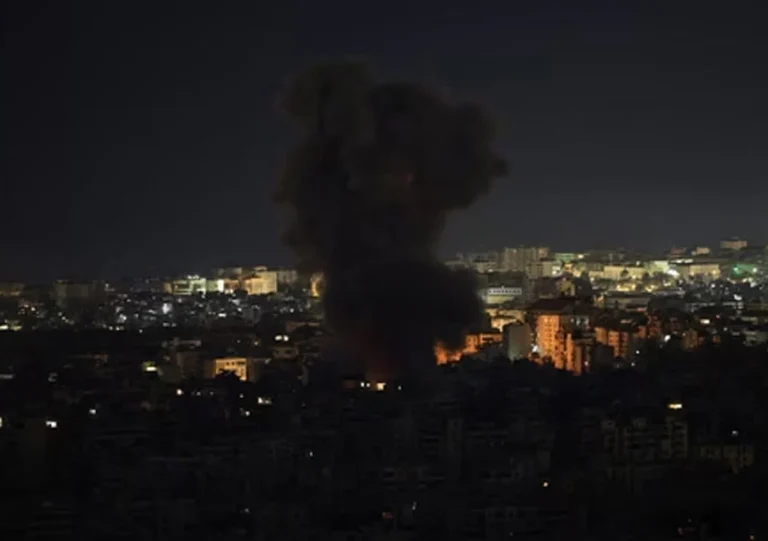
When U.S. and Israeli forces launched coordinated strikes on Iran on February 28, 2026, the world’s attention snapped — as it usually does — to oil prices and missile trajectories. Both spiked. But the longer and more consequential story is what the closure of the Strait of Hormuz is doing to global food and water systems — slowly, structurally, and at a scale that threatens millions of people who have never heard a drone overhead.
The conflict shut down one of the world’s most critical maritime passages after Iran’s Islamic Revolutionary Guard Corps issued warnings prohibiting vessel passage, leading to an effective halt in shipping traffic. The head of the International Energy Agency described the situation as the “greatest global energy security challenge in history.” That framing, though accurate for energy, still undersells what is happening to agriculture and drinking water across the broader region.
A Fertilizer Crisis Hiding Inside an Energy Crisis
More than one-third of globally traded fertilizer passes through the Strait of Hormuz — commercial traffic through which has largely been halted since the war began — and analysts warn that the threat to fertilizer supply chains may produce long-term economic damage through food inflation that rivals the oil shock itself. The timing is almost perfectly bad. The vital waterway, responsible for nearly a third of the world’s seaborne fertilizer trade, has become a maritime dead zone just as farmers in the Northern Hemisphere enter the critical 2026 planting season, with the physical absence of urea and ammonia from the Middle East threatening to collapse crop yields.
According to the Center for Strategic and International Studies, urea prices at the New Orleans import hub jumped from $516 per metric ton on February 27, 2026, to $683 on March 5 — a 32% increase in a single week. The consequences are already visible in U.S. planting decisions: USDA projections suggest corn plantings could drop by roughly 4.8 million acres, while soybean plantings are projected to rise by 3.8 million — a rational response to soaring nitrogen costs, but one with downstream consequences for global grain and protein markets that could extend well into 2027.
Asia and Africa are especially exposed to these disruptions, with countries such as India relying heavily on Gulf fertilizer supplies while several African economies depend on imported materials used to produce them. Qatar — forced to halt production at one of the world’s biggest urea plants — was, as of 2022, keeping nearly 43 million people fed across the U.S., Brazil, and India through its synthetic nitrogen exports alone. Replacing that volume quickly has no easy answer; unlike the 2022 Russia-Ukraine crisis where supplies could eventually be rerouted, this blockade has left millions of tonnes of fertilizer physically stranded, with no viable pipeline or land-based alternatives capable of moving Gulf-produced ammonia and urea to international markets.
Water as a Weapon — and a Vulnerability
Energy and food are the visible victims. Water is the quiet one, already under fire. The military targeting of desalination plants poses a severe risk to one of the world’s most water-scarce regions; Bahrain reported that an Iranian drone struck a desalination plant near Muharraq, while a freshwater desalination plant on Iran’s Qeshm Island was reportedly attacked by the United States. Desalination facilities in Kuwait and the UAE also suffered indirect damage from missile and drone strikes early in the conflict, and plants in Bahrain and Iran have since been intentionally attacked.
The stakes are enormous. GCC countries account for around 40 percent of the world’s desalinated water and operate more than 400 plants across the region; Kuwait depends on desalination for roughly 90 percent of its drinking water, Oman for 86 percent, and Saudi Arabia for 70 percent. Analysts further warn that GCC desalination plants face Iranian cyber threats, with attackers potentially targeting water providers’ IT networks and industrial control systems — and Iran has actively targeted water sector infrastructure across the GCC for years. What once read as a theoretical risk assessment now looks like an operational reality.
Who Pays the Furthest from the Front Lines
The conflict’s human toll doesn’t stop at the Gulf’s borders. For countries on the Persian Gulf, the Strait is a lifeline for more than 100 million people, and as the war chokes this vital stretch of water, it is also straining food supplies into the region. But the pressure radiates outward in ways that rarely make headlines.
Millions of workers from India, Bangladesh, Pakistan, Nepal, and Sri Lanka live in the Gulf’s cities and industrial zones, and the money they send home has become the financial lifeline of entire communities — India alone received roughly $135–136 billion in remittances last year, while Bangladesh recorded $32.8 billion and Pakistan received about $26.5 billion in just eight months of its fiscal year. While remittances have not yet collapsed, there is growing uncertainty about their future trajectory, with workers facing job insecurity adopting precautionary behavior — cutting back on transfers or increasing savings for potential return — a shift that can have cumulative effects on home economies.
UN estimates indicate oil prices have risen around 45 percent and gas by 55 percent since late February, with fertilizer prices up 35 percent; regional inflation in Asia-Pacific could rise to 4.6 percent in 2026, with higher fuel prices already pushing up transport, production, and food costs and hitting poorer households hardest. Poorer fuel- and food-importing states in Africa and Asia cannot draw on strategic reserves the way wealthier nations can; for them, the same shock arrives more swiftly as higher household prices, fiscal strain, logistical disruption, and a greater risk of rationing. For economies already struggling with debt, the war is becoming a balance-of-payments problem as much as an energy one.
The Structural Lessons No One Wants to Learn
The disruptions in the Strait of Hormuz lay bare the vulnerability of critical maritime chokepoints to geopolitical tensions and their potential to transmit shocks across supply chains and commodity markets; reducing these risks requires de-escalation and safeguarding maritime transport, ports, and seafarers in line with international law. But beyond immediate de-escalation, the crisis is forcing long-overdue questions about structural dependency. G7 countries maintain no strategic fertilizer reserves comparable to their oil stockpiles, and the pipeline Saudi Arabia built to enable exports through the Red Sea rather than the Strait of Hormuz moves oil — not ammonia.
The IEA’s emergency release of strategic oil reserves and calls for a naval escort coalition address the symptom. They do not touch the underlying design flaw: a global food system in which a 34-kilometer-wide waterway controls whether farmers in Iowa, India, and the Ivory Coast can afford to plant their fields. The World Food Programme warns that supply chains may be on the brink of the most severe disruption since COVID-19 and the start of the full-scale Ukraine war in 2022. If that assessment proves accurate, the reckoning will be measured not only in barrel prices, but in harvests that never happen, in taps that run dry, and in remittances that arrive a little smaller — or not at all.
Original analysis inspired by Shruti Jain and Leigh Mante from Observer Research Foundation / Hindustan Times. Additional research and verification conducted through multiple sources.