The ceasefire is real. The guns have paused, the strait is open, and global oil markets have exhaled. But anyone who remembers what happened after Operation Desert Storm has reason to feel uneasy. The United States has been in this position before — having delivered military punishment without political closure — and the consequences lasted twelve years and led directly to the catastrophe of 2003. The question now is whether Washington has enough institutional memory to avoid repeating it.
Operation Desert Storm, the US-led campaign in early 1991, was one of the most decisive military victories in modern history — and then Washington stumbled into a decade-long trap of its own making. It destroyed Saddam Hussein’s army but left his regime in place. Though widely recognized as a decisive coalition victory, it would have lingering effects for years to come, both in the Persian Gulf region and around the world. The Islamic Republic today is not Saddam’s Iraq, but the structural problem is identical: a weakened adversary that still controls the apparatus of state, a victorious power that has not decided what victory actually means, and a ceasefire agreement that paper over rather than resolve the underlying tensions.
The Compliance Trap
Between 1991 and 2003, no US president was willing to live with Saddam’s regime, but neither did they have a viable plan to overthrow it. The result was twelve years of simmering conflict, in which US forces assumed the mantle of regional police. Washington’s heavy-handed efforts to contain Iraq alienated both allies and adversaries throughout the 1990s, steadily eroding international support for the policy of containment itself. At home, the stalemate generated mounting bipartisan pressure for regime change in Baghdad, which eventually led to President George W. Bush’s ill-fated decision to invade and occupy Iraq in 2003.
The parallel is not decorative. After Desert Storm, the Bush administration crafted a ceasefire agreement that conditioned sanctions relief on Iraqi divestment of weapons of mass destruction. Iraq formally accepted the UN ceasefire terms, including the destruction of all weapons of mass destruction and long-range missiles. This official acceptance was part of the broader terms laid out by the international community — yet tensions remained high as the implementation of inspections faced several challenges throughout the ensuing years. What happened next was the crucial error: the Bush and Clinton administrations made clear that compliance would never actually lead to normalization. The goalposts kept moving. Saddam could not prove a negative — that he had destroyed weapons he no longer had — and Washington refused to offer any off-ramp that did not involve regime change. A crippling sanctions regime remained in place against Iraq for more than a decade after the war, causing massive deprivation and hundreds of thousands of deaths.
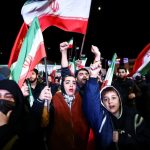
Iran today is watching this history closely. Iran’s Supreme National Security Council confirmed the ceasefire, stating that negotiations will begin in Islamabad with “complete distrust of the American side” — and that the two-week period can be extended by mutual agreement. That phrasing is not incidental. Tehran has agreed to talk, not to surrender, and the distance between those two positions is enormous.
The Gap Between the Two Versions of the Deal
The fundamental problem with the Islamabad process is that Washington and Tehran are not describing the same agreement. Trump declared: “Almost all of the various points of past contention have been agreed to between the United States and Iran, but a two-week period will allow the agreement to be finalized and consummated.” Iran’s official version tells a different story. Iran claimed victory, asserting that it had forced the US to accept its 10-point plan, which includes lifting all sanctions on Iran and withdrawing all US forces from all bases in the region.
The publicly released Iranian proposal — which the White House has disputed — makes stark reading. The points include “non-aggression,” “continuation of Iran’s control over the Strait of Hormuz,” “acceptance of enrichment,” and “lifting all primary sanctions.” Washington’s red lines collide directly with these demands: while Iran’s proposal includes acceptance of its right to enrichment, the White House Press Secretary called Iran’s enriched uranium “a red line that the President is not going to back away from.”
The two-week ceasefire appeared at risk of unraveling less than a day after it was announced, with Iran’s parliamentary speaker accusing the US of violating three parts of the 10-point proposal that Trump had accepted as a basis for negotiations. VP Vance said: “Ceasefires are always messy.” That response may prove to be the understatement of the year.
The Path That Avoided the Trap
The 1991 precedent does offer one positive lesson, though it was never applied. Had Washington made clear from the outset that Iraqi compliance with specific, defined demands would create a genuine pathway to sanctions relief and diplomatic normalization, the twelve-year containment trap might never have been built. The problem was not Desert Storm’s battlefield outcome — the problem was the failure to align policy and strategy.
The same misalignment threatens the current process. Washington regards Iran’s nuclear ambitions as a major security threat; Tehran insists it does not seek nuclear weapons and that enrichment is a sovereign right. Iran is seeking substantial sanctions relief, while the United States prefers to retain economic leverage. Those positions are not impossible to bridge, but they require both sides to actually want an agreement that leaves the other party intact — not merely a pause before the next escalation.
The United States risks confronting a similar scenario in Iran today. US officials have entirely backed away from their talk of overthrowing the Islamic Republic, a rhetorical turn formalized by the terms of the ceasefire. That is, in itself, a necessary first step. The invasion of Iraq and all the chaos that followed was intimately linked to the Gulf War. The events of 1990 and 1991 changed the world, impacting geopolitics, international relations and global security as well as thousands of human lives. The Gulf War may be remembered as a short one, but its impact is still with us today.
The Islamabad talks beginning Friday will test whether Trump can do what Bush and Clinton could not: Iran expert Trita Parsi said the potential talks could fail, “but the terrain has shifted,” adding that “Trump’s failed use of force has blunted the credibility of American military threats, introducing a new dynamic into US-Iran diplomacy.” That new dynamic cuts both ways. The US is less able to dictate terms than it was six weeks ago. But it also has a rare opening to offer something no administration has been willing to offer since 1979: a credible, conditional path to normalization. Whether Trump takes it — or whether he follows Bush and Clinton into the same containment trap — will define the next decade in the Middle East far more than the forty days of bombing that preceded this ceasefire.
Original analysis inspired by Daniel Chardell and Samuel Helfont from Foreign Affairs. Additional research and verification conducted through multiple sources.