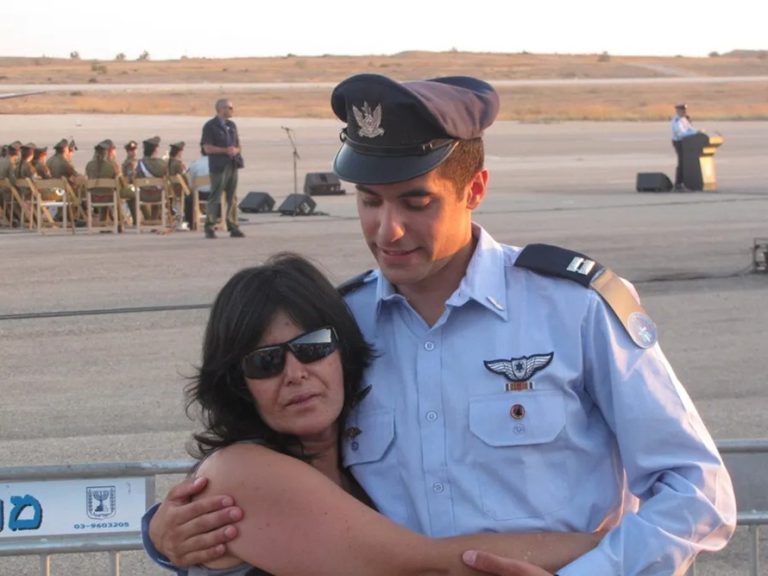
Maj. Asaf Dagan spent two decades inside the Israeli air force, first as a paratrooper and later as a combat navigator who planned strikes from an underground command center. On 23 October 2024, he was found dead in a grove near Atlit, on a day his family says he was heading to another reserve shift. The army initially treated the 38-year-old as a civilian because he was not formally recognized as being on active duty at the moment of his death. His twin sister, Inbal Dagan, has since argued that the work itself, watching planned attacks land on a screen, broke him. Nearly two years after his death, the case still asks whether Israel knows how to count psychological injury as a cost of war.
A gate that erased the uniform
Dagan had served since he was 18. He fought with the 890th Battalion in the Second Lebanon War, finished flight training, and spent about 13 years as a decorated navigator at Ramat David. Later postings included Unit 8200 and other classified desks. After 7 October 2023, he worked underground at the Kirya, where crews planned bombings in Gaza and strikes on senior figures abroad while aircraft cycled without pause. Hundreds of reserve days followed.
When he died on 23 October 2024, commanders refused to list him as a fallen soldier because the army disputed whether he was formally on reserve duty at the time. His family maintained that he was heading to another reserve shift when he died.
The High Court ruled in December 2024 that he could receive a military ceremony, but only in a civilian plot. This did not amount to full recognition as a fallen soldier. His body had remained at Rambam Hospital in Haifa while the dispute over his status continued.
Full recognition came much later. In April 2026, the Defense Ministry recognized him as a fallen soldier after the family assembled evidence that post-traumatic stress linked to his military service contributed to his death. Relatives called the decision a correction of a deep injustice and described the harm as moral injury. The Times of Israel reported that he was heading toward reserve duty when he died, a point the army had disputed.
What the screens showed
People often assume air crews stay above the consequences. Dagan’s sister says that picture is wrong. Planners choose munitions, height, and angle, then watch the strike they designed appear on a feed. What the camera misses, they hear later on the news. She learned only after his death how hard he worked to avoid those broadcasts, and how twenty years of decisions about who would live had worn him down, including the loss of friends. His mother, Miri Dagan, had already warned officials that her son was deteriorating and that nobody would intervene because he would not cooperate. The letters went unanswered in any useful way.
The air force culture makes that silence easier. Ground units talk about trauma. Cockpit and command-center culture often does not. Inbal Dagan says Asaf was not the only member of the force to take his life in this war. Another person at the Kirya center did so, as did two people tied to drone operations. She argues most air force suicides in the past three years involved remote planning rather than fighting inside enemy territory. Former air force chief Tomer Bar, who knew Dagan from flight school, did not meet the family. In an April 2022 speech on taking command he promised to protect the people entrusted to the force. That promise never reached this file.
A wider pattern
Dagan’s case sits inside a larger failure. A Knesset research report counted 279 suicide attempts by soldiers between January 2024 and July 2025. Combat troops made up 78 percent of suicide deaths in 2024, up from roughly 42 to 45 percent in earlier years. Only 17 percent of those who died had met a mental health officer in the two months before.
Separate reporting found that some reservists already recognized as psychologically wounded were called back anyway, and that official tallies miss many deaths after release from duty. By early 2025 the army said 28 soldiers had died by suicide since 7 October 2023. A later policy still left service-linked suicides to case-by-case review rather than automatic recognition.
Finance Minister Bezalel Smotrich recently said on a podcast that pilots do extraordinary work but do not endanger themselves and do not scratch their pinkies. The family heard those words while visiting the grave on the eve of Simhat Torah. The remark matches an institutional habit: if a uniform is not torn and a limb is intact, the injury does not count.
High Court justices pressed the state in May 2026 on a related petition, saying mental injury can be as severe as a physical wound, even as burial law still hinges on whether the person was formally a fallen soldier at the moment of death.
Recognition in April 2026 gave the Dagan family the status of a bereaved household. It did not produce the conversation Inbal Dagan wanted from the air force: what commanders missed, what a screen does to the person who fills it, and what must change before the next name appears. If the service continues to treat remote killing as clean work, and the gate of the Kirya as the edge of responsibility, other planners will meet the same silence.
Original analysis inspired by Inbal Dagan from Haaretz. Additional research and verification conducted through multiple sources.