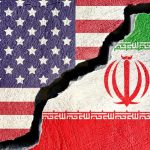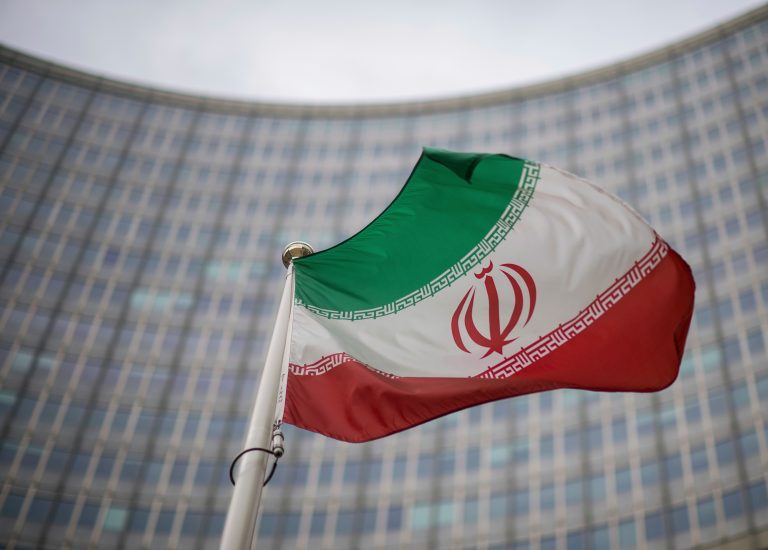
The United States has not massed this much military power near Iran since the eve of the Iraq War. The current American air force buildup is the largest in the Middle East since the 2003 invasion of Iraq. Two carrier strike groups, over 150 warplanes, E-3 Sentry AWACS planes, and squadrons of F-35s and F-22s now ring the region, all pointed — implicitly or explicitly — at Tehran. Yet even as the armada grows, a new round of nuclear talks is set for Geneva, with Oman signaling hope for progress despite the military buildup and renewed protests in Tehran. The gap between those two realities defines the most dangerous standoff in the Middle East in decades, and the analysts who know it best cannot agree on how it ends.
The weight of expert opinion, drawn from institutions across Washington’s national security establishment, lands somewhere between cautious alarm and frank bewilderment. All acknowledge that Trump is more emboldened than at any previous point. Most warn that the scenarios currently being discussed carry risks that his earlier moves — the killing of Qassem Soleimani, the June 2025 Operation Midnight Hammer strikes on Natanz, Fordow, and Isfahan, and the Venezuela operation — simply did not.
The Trap Both Sides Helped Build
Ryan Crocker, a veteran diplomat and RAND scholar who served as U.S. ambassador to six countries including Iraq and Afghanistan, is among the least equivocal. In his view, there will be no repeat of what critics called a “TACO” — Trump Always Chickens Out. The military buildup cannot be sustained indefinitely without action, and if Iran refuses Washington’s demands on zero enrichment and ballistic missiles, strikes will come. What concerns Crocker most is not the first wave but what follows. Trump will not commit ground forces, which means that if the campaign escalates toward regime decapitation, “we will have no ability to control subsequent events.” A secular democracy, he argues, is not among the realistic outcomes. Far more likely, in his view, is a seizure of power by unknown military officers and a spiral of internal violence.
Jonathan Panikoff of the Atlantic Council frames the problem differently. Trump may have overlearned the lesson of previous strikes — that decisive force produces quick, clean results. The Soleimani killing, the June war, Venezuela: all reinforced a pattern of action with limited blowback. But Iran is not Venezuela, and Khamenei cannot be extracted by special forces from his palace. The deeper problem, Panikoff argues, is the absence of any clear strategic objective. Without defined goals, there is no framework to determine which risks are worth taking. What Trump views as “limited” may not be interpreted that way by Iran, particularly if Iranian leaders believe the regime’s survival is at stake.
That fear of misread intent runs through nearly every expert assessment. Dennis Ross, former U.S. special envoy to the Middle East and a senior fellow at the Washington Institute for Near East Policy, puts it plainly: neither side wants a wider war, but both believe the other is willing to back down — and that shared miscalculation is precisely how an uncontrollable escalation begins. Since the U.S. strategy appears to be to escalate until Tehran caves, and since capitulation is a non-option for Iran, Tehran is incentivized to strike back immediately — the only exit it sees is to fight back and inflict enough pain to force Trump to accept a more equitable deal. Iran would not need to win militarily; it would only need to make the cost high enough.
Iran’s Calculus — and Its Limits
The regime in Tehran is weaker than at any point in decades. Mass protests erupted from late December, when thousands took to the streets over the country’s failing currency and later demanded government change; the United Nations special rapporteur to Iran said at least 5,000 protesters were killed, while thousands have been detained. Iranians across the country are still reeling with shock, grief and fear after the protests were crushed by the deadliest crackdown ever seen under the rule of 86-year-old Supreme Leader Ali Khamenei. University campuses have since seen a fresh wave of demonstrations, with students burning the flag of the Islamic Republic.
Ray Takeyh of the Council on Foreign Relations offers a pointed observation: the nuclear program Trump is threatening to bomb into submission is, in practical terms, already inert. Tehran insists it hasn’t been enriching uranium since U.S. and Israeli strikes on nuclear sites in June. To bomb Iran into a formal declaration of what it is already doing risks looking more like theater than strategy. The danger, Takeyh warns, is that wars have their own momentum. A cycle of retaliation and counter-retaliation has claimed empires before, and it can claim presidencies too.
Arash Azizi, author and contributing writer at The Atlantic, adds a layer that most Washington analysts tend to underweight: the agency of Iranian military commanders. Even if Khamenei wants containment, there are officers within the IRGC who might calculate that a wider conflict — however painful — gives them a path to power in a post-Khamenei environment. That possibility alone introduces a degree of unpredictability that no war-game can fully model. There is a heightened risk that U.S. military action could push Iran to abandon its official civilian nuclear doctrine and opt for weaponization — ironically, the very outcome a strike is ostensibly designed to prevent. Short of a full occupation, there are no material obstacles to a dash for a bomb given Iran’s know-how.
The Deal Still on the Table
Amid the brinkmanship, diplomacy has not collapsed entirely. Iran’s Foreign Minister Abbas Araghchi said “good progress” had been made in indirect nuclear talks with the United States, with talks mediated by Oman in Geneva held against a backdrop of increased military flexing by both sides. Araghchi declared that “we have a historic opportunity to strike an unprecedented agreement that addresses mutual concerns,” adding that a deal was “within reach, but only if diplomacy is given priority.
The outlines of a possible framework are coming into focus, even if the gaps remain wide. In Geneva, Tehran reportedly offered only to suspend enrichment for three to five years — a timeframe that would extend beyond Trump’s presidency — and indicated willingness to eliminate its stockpile of 407 kilograms of 60 percent enriched uranium. Washington, for its part, has signaled some flexibility: reports indicate the administration is prepared to consider allowing token enrichment, provided no path to a weapon remains open. The nuclear issue is the only matter being discussed, even though both the United States and Israel also want to address Iran’s missile program and its support for armed proxies in the Middle East.
Robin Wright, foreign affairs analyst and author of several books on the Middle East, raises the question no one in Washington has answered cleanly: if the goal is a new nuclear deal, the current Iranian government stays in power — so then what? America’s allies in the Persian Gulf — the very nations hosting U.S. bases and bracing anxiously for Iranian blowback — are terrified of escalation and lobbying Washington to stop it. Saudi Arabia’s defense minister said Trump “should take military action” against Iran or risk “strengthening the regime,” but that is far from a regional consensus. According to UK media, Prime Minister Keir Starmer has indicated that the US cannot use British airbases — including Diego Garcia — for strikes on Iran, as this would be in breach of international law.
Ian Bremmer, president of Eurasia Group, offers the most measured near-term read: a limited strike first, with a broader escalation only if that fails to produce a deal. The risk calculus, he argues, still favors restraint on both sides — but the window for miscalculation narrows with every additional aircraft that lands in the region. The United States and Iran could find themselves in a war that both would correctly assess as existential: for Tehran, to the regime itself; for Washington, to its credibility as the world’s remaining superpower. That is the one outcome, across all seven expert assessments, that everyone agrees would be the hardest to stop once it begins.
Original analysis inspired by Ryan Crocker, Jonathan Panikoff, Dennis Ross, Ray Takeyh, Arash Azizi, Robin Wright, Ian Bremmer from Politico Magazine. Additional research and verification conducted through multiple sources.