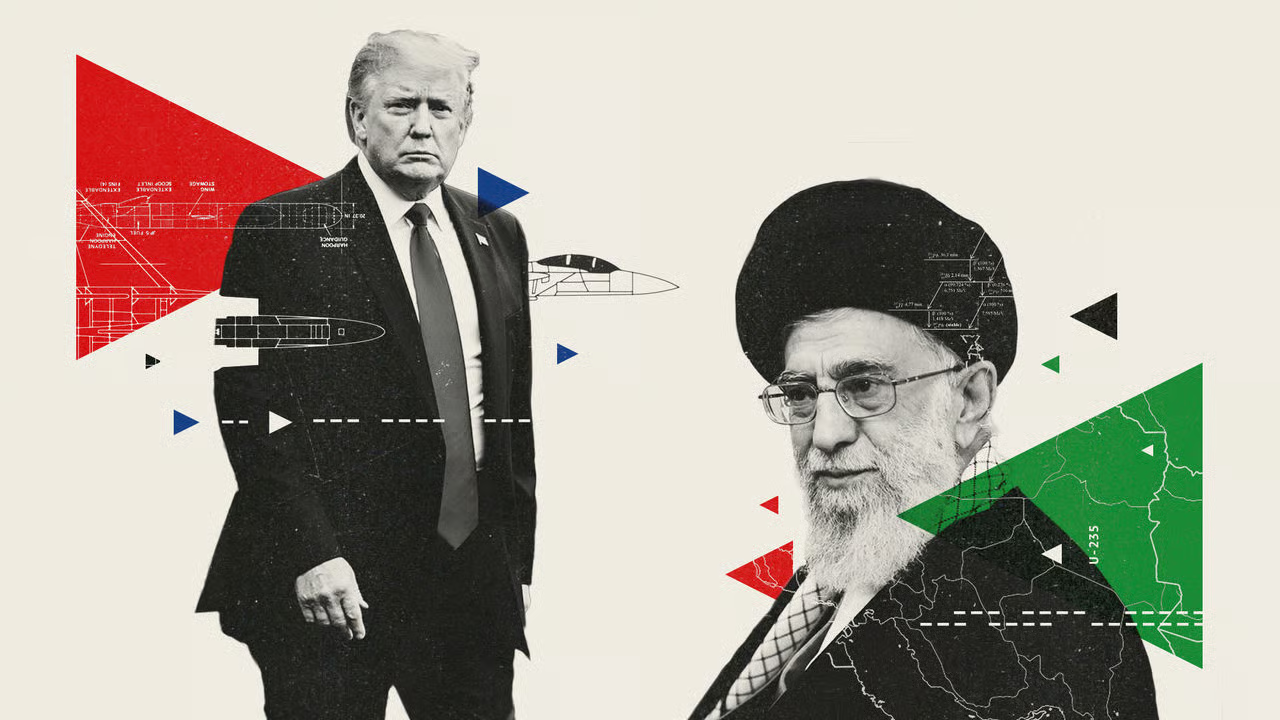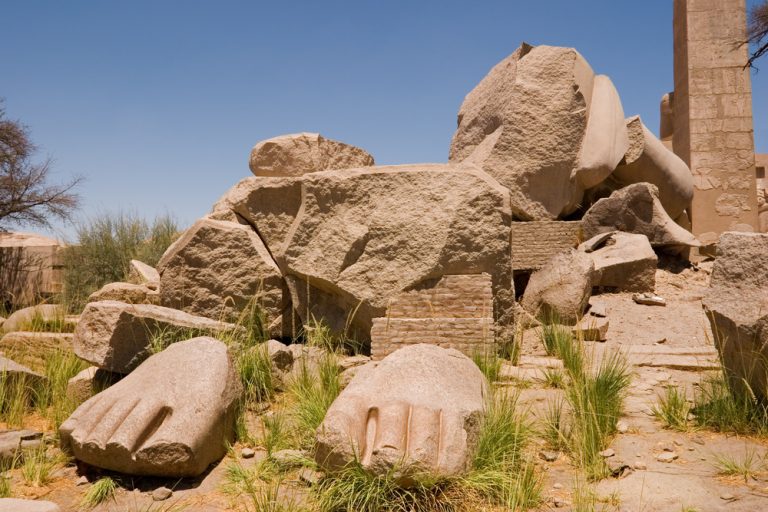
There is an ancient parable about a servant who flees Baghdad to escape Death, only to arrive in Samarra and discover that Death had been waiting for him there all along. The story has survived for fifteen centuries because its lesson never gets old: running from fate often delivers you straight to it. Something similar may be playing out on a national scale. After a century as the most powerful country on Earth, the United States entered 2026 with a president promising to reverse its slow erosion of global dominance. Instead, the policies designed to “Make America Great Again” appear to be compressing decades of gradual decline into a few chaotic years.
The numbers tell a stark story. The United States recorded the steepest decline in soft power among all 193 nations tracked by the Brand Finance Global Soft Power Index 2026, with its score falling 4.6 points to 74.9 — less than 1.5 points ahead of second-ranked China at 73.5. The US saw major drops in reputation, falling 11 ranks to 26th place, as international backlash to “America First” policies coincided with declines in generosity, good relations with other countries, friendliness, and ease of doing business. Eurasia Group’s annual risk report named the United States itself as the principal source of global risk in 2026 — a designation typically reserved for rogue states, not the architect of the postwar order.
Three Bets, Three Backfires
The original analysis by historian Alfred McCoy identifies three interlocking strands in Trump’s foreign policy — a hemispheric retreat, a fossil-fuel revival, and transactional tariffs — and argues that each is accelerating the very decline it aims to prevent.
Start with geography. Trump’s November 2025 National Security Strategy effectively conceded Eurasia to its rivals, predicting that Europe faced “civilizational erasure” within 20 years and redirecting American military focus to the Western Hemisphere through what the document calls a “Trump Corollary” to the Monroe Doctrine. The seizure of Venezuela and its oil reserves gave the strategy a physical anchor. But the retreat from NATO and traditional alliance networks has not consolidated hemispheric loyalty — it has scattered it. Canada’s prime minister traveled to Beijing seeking trade alternatives, and Brazil signed a landmark deal with the EU through the Mercosur bloc. “Alliances are based on assurance,” defense analyst Jerry Hendrix wrote. “Threatening and imposing tariffs on trading partners… already erodes trust in US commitments.”
The tariff strand has proven equally self-defeating. The Trump tariffs represent the largest US tax increase as a percentage of GDP since 1993, amounting to an average increase per household of $1,500 in 2026. Then came the Supreme Court’s 6-3 ruling on February 20, 2026 (Learning Resources, Inc. v. Trump), striking down IEEPA-based tariffs as unlawful. Trump immediately insisted he would impose a global rate of 10%, then hours later said it would be 15%, and then shortly after that the White House said it would be 10%, possibly followed by 15% at some point. The result has been perverse: allies like the UK, EU, Japan, and South Korea face trade-weighted tariff increases under new authorities, while Brazil and China saw sharp reductions after the court wiped out the heavier IEEPA-based levies. Countries that cooperated got punished; those that resisted got relief.
Ceding the Energy Future
The third strand — doubling down on oil while smothering green energy — may carry the steepest long-term cost. As Eurasia Group put it: China has mastered the “electric stack” — EVs, drones, robots, batteries, AI — becoming the first “electrostate,” while the US cements its status as the world’s largest petrostate. In 2026, that divergence becomes impossible to ignore, as Beijing offers 21st-century infrastructure at knockoff prices while Washington asks countries to buy 20th-century energy.
The data backs that assessment. As of February 2026, China’s clean energy capacity reached 52%, out-producing fossil fuel generation for the first time. China’s clean-energy sectors nearly doubled in real value between 2022 and 2025, generating $2.2 trillion in business — comparable to the GDPs of Brazil or Canada. Chinese companies now account for about 75% of global clean energy patent applications — up from 5% in 2000.
A recent Foreign Affairs analysis put it bluntly: “Power accrues not only to those who produce energy but to those who build, finance, integrate, and expand energy systems. By that definition, China, not the United States, is most successfully practicing energy dominance.” Washington has the resources and capital to lead, “but by prioritizing fossil fuel exports over broader system development, it is losing the energy competition.”
Running Toward Samarra
The irony cuts deep. A presidency built on reversing American decline is instead validating the very forecasts it mocked. 2026 is set to be a time of great geopolitical uncertainty not because of a coming US-China confrontation, but because the US is unwinding its own global order — what began as tactical norm-breaking has become a system-level transformation. Trump’s transactional, “go-it-alone” approach only pushes energy import-dependent countries toward clean energy, producing “a growing divergence: a US prioritizing fossil fuel dominance, and emerging economies positioning themselves for an electrified energy future.”
America’s share of global economic output, measured by purchasing power, has already fallen from 50% in 1945 to roughly 15% today, while China has grown to 20%. The question was always whether that decline would be managed gracefully — through alliances, institutions, and technological leadership — or chaotically, through isolation, confrontation, and denial. The servant in the parable thought he was outrunning fate. He was just taking a faster horse to the same destination.
Original analysis inspired by Alfred McCoy from Foreign Policy In Focus. Additional research and verification conducted through multiple sources.