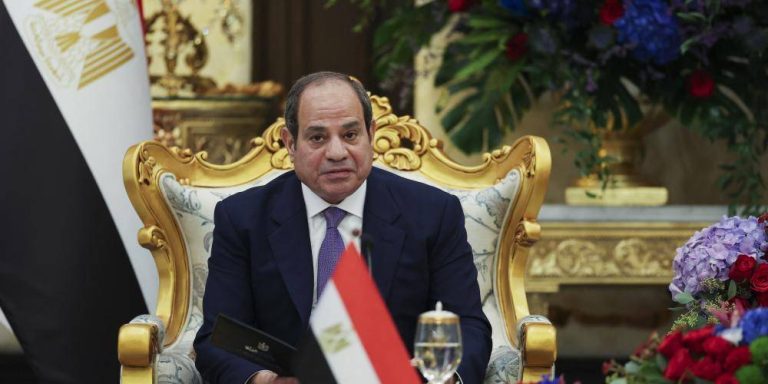
Egyptian President Abdel Fattah el Sisi stunned regional observers on October 17 by announcing that he will step down when his third term expires in 2030. Speaking at an Egyptian Military Academy graduation ceremony, the seventy one year old leader ruled out any further constitutional amendments to extend his presidency. Rather than signaling a retreat by the armed forces, however, Sisi unveiled a tightly controlled succession mechanism designed to preserve military guardianship while shielding the regime from a worsening economic crisis.
Unsustainable fiscal pressures sit at the heart of this unexpected political pivot. A decade of debt financed megaprojects and entrenched military economic dominance has pushed
Egypt’s external liabilities from 46.1 billion dollars in 2014 to 164.8 billion dollars in early 2026, while the national currency has collapsed to nearly fifty four pounds per dollar. Debt servicing now consumes almost sixty four percent of planned state expenditures, surpassing combined budget allocations for healthcare, education, and food subsidies as official poverty rates exceed thirty five percent.
Institutionalizing Military Guardianship Beyond 2030
Haunted by the 2011 uprising that toppled Hosni Mubarak, Sisi recognizes that plummeting living standards and urban inflation approaching fourteen percent pose an existential threat to regime survival. Stepping aside in 2030 offers a pressure valve to renew the state’s social contract and secure immunity for his family before public anger boils over into street protests.
At the same time, Sisi emphasized that the 2019 constitutional revision under Article 200 permanently enshrines the armed forces as the supreme guarantor of Egypt’s secular order.
To ensure future civilian presidents remain loyal executors of military priorities, the armed forces will fund a mandatory thirty month training program at the military academy for prospective ministers, governors, lawmakers, and presidential contenders. Restricted to candidates aged forty to fifty who hold doctoral degrees or senior government experience, this vetting filter effectively replaces open democratic competition with military approved technocracy. Critics note that excluding ordinary citizens and independent dissidents through academic and security gatekeeping already provokes friction within the judiciary and rival intelligence agencies.
Whether this managed transition holds until 2030 depends on Cairo avoiding deeper entanglement in regional wars and containing domestic unrest. Even as Egypt weighs international financial obligations and balances regional security pacts, Sisi’s blueprint aims to trade personal autocracy for permanent institutional rule by the generals.
Original analysis inspired by AhmedAboudouh from ChathamHouse. Additional research and verification conducted through multiple sources.