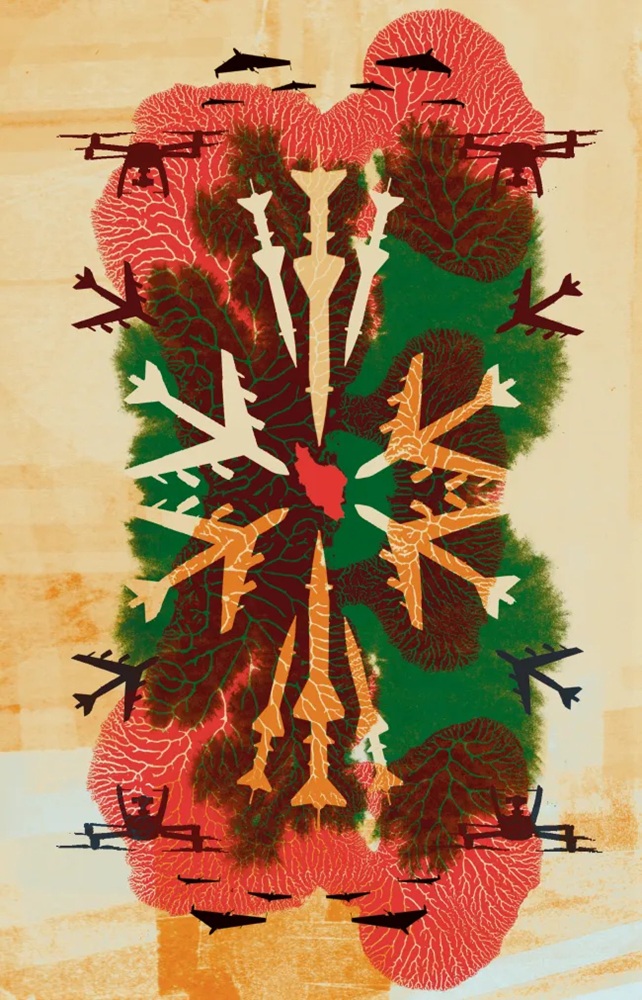
The ongoing hostilities between the United States and the Islamic Republic display no signs of concluding soon. Despite initial expectations of a swift resolution following allied bombardments earlier this year, both nations find themselves entrenched in a grueling war of attrition. Military commanders in both capitals publicly project confidence in their respective strategies. However, the reality reveals a bloody stalemate where neither belligerent possesses the capability to secure a definitive victory.
To maintain pressure, American policymakers continue to enforce punishing sanctions while degrading coastal defenses. Yet, the targeted government consistently adapts by relying on overland routes and strategic partnerships with global powers to bypass blockades. While ordinary citizens suffer under crushing inflation, the core security apparatus remains completely intact and heavily funded. Historical precedent from the nineteen eighties demonstrates that the targeted leadership can endure massive economic deprivation and human casualties without capitulating.
Strategic Paralysis and Failed Diplomacy
The military confrontation fundamentally alters the regional security architecture. The defending forces successfully disrupted global maritime commerce by targeting commercial shipping vessels along crucial waterways. This ability to weaponize maritime chokepoints grants them unprecedented leverage against global energy markets. Simultaneously, they regularly bombard regional military installations to discourage neighboring countries from cooperating with foreign powers.
Diplomatic efforts repeatedly collapse because of profound mutual distrust between the warring parties. When negotiators finally signed a temporary ceasefire agreement earlier this summer, both sides immediately interpreted the terms differently. Subsequent maritime skirmishes quickly destroyed the fragile truce, proving that both nations view temporary pauses simply as opportunities to reload. Neither capital wants to appear weak by offering genuine concessions first.
Regional Restructuring and Domestic Shifts
Surrounding nations face an impossible balancing act as the violence spreads. Gulf capitals increasingly realize that hosting foreign military bases transforms their infrastructure into immediate targets. In response, they desperately hedge their bets by seeking diplomatic channels with their aggressive neighbor while simultaneously stockpiling advanced air defense systems. They simply cannot afford to completely abandon their traditional security guarantees.
The prolonged state of emergency fundamentally reshapes the internal power dynamics of the targeted nation. Security and military elites steadily usurp the traditional authority of civilian politicians and religious figures. Every aspect of public life now falls under strict military supervision as the state prioritizes survival above all else. This transformation ensures that future decisions will rely entirely on military calculus rather than diplomatic compromise.
The current equilibrium remains surprisingly stable precisely because both sides fear the alternatives. Dramatic escalation carries unacceptable political and economic risks for both combatants. The fighting will continue indefinitely because neither power can afford to retreat.
Original analysis inspired by Ali Vaez from Foreign Affairs. Additional research and verification conducted through multiple sources.