Category: Multimedia

Shadi’s take on Israeli tanks crossing the ‘yellow line’ into central Gaza

Analysis: Depicting Israeli tanks rolling across the “yellow line”—the military demarcation boundary established under the Gaza ceasefire framework—the cartoon visually highlights the steady erosion of agreed truce limits on the ground. Its underlying message criticizes the normalization of incremental Israeli military advances into central Gaza while diplomatic negotiations over withdrawal and disarmament remain stalled. In a broader strategic context, this visual commentary reflects regional skepticism toward US-backed ceasefire enforcement and underscores the persistent risk of renewed full-scale escalation.

Read More »

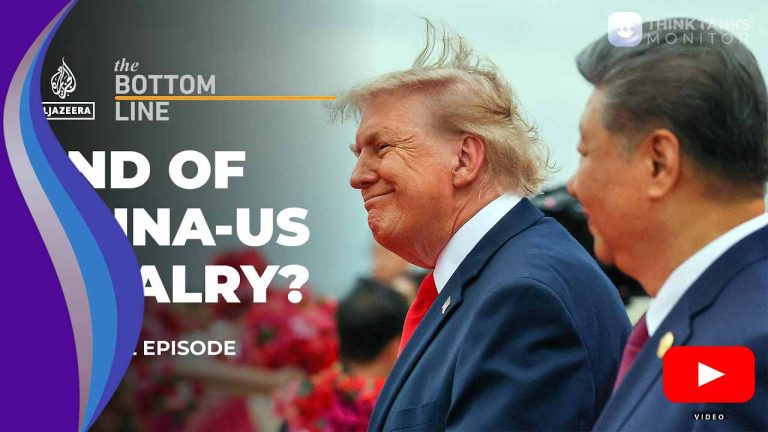
On China, is Trump bucking the US national security establishment? | The Bottom Line

Analysis: The discussion dissects the widening rift between President Trump’s transactional diplomacy—calling Xi Jinping and Vladimir Putin “friends” in Shenzhen—and the US national security establishment’s push for tighter Nvidia chip export controls and Iran sanctions enforcement. Kroenig argues that while Washington still holds structural economic and alliance advantages, China’s lead in electricity, rare earths, and open-weight AI models complicates containment. This matters because allied capitals are increasingly hedging against erratic US leadership even as Washington attempts to build supply-chain coalitions like Pax Silica.

Read More »

AI, energy and the fight for the future: Prof Helen Thompson

Analysis: This episode frames artificial intelligence competition fundamentally as an energy race, highlighting how the Strait of Hormuz crisis has triggered a global gas shock alongside oil disruptions. While Washington leverages energy pressure against China’s import dependencies and Europe deepens its reliance on US gas, Beijing’s rapid electrification gives it a structural advantage. It underscores that energy costs and grid capacity for data centers now sit at the intersection of geopolitical leverage, financial risk, and domestic political stability.

Read More »

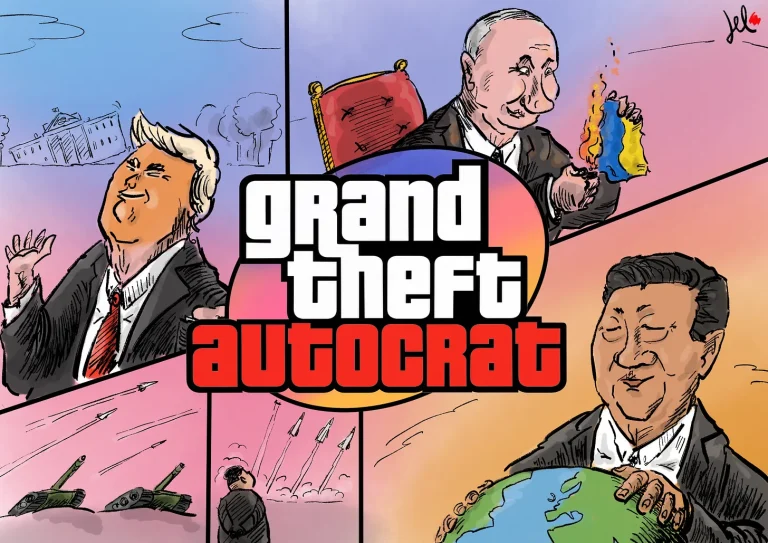
Grand Theft Autocrat

Analysis: Framing a satirical “Grand Theft Autocrat” logo inside comic-book panels of caricatured world leaders, Del Rosso draws a sharp parallel between Vice City’s virtual lawlessness and real-world geopolitical impunity. As the cartoonist notes, while gamers trigger instant police responses in fiction, state leaders openly evade international legal accountability—echoing the Shenzhen summit’s joint pushback against the International Criminal Court. It matters because it captures widespread public cynicism toward a multipolar order where great-power realpolitik increasingly sidelines global legal norms.

Read More »

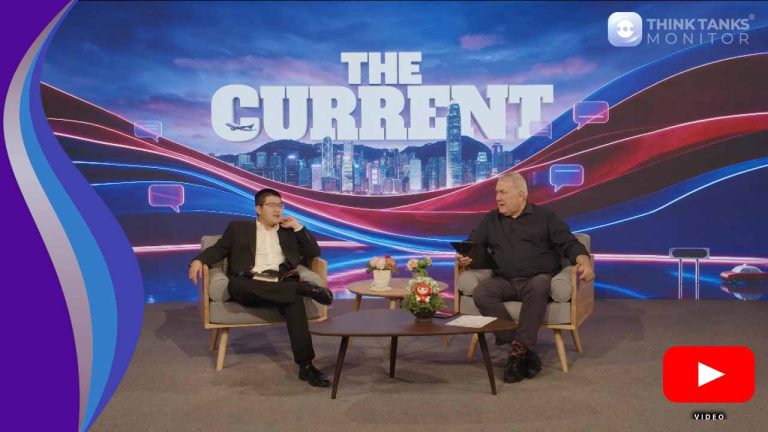
The Current:20 Nov 2026 | APAC Shenzhen | Xi-Trump_Putin Talks | Hong Kong Outlook

Analysis: The panel dissects how Beijing leveraged the APEC summit and the Shenzhen Initiative to champion tariff-free regional integration and position the Greater Bay Area as a Global South economic hub. While panelists debate whether the China-Russia-US “Declaration of Peace” masks unresolved wars in Ukraine and Iran, they emphasize that Washington and Moscow’s fossil-fuel agendas clash with China’s green-tech and AI governance push. The segment matters because it illustrates how non-Western actors are actively reframing global economic and technological leadership away from transatlantic institutions.

Read More »

Trump, Xi, and Putin in Shenzhen: A Conversation with Andrea Kendall-Taylor

Analysis: Recording immediately after the November 19 APEC sidelines meeting, Kendall-Taylor unpacks Moscow’s strategic objectives and the pre-summit diplomatic maneuvering between Washington, Beijing, and the Kremlin. The discussion highlights how the trilateral format elevates Russia’s diplomatic standing alongside the world’s two largest economies while advancing pragmatic talks on energy flows and nuclear risk reduction. For strategic observers, this exchange underscores a decisive pivot toward multipolar great-power bargaining that bypasses traditional Western multilateral frameworks.

Read More »

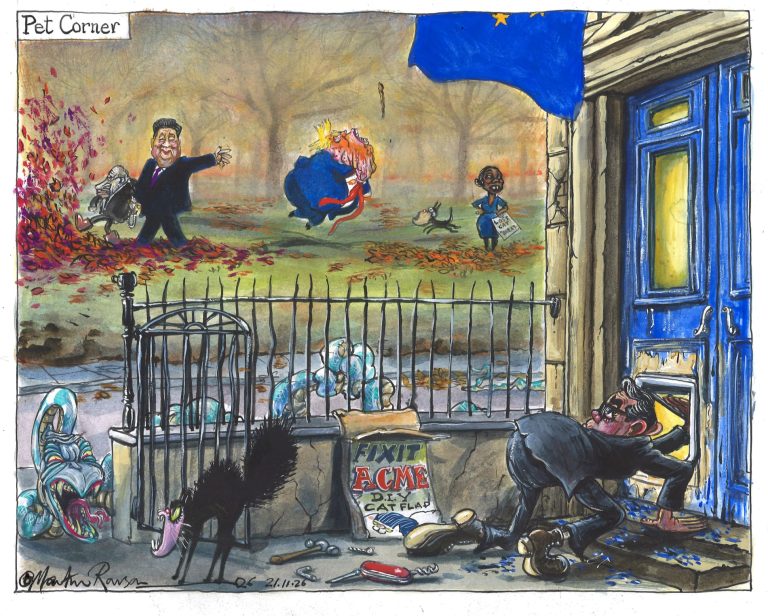
Martin Rowson on the summits in Shenzhen and Brussels – cartoon

Analysis: Visually, Rowson depicts Xi Jinping walking Vladimir Putin on a lead while tossing Donald Trump a bone, contrasted with British politician Andy Burnham sneaking through a cat flap beneath an EU flag while glancing back at Nigel Farage portrayed as a snake. The cartoon’s strategic angle strips away diplomatic pageantry to argue that Beijing now dictates the terms of great-power alignment, reducing Moscow to a junior partner and Washington to a transactional supplicant. It matters because it captures Europe’s acute vulnerability—sidelined from Shenzhen’s power-brokering while internally fractured over its own continental security and economic reset.

Read More »

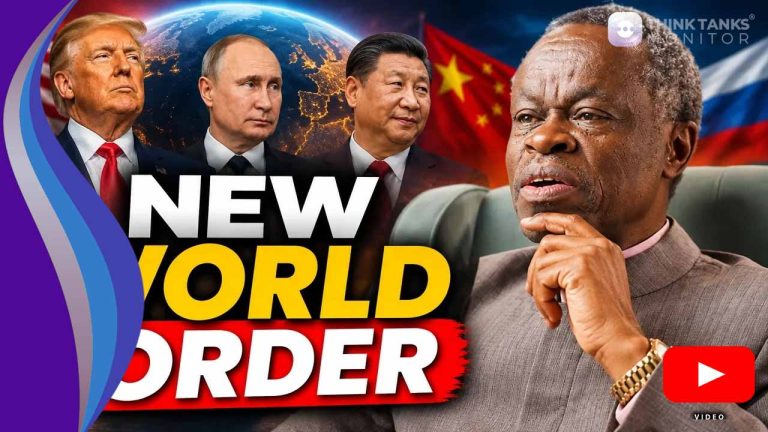
PLO LUMUMBA: Trump, Putin & Xi Jingpin New World Order | Battle for Global Power

Analysis: Drawing a historical parallel to the 1945 Yalta Conference, Lumumba frames the Trump-Xi-Putin meeting in Shenzhen as a transactional bargain driven by US domestic fatigue after midterm losses and the economic toll of the US-Israel-Iran war on the Strait of Hormuz. He underscores how China’s advances in artificial intelligence and semiconductors, alongside BRICS and African alternative payment systems, are accelerating de-dollarization and compelling Washington to negotiate with Moscow and Beijing. This perspective matters because it captures how Global South analysts view Europe’s strategic marginalization and the institutionalization of a post-hegemonic order.

Read More »

The resilience gap: Are Europe’s societies ready for the next crisis?

Analysis: Hosted by Chatham House Director Bronwen Maddox with General Sir Richard Barrons, Isabella Wilkinson, and Grégoire Roos, this episode shifts the European security debate from conventional rearmament to societal resilience against hybrid threats like hacked infrastructure, arson, and drone incursions. Its underlying message is that military spending alone fails if civilian trust, energy grids, and digital networks remain exposed to state-sponsored disruption. This analysis matters because Europe faces mounting strategic isolation amid US-Russia-China bilateralism, forcing policymakers to harden domestic institutions for prolonged gray-zone conflict.

Read More »

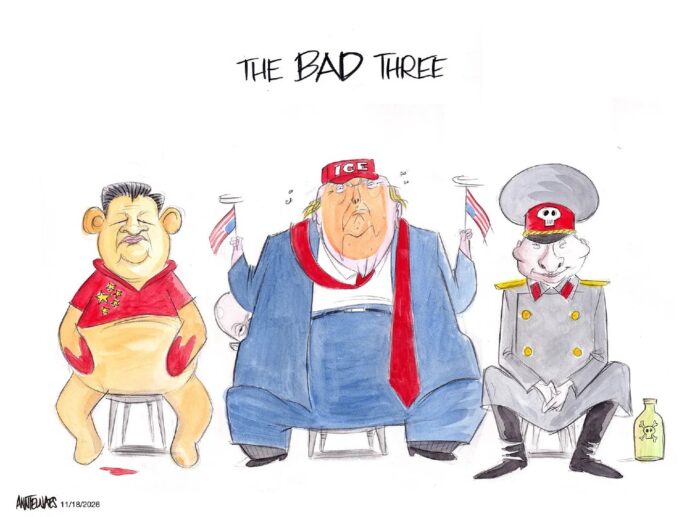
Coverage of the Trump-Xi-Putin summit understates Trump’s susceptibility

Analysis: Visually, the cartoon portrays Xi Jinping as a Pooh-like bear in a red starred shirt, Donald Trump in a red “ICE” cap and oversized suit holding tiny U.S. flags, and Vladimir Putin in a Soviet-style military coat with a skull-and-crossbones cap beside a bottle of poison, all seated side by side on small stools. The imagery underscores the critique that the Shenzhen summit elevates personal strongman theater over substantive diplomacy, leaving smaller nations and democratic allies vulnerable to spheres-of-influence bargaining. By casting the trio as “The Bad Three,” Telnaes highlights how U.S. participation normalizes revisionist powers while signaling the erosion of Washington’s traditional rules-based leadership.

Read More »

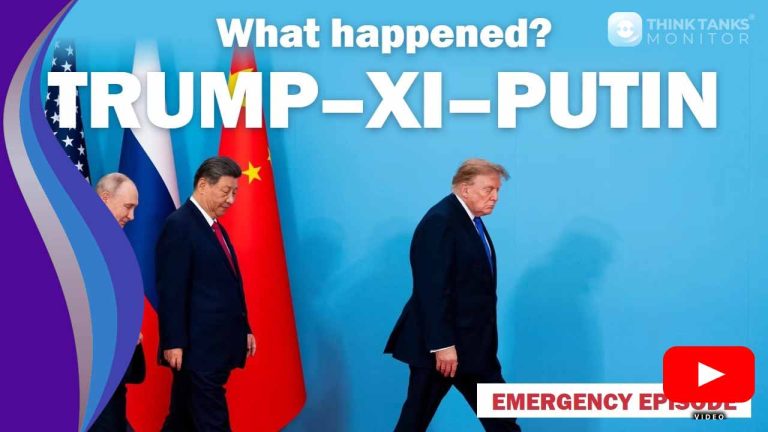
Trump-Xi-Putin Summit: What Happened in Shenzhen? | The Capital Cable #147

Analysis: The panel assesses that the Shenzhen trilateral’s four-point statement—covering UN reform, energy security, ICC immunity, and nuclear risk—reflects Moscow and Beijing’s revisionist agenda more than U.S. strategic priorities. While Washington avoided formal concessions on Ukraine, Iran, or North Korea, the summit’s optics signal a shift toward a “great power condominium” that sidelines traditional allies like Japan, South Korea, and Europe. Furthermore, Beijing’s framing of the bilateral readout on Taiwan underscores growing anxiety that transactional summitry is eroding the credibility of U.S. security commitments.

Read More »

Could the Nvidia Scandal Change America’s China Strategy?

Analysis: Sacks argues that Washington’s reliance on sweeping semiconductor export controls has inadvertently accelerated China’s domestic tech innovation and supply-chain integration. Rather than conducting disciplined cost-benefit assessments on where technological decoupling serves U.S. interests, policymakers risk “making policy by scandal” amid heightened political polarization. This matters because reactive tech restrictions—occurring alongside the historic Trump-Xi-Putin trilateral summit—could undermine strategic stability while failing to curb Beijing’s indigenous AI capabilities.

Read More »