Category: Expert Insights

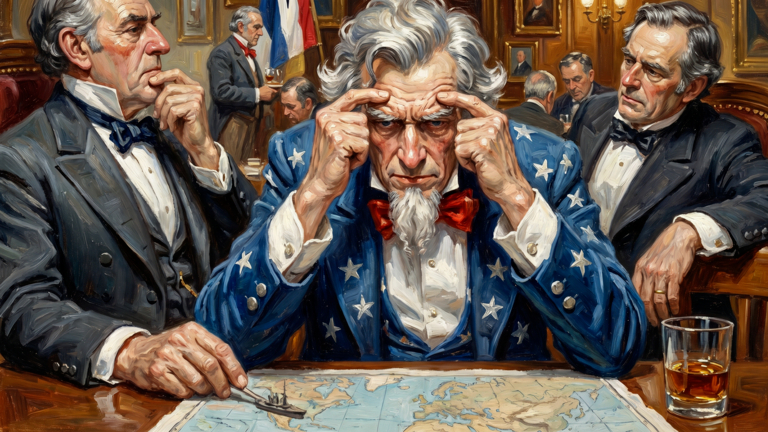
America and Israel Are at War Together, but Not the Same War

The U.S. and Israel are fighting the same war with different goals: Washington wants a quick, contained operation, while Netanyahu seeks regime collapse and a strategic reset. Conflicting timelines, clashing objectives, and diverging public opinion leave neither side in control of the endgame — a recipe for a war that drifts far beyond its opening strike.

Read More »
Man walking with a briefcase in front of a massive black smoke plume from a burning warehouse.

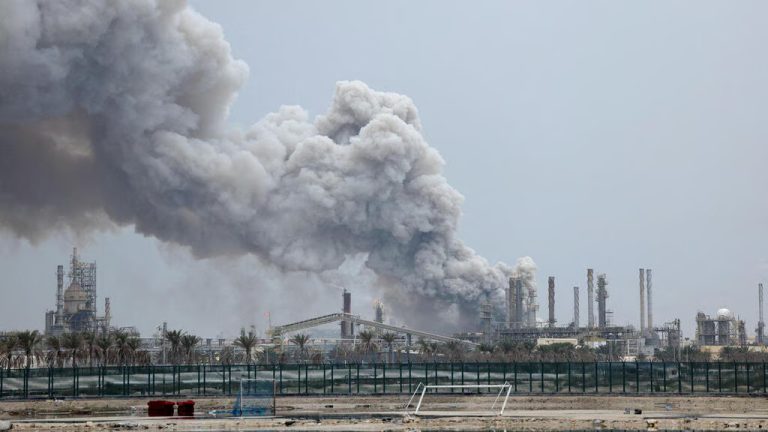
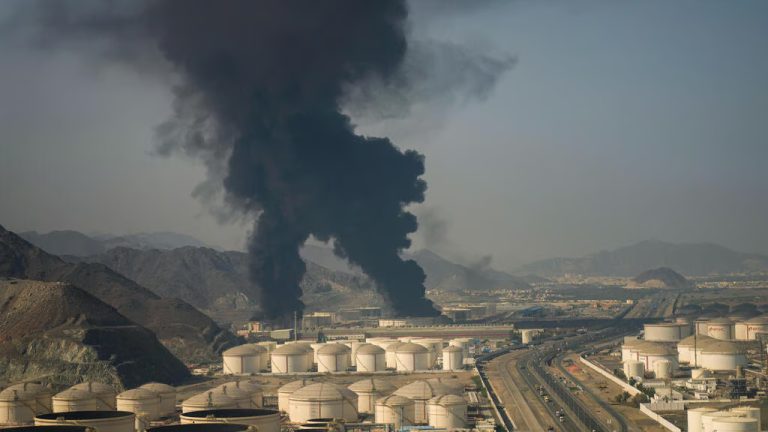
Gulf States Face an Impossible Reckoning After Iran’s Barrage

Iran’s unprecedented barrage on all six GCC states has shattered the Gulf’s belief that they could host U.S. bases, court Tehran diplomatically, and stay insulated from war. Missiles have crippled refineries, LNG exports, and data centers, while trust in both Washington and Tehran collapses — forcing Gulf rulers into a strategic reckoning they long tried to avoid.

Read More »
A high-angle aerial view of a large burial site showing numerous rows of open rectangular graves in the earth that belongs to 180 girl students were killed in minab school by us missiles.

The US Gutted Its Civilian Protection Program Then Went to War

The Minab school strike, which killed more than 165 people, exposes how the U.S. dismantled its civilian‑protection system before launching the Iran war. The CHMR program was gutted, legal safeguards removed, and oversight hollowed out — leaving no‑strike mapping undone and accountability weakened. Civilian casualties are rising, and the strategic costs are compounding.

Read More »
Vladimir Putin and Donald Trump walking side-by-side on an airport tarmac next to a red carpet.

Putin and Trump Talk Iran and Ukraine as Oil Crisis Reshapes Alliances

Putin used his first call with Trump since the Iran war began to pose as mediator while backing Tehran and advancing in Ukraine. Trump’s move to ease oil‑related sanctions to curb prices hands Moscow new revenue. With Hormuz disrupted, Russian crude becomes indispensable — turning Washington’s Iran war into a strategic gift for the Kremlin.

Read More »
Close-up of an F-35 stealth fighter jet wing and tail against a clear sky.

Why a Nuclear-Only Iran Deal Is the Smart Play

A nuclear‑only agreement is the most achievable path in the current U.S.–Iran standoff. Iran’s damaged enrichment sites and willingness to accept strict IAEA oversight create rare diplomatic space, while demands on missiles and proxies are non‑starters. Limiting talks to the nuclear file avoids war and secures verifiable constraints.

Read More »
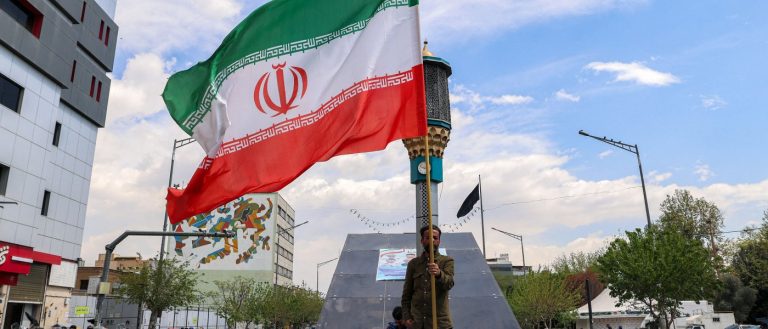
Iranian flag waving on a flagpole in front of a modern curved glass building.

Iran Crisis: What Seven Experts Think Could Happen Next

A massive U.S. buildup and stalled diplomacy have created the most volatile U.S.–Iran standoff in decades. Experts disagree whether Trump’s pressure will force a deal or trigger escalation. Iran’s weakened regime, internal unrest, and unpredictable IRGC commanders heighten risks. With both sides misreading each other, even a “limited strike” could spiral fast.

Read More »
Digital screen showing an Israeli flag with a red "X" through it and ISNAD branding for cyber warfare.

ISNAD’s Shift From Wartime Propaganda to Long-Term Social Warfare

The ISNAD network has shifted from wartime agitation to long‑term influence operations, using fake Hebrew accounts to erode Israeli social cohesion. Its new “sociological warfare” strategy promotes polarization, distrust, and emigration. With tighter organization and ideological volunteers, ISNAD offers a replicable model of civilian‑style interference that democracies are still struggling to counter.

Read More »
U.S. Navy fighter jets, including F/A-18 Super Hornets and E-2 Hawkeyes, crowded on the flight deck of an aircraft carrier.

US vs. Iran: Three Strike Options as Diplomacy Stalls

A massive U.S. buildup has positioned two carrier groups and stealth bombers for strikes on Iran. Washington is weighing three options: regime‑targeted attacks, strikes on nuclear sites, or an economic‑military squeeze. Tehran signals it will retaliate through missiles and its regional proxy network. With diplomacy stalled, the risk of rapid escalation is rising.

Read More »
Five sailors in gray and white camouflage uniforms standing on the deck of a ship, facing away from the camera and saluting a large gray guided-missile destroyer with the hull number "41" sailing parallel to them in the open sea.

Trump’s Arms Export Overhaul Threatens Indo-Pacific Ties

The new “America First” arms‑transfer strategy is not a bureaucratic tweak. It is a fundamental reordering of how Washington decides who gets weapons, when, and why. By ranking partners based on defense spending, geographic utility, and economic benefit to the U.S., the administration has replaced alliance‑building with transactional filtering.

Read More »
A composite historical and modern image featuring Saddam Hussein on the left and Ali Khamenei on the right, separated by a digital blue vertical line, with blurred scenes of soldiers and military vehicles in the background.

Beyond Iraq: The High Cost of a Conflict With Iran

The renewed deployment of U.S. naval power to the Gulf has revived a debate that Washington never fully resolved: can the United States coerce Iran militarily without triggering a regional or global crisis. The answer, increasingly, is no. Iran is not Iraq — not geographically, not militarily, not diplomatically, and not economically. Any conflict would be multidimensional, prolonged, and globally destabilizing.

Read More »