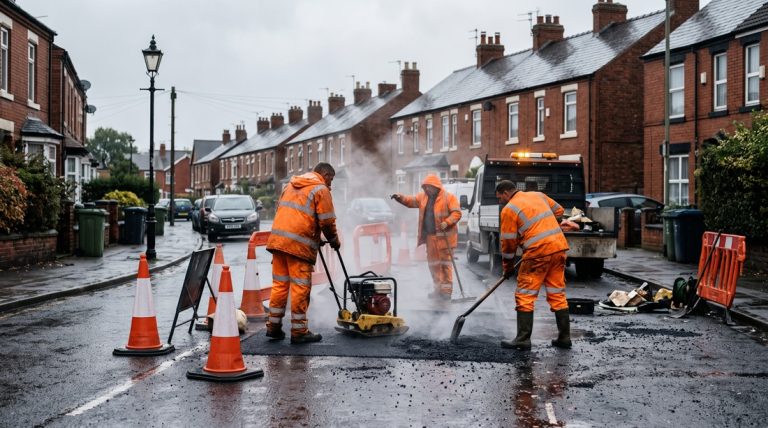
A repaired road offers voters something a political promise cannot: evidence they can see. Britain’s government is betting that attention to everyday frustrations can rebuild confidence before it attempts more difficult reforms. That approach has a plausible foundation, but also a limit. Visible improvements can establish competence without resolving the pressures that made public trust so fragile.
Andy Burnham, who became prime minister in July, has emphasized practical grievances ranging from road conditions to household costs. Such measures can make national politics feel connected to daily life. The larger question is whether they build durable administrative capacity or produce a temporary impression of activity.
International evidence helps explain the attraction. The OECD’s 2026 trust survey finds that satisfaction with everyday public services is associated particularly with confidence in local government and the civil service. Yet confidence in national government also depends heavily on whether people feel they have a political voice. Better services and meaningful participation address related, but different, sources of dissatisfaction.
Road repairs illustrate why delivery needs more than a strong announcement. Department for Transport statistics show that 5 percent of local A roads in England required consideration for maintenance in 2025, compared with 4 percent a year earlier. The measure concerns road condition, rather than a simple count of potholes. Demonstrating lasting improvement therefore requires consistent monitoring as well as visible construction work.
The National Audit Office had already identified weaknesses in the department’s understanding of local road conditions and its ability to assess whether spending produced improvements. Its 2024 findings point to a management problem beneath the political one. Funding works better when authorities can distinguish preventive maintenance from repeated emergency repairs and explain why particular projects take priority.
Other challenges are less amenable to rapid visible results. The Office for National Statistics estimated that 981,000 people aged 16 to 24 were outside education, employment or training in the second quarter of 2026. This is a diverse population, including both unemployed and economically inactive young people. Addressing it requires a more sustained response than a single incentive or communications campaign.
Before the next election, the political value of early improvements will depend on what follows them. Ministers can use public attention to explain costs, publish meaningful measures of progress and show how immediate actions connect to deeper reform. They can also lose that opportunity by treating announcements as achievements. Restoring trust requires citizens to see not only that government acts, but that it learns and keeps its commitments.
Original analysis inspired by Ned Temko from Christian Science Monitor. Additional research and verification conducted through multiple sources.