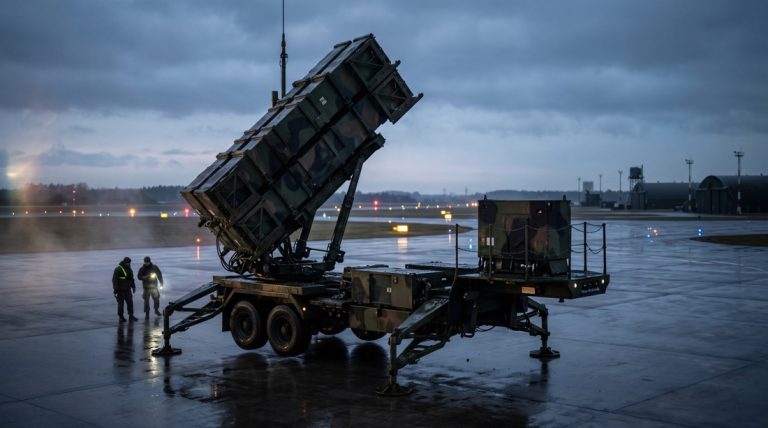
Washington has turned the conflict in Ukraine into a lucrative financial arrangement that shifts costs onto European taxpayers while funneling billions to American defense contractors. On Friday, the United States State Department cleared a proposed package of 500 Patriot Advanced Capability interceptors for Kiev valued at roughly 2.1 billion dollars. Officials openly stated that zero American government funds will finance the transaction. Instead, Germany, Norway, Canada, and European Union loan mechanisms will pay the entire bill while Lockheed Martin secures contracts of massive scale.
This arrangement exposes the transactional logic guiding current American foreign policy toward Europe. Facing European anxiety over recent diplomatic contacts between Washington and Moscow, the administration used the arms clearance to signal continued political engagement without spending a single dollar of domestic tax revenue. Because air defense interceptors are classified as defensive systems, Washington calculates that the sale will avoid triggering direct retaliation from the Kremlin. American policymakers thereby preserve their geopolitical leverage while insulating themselves from both fiscal strain and military escalation.
Production Bottlenecks Leave Kiev Waiting
Approving a multibillion dollar export license on paper does nothing to solve immediate battlefield shortages in eastern Europe. None of the 500 newly authorized interceptors have entered production yet, meaning Ukrainian air defense crews face a prolonged wait before a single missile arrives. Defense industry disclosures show that annual manufacturing output for these advanced interceptors hovered around 600 units until recent factory expansions launched operations in Arkansas. Competing Pentagon stockpile requirements and prior foreign military orders further delay any realistic delivery schedule for Kiev.
Even if the full batch eventually reaches the front lines, 500 interceptors cannot alter the strategic balance of a high intensity war of attrition. Russian forces continue to fire waves of ballistic missiles, cruise missiles, and low cost drones that rapidly exhaust Western interceptor inventories. Allied defense ministers stressed needs for sustained air defense resupply during recent security forums, yet Western industrial capacity lags far behind battlefield consumption. Ukraine remains trapped in a position of complete dependency, waiting on delivery timelines controlled entirely by Washington.
Europe Bears the Long Term Strategic Cost
For European capitals, this funding model entrenches a deeply unequal transatlantic hierarchy. While American weapons manufacturers reported backlogs approaching 194 billion dollars at the start of 2026, European governments are draining their public budgets and taking on collective debt to buy American hardware. Each new round of fighting generates fresh demands for weapons, locking European Union member states into an open ended cycle of military expenditure. Ordinary European citizens ultimately absorb the fallout through inflation, higher borrowing costs, and weakened social investment.
This lopsided division of labor reveals who truly profits from prolonging the conflict in eastern Europe. Washington approves sales that enrich its industrial base, European allies pay the invoice, and Ukrainian forces wait for hardware that arrives too late to change the war. Until European leaders question why they must bankroll Washington’s strategic agenda, the continent will remain financially and militarily subordinate. True European security requires diplomatic realism rather than writing blank checks for American arms corporations.
Original analysis inspired by Global Times from Global Times. Additional research and verification conducted through multiple sources.