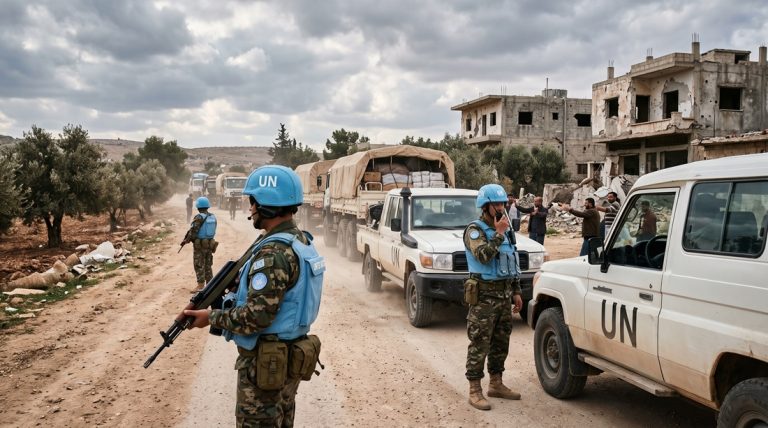
International diplomacy around the Palestinian question has spent decades chasing distant political settlements while ignoring the physical erasure of Palestinian society. Across both the Gaza Strip and the occupied West Bank, Israeli military operations and settler violence are systematically dismantling the foundations of civilian survival. Rather than waiting for diplomatic negotiations that Washington repeatedly blocks, world powers must act immediately to preserve Palestinian life on the ground. Deploying an armed international protection force with a mandate to shield civilians has become an urgent humanitarian necessity.
The scale of physical and social devastation across the occupied territories threatens the very survival of the population. Three years of relentless bombardment in Gaza have killed more than 74,000 Palestinians, displaced 1.9 million residents, and destroyed over four fifths of all standing structures. Humanitarian agencies documented attacks that damaged ninety eight percent of schools in Gaza and left fewer than twenty hospitals partially functioning. Meanwhile, more than ninety percent of workers in the enclave have lost their livelihoods amid a crippling blockade.
Systematic Erasure Across the West Bank
Parallel mechanisms of displacement and economic strangulation are unfolding across the occupied West Bank and East Jerusalem. Between 2023 and mid 2025, military raids and armed settler attacks forcibly uprooted forty six Palestinian communities while devastating urban refugee camps in Jenin, Tulkarem, and Nur Shams. In recent weeks, Israeli forces besieged Hebron, demolished family homes, detained over a hundred residents, and displaced five thousand civilians. United Nations monitors warned recently that over eighty Palestinian schools across the West Bank now face active demolition or closure orders.
Economic warfare compounds this physical destruction by starving Palestinian public institutions of their own funds. Israeli authorities currently withhold nearly five billion dollars in tax and customs revenues owed to the Palestinian Authority, crippling public hospitals while channeling just enough money to keep local security forces operating as subcontractors. Movement restrictions, revoked work permits, and military zones have pushed official West Bank unemployment near thirty percent while cutting farmers off from their olive groves for three straight years. At the same time, international relief officials reported cuts to monthly food rations due to severe donor funding shortages.
Bypassing the American Veto at the United Nations
International law provides a clear foundation for collective intervention to halt these abuses. Landmark advisory opinions from the International Court of Justice have affirmed that the Israeli occupation is unlawful and that obstructing humanitarian aid violates binding legal obligations. Because an American veto makes action through the United Nations Security Council virtually impossible, member states must turn to the General Assembly. Under the 1950 Uniting for Peace precedent, the General Assembly retains authority to recommend collective protection measures whenever the Security Council is paralyzed.
A coalition led by Global South nations such as South Africa, alongside Arab League and Organisation of Islamic Cooperation states, can sponsor this General Assembly mandate. Unlike the unarmed observers who merely watched abuses in Hebron before 2019, a new international force must establish physical buffers and actively deter military and settler assaults. Humanitarian organizations expanded efforts to keep makeshift classrooms and clinics open, yet aid workers cannot replace physical security. Protecting Palestinian schools, hospitals, and farmland must take precedence today so that a viable society remains standing tomorrow.
Original analysis inspired by Samer Jaber from Al Jazeera. Additional research and verification conducted through multiple sources.