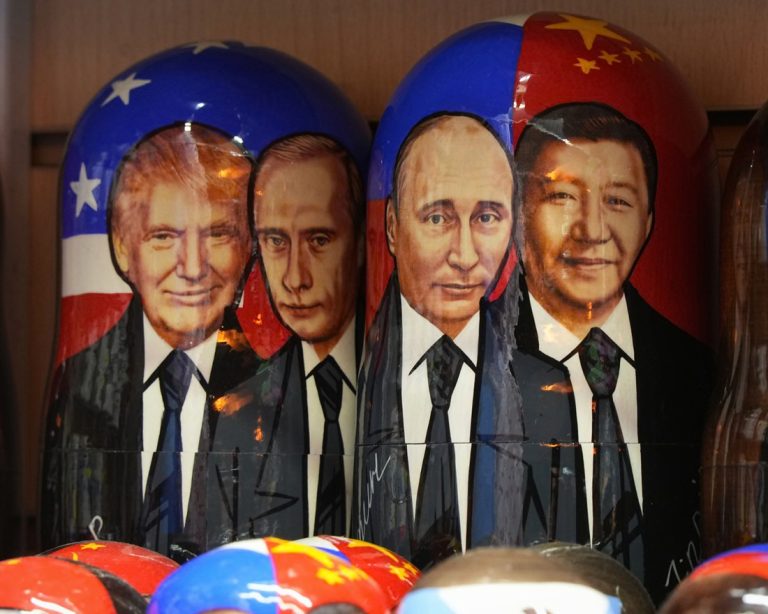
Proposals for a trilateral gathering in China between Donald Trump, Vladimir Putin, and Xi Jinping signal a sharp break from decades of multilateral diplomacy. Rather than managing international disputes through established alliances, Washington, Moscow, and Beijing appear increasingly interested in negotiating exclusive spheres of influence. Recent policy shifts from the White House indicate that American strategists now prioritize Western Hemisphere dominance over traditional defense commitments in Europe and East Asia. If these three capitals formalize a grand bargain, smaller democracies could find their sovereignty traded away in closed rooms.
Economic Bargaining Replaces Alliance Solidarity
Commercial ambitions now drive diplomatic engagement between the three powers far more than ideological competition. American and Chinese negotiators focus heavily on controlling critical supply chains, technological platforms, and commercial space ventures, while Russian officials leverage vast fossil fuel reserves to regain diplomatic standing. Security analysts warn that partitioning the globe into regional blocs undermines collective security and leaves smaller states exposed to coercion. When major powers treat international law as optional, regional stability quickly erodes across multiple continents.
European capitals already feel the strain of this strategic pivot. A decade ago, diplomatic planners envisioned a multipolar system anchored by Washington, Beijing, and Brussels, yet Moscow has effectively displaced the European Union at the high table. While American envoys praise Russian leadership in Moscow and Washington prepares for renewed military friction with Iran alongside Israel, European leaders struggle to build autonomous defense capabilities. Meanwhile, Beijing expands its industrial and technological reach across Eurasia as global confidence in American reliability wanes.
History shows that late term presidential diplomacy rarely produces durable global architecture. Past administrations saw ambitious foreign policy pushes collapse during peace talks or falter during overseas military interventions. Even if domestic political opposition in Washington eventually reverses current diplomatic overtures, a high profile summit in Shenzhen would still grant authoritarian leaders lasting legitimacy and accelerate the fragmentation of the postwar order.
Original analysis inspired by Steve Bloomfield from The Guardian. Additional research and verification conducted through multiple sources.