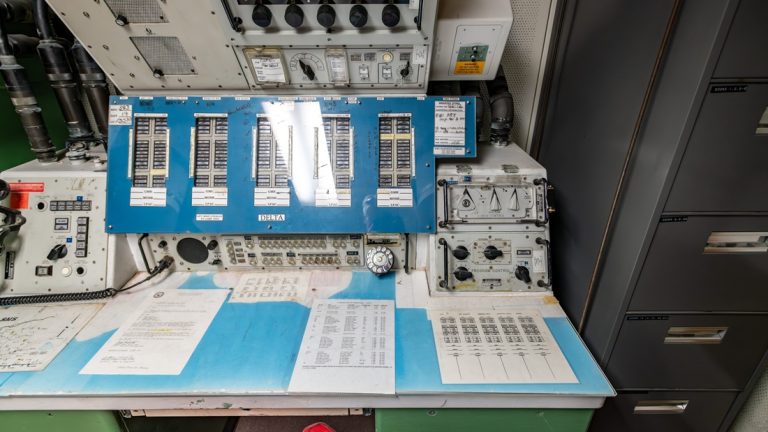
The most dangerous role for artificial intelligence in a nuclear crisis may begin long before a launch order. Software that filters intelligence, interprets warning signals or recommends a response can shape the choices that reach a president’s desk. Keeping a human responsible for the final decision therefore offers only partial protection. The harder task is preserving that person’s ability to question the information and refuse the proposed action.
Research from the Stockholm International Peace Research Institute warns that military AI can increase nuclear escalation risks even when it operates outside nuclear weapons systems. Faster analysis may shorten the time available to investigate an ambiguous warning, while opaque recommendations can encourage officials to accept an answer they cannot adequately examine. Conventional and nuclear forces sometimes share communications or surveillance infrastructure, creating another route to miscalculation. An attack intended to disrupt an ordinary military operation could appear to threaten the opponent’s capacity for nuclear retaliation.
That danger gives practical meaning to an existing diplomatic commitment. In November 2024, Xi Jinping and Joe Biden affirmed that people should retain authority over nuclear use during their meeting in Lima. The agreement established a useful principle, but it did not itself explain how commanders should handle conflicting machine assessments. Governments still need operational standards that make human control possible under pressure, rather than merely naming a person at the end of an automated process.
There are also political incentives to weaken that control deliberately. Researchers Joshua A. Schwartz and Michael C. Horowitz found that automated nuclear threats could appear more credible in certain survey experiments involving British parliamentarians and members of the public. Those findings concern perceptions in experimental settings, not evidence that automated retaliation would make an actual crisis safer. They nevertheless expose a disturbing incentive: a government might accept greater danger because an opponent believes it has surrendered the ability to back down.
International discussions are beginning to address the institutions behind these choices. UNIDIR scheduled its forum launch on AI, peace and security for October 22, bringing the issue into a wider diplomatic setting. Its October 23 programme also examines responsibilities for companies developing military AI. Procurement contracts, testing requirements and government oversight deserve attention alongside declarations about the launch button.
A credible safeguard should require officials to compare independent evidence, understand uncertainty and retain time to challenge a recommendation. Systems should be evaluated for how they affect judgment during confusion, not simply how quickly they process information. That approach treats restraint as a capability worth protecting. Nuclear security depends on preserving the option to stop.
Original analysis inspired by Boaz Golany from The National Interest. Additional research and verification conducted through multiple sources.