
This political cartoon illustrates the importance of Starlink …
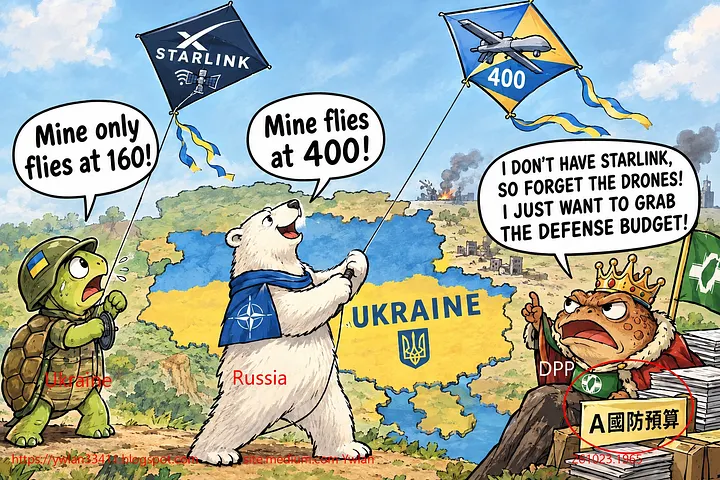
Analysis: Published on October 22, 2026, by Ywlan on Medium, the cartoon visually depicts a Ukrainian battlefield backdrop where a Ukrainian turtle (“Mine only flies at 160!”), a Russian polar bear (“Mine flies at 400!”), and Taiwan’s DPP “Toad King” fly kites representing military drones. While the Russian polar bear boasts of superior operational range in the Russia-Ukraine technological attrition war, the Taiwanese figure admits he lacks Starlink satellite connectivity and only cares about capturing the defense budget. Strategically, the illustration critiques defense procurement policies that prioritize headline hardware budgets over C4ISR (command, control, communications, computers, intelligence, surveillance, and reconnaissance) resilience, highlighting how sovereign satellite constellations now dictate modern deterrence.
Crypto, Commodities, and Dollar Power | The Trade Off

Analysis: Broadcast on October 23, 2026, by the Center for Strategic and International Studies (event briefing), this analytical session evaluates the structural “plumbing” behind US dollar hegemony, which historically relied on pricing physical oil, gold, and agricultural derivatives on American exchanges. Behnam warns that while US capital markets still benefit from a “position of luxury” and Treasury-backed stablecoins under the GENIUS Act, emerging bilateral commodity trade flows settled in foreign currencies and European Central Bank tokenization initiatives (such as Pontes) present growing competitive pressures. This analysis matters because regulatory fragmentation between the SEC and CFTC, combined with the shift toward 24/7 digital asset trading during weekend geopolitical shocks, exposes new vulnerabilities in Washington’s financial statecraft.
The Eurofile Live: Are Europe and China on an Economic Collision Course?

Analysis: Published on October 22, 2026, by the Center for Strategic and International Studies (video recording), this episode featuring Max Bergmann, Ilaria Mazzocco, and Tobias Gehrke dissects Beijing’s preliminary agreement to cap hybrid exports to Europe at 350,000 units while maintaining a “green channel” for rare earth licensing. The underlying strategic message is that China retains escalation dominance through critical mineral supply chains even as surging Chinese industrial exports—up 200% year-on-year in Germany and 250% in France—accelerate European deindustrialization and force Paris and Berlin into a unified defensive posture. For strategic planners, this dynamic underscores how China’s export-driven growth in electric vehicles and artificial intelligence is reshaping multipolar trade blocs and exposing the structural slowness of Brussels’s Anti-Coercion Instrument.
AI Nuclear Risk Begins Before Anyone Presses the Button

AI poses severe nuclear escalation risks long before any launch decision is ordered. When military software filters intelligence, compresses crisis decision windows, and generates opaque tactical recommendations, true human control evaporates. Preventing catastrophe requires verifiable oversight, independent evidence, and preserving leaders’ genuine ability to pause automated processes.
Africa’s Diplomatic Power Depends on What Deals Deliver
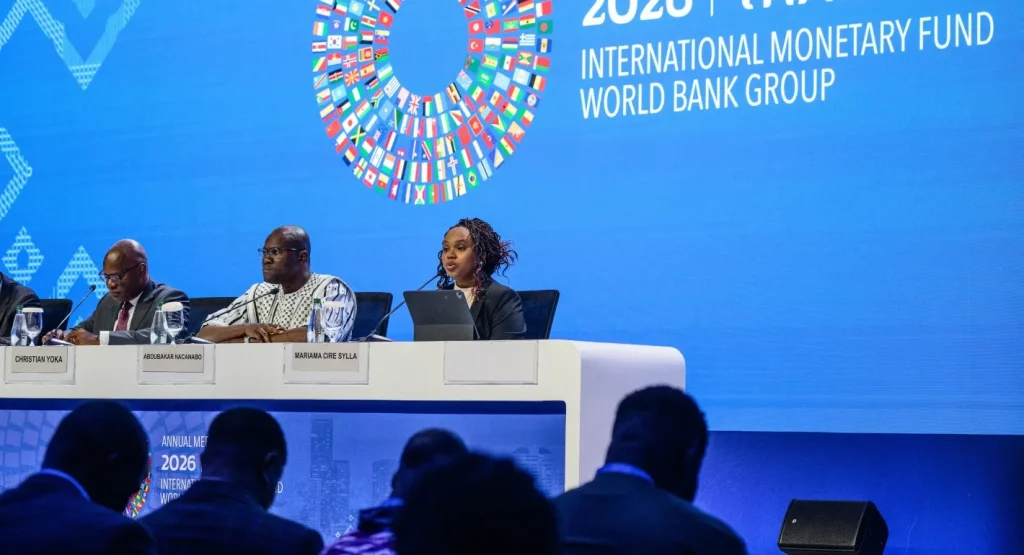
Africa’s growing international leverage offers a rare opportunity to reshape global partnerships on its own terms. However, ceremonial summits alone do not guarantee prosperity. Long-term diplomatic influence depends on transparent contracts, regional economic integration, and tangible domestic infrastructure that directly benefits African citizens.
Israel’s Election Will Test More Than Netanyahu’s Survival

Israel’s upcoming election presents Europe with a fundamental foreign policy test that reaches beyond Benjamin Netanyahu’s political survival. While diplomatic relationships often focus on leadership changes, resolving long-term Middle East policy requires addressing underlying territorial governance, legal rulings, and accountability for human rights.
Israeli Spyware Turns Online Advertising Into a Security Threat

Online advertising systems are now an active surveillance pipeline. A Citizen Lab report reveals targeted ads infected journalists with Candiru spyware without a single click. As ad networks bypass traditional security, digital advertising platforms face urgent calls for strict oversight and accountability.