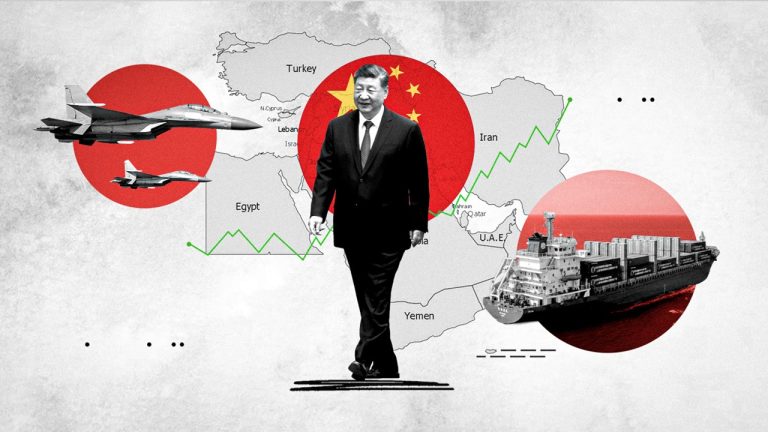
Recent military maneuvers across North Africa reveal a quiet shift in international security dynamics. While long standing Western defense guarantees encounter growing skepticism throughout the region, Asian powers are gradually assuming a more visible posture. Joint aerial exercises over the Mediterranean and Red Sea corridors demonstrated that eastern aviators can now execute demanding missions thousands of kilometers from their home airfields. These combined operations signal an expanding capability to project power into territories once dominated exclusively by Western military forces.
During recent air combat training in North Africa, foreign fighter wings showcased long range operational endurance through aerial refueling maneuvers. Advanced early warning aircraft and tactical electronic warfare units operated alongside regional fighter squadrons to practice complex aerial engagements. At sea, naval escort flotillas have guarded international trade routes near the Horn of Africa for nearly two decades. Similar naval exercises in the Gulf of Oman alongside Persian and Russian fleets demonstrated that these maritime deployments are becoming regular features of regional waterways.
Strategic Technology and Regional Partnerships
Rather than constructing sprawling foreign bases, Beijing prefers to project influence through security partnerships with regional allies. Islamabad has increasingly signed mutual defense pacts with Arabian Gulf monarchies, creating an indirect avenue for Asian hardware to enter regional arsenals. Modern air defense batteries and co produced fighter jets regularly arrive in Gulf kingdoms under Pakistani military cooperation treaties. Regional armed forces also integrated indigenous satellite positioning networks into their command architectures, steadily reducing their historic reliance on Western orbital guidance.
Commercial diplomacy and infrastructure investments have paved the way for deeper security cooperation across multiple sovereign capitals. Unmanned aerial platforms and precision strike technologies manufactured in the east now feature prominently in regional defense inventories. Defense specialists note that technical assistance for domestic ballistic missile programs has further expanded bilateral security ties with major petroleum producers. By positioning itself as a dependable supplier without political lectures, the Asian giant steadily builds trust among governments seeking to diversify their foreign defense suppliers.
Structural Limits to Military Power
Despite this growing footprint, substantial structural obstacles prevent the establishment of an alternative security umbrella. The Asian power maintains only a single recognized naval logistics facility in the Horn of Africa and completely avoids binding collective defense treaties. Furthermore, diplomatic envoys carefully cultivate balanced relationships with competing regional capitals, maintaining extensive commercial accords with Riyadh, Abu Dhabi, Cairo, and Tehran simultaneously. Commercial entities have also supplied critical electronic components for drone assembly and air defense hardware to regional actors, creating complicated diplomatic friction with Western regulators.
Asian policymakers deliberately avoid replicating the expansive overseas garrison model established by Western powers. Regional analysts recognize that security initiatives remain focused on safeguarding vital energy supplies, commercial shipping lanes, and overseas commercial investments. Diplomatic strategists consistently prioritize conflict deescalation and commercial stability over overt military confrontation. In an increasingly fragmented global order, this cautious engagement provides considerable diplomatic leverage while avoiding the heavy burdens of permanent regional policing.
Original analysis inspired by Sabena Siddiqui from The New Arab. Additional research and verification conducted through multiple sources.
By ThinkTanksMonitor