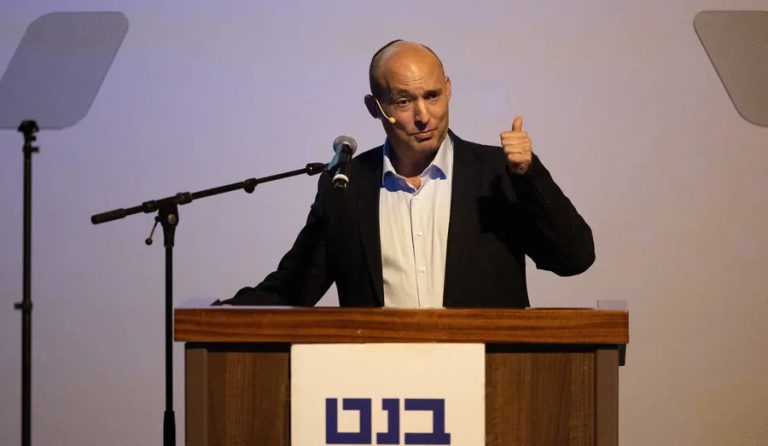
Naftali Bennett and Yair Lapid have announced a surprise political merger, positioning themselves as a unified front against Benjamin Netanyahu in Israel’s upcoming elections. The move, revealed on Sunday, combines Bennett’s right-wing appeal with Lapid’s centrist base under a new party called “Together,” led by Bennett. Analysts see it as a calculated bid to capitalize on Netanyahu’s mounting troubles, particularly after the inconclusive Iran war and ongoing domestic crises.
The timing appears deliberate. President Isaac Herzog’s recent decision to delay a pardon for Netanyahu has fueled speculation that the prime minister may pursue a plea bargain and step aside. If that happens, Likud could descend into a chaotic succession battle, potentially driving voters toward hardline figures like Itamar Ben-Gvir. Bennett is betting he can emerge as the “national healer,” offering stability after years of conflict and division.
Double Setbacks Weaken Netanyahu
Netanyahu’s position has been eroded by two major failures. The October 7, 2023, Hamas attack exposed intelligence and preparedness gaps, while the recent Iran campaign ended without achieving decisive goals like regime change or full nuclear dismantlement. Public frustration has grown over perceived governmental neglect, from northern border communities to rising violent crime. Polls show Netanyahu’s coalition struggling, with projections placing it at around 50 seats if elections were held now, compared to stronger opposition numbers.
Herzog’s announcement was a significant blow. By buying time rather than granting an immediate pardon, the president signaled shifting power dynamics. Netanyahu, once dominant, now faces isolation even from longtime allies. His absence from key Independence Day events and the cooling of personal diplomatic relations with the Trump administration have further weakened his standing.
The Bennett-Lapid alliance revives their 2021 partnership that briefly unseated Netanyahu. While ideological differences remain, both leaders recognize the opportunity in a fragmented opposition landscape. Lapid’s Yesh Atid brings organizational strength and funding, while Bennett’s right-wing credentials could attract voters disillusioned with Likud but wary of left-leaning alternatives.
Recent polling reflects the potential impact. A survey by Israel’s N12 News showed Bennett’s bloc gaining ground, though outcomes remain fluid. The Jerusalem Post reported similar trends, with the new alliance projected to challenge Likud but not yet guarantee a majority without broader support.
Strategic Gamble for Opposition
The merger is an early move in what promises to be a contentious campaign. By uniting now, Bennett and Lapid aim to consolidate the anti-Netanyahu vote before other opposition figures like Gadi Eisenkot can gain momentum.
However, challenges remain. The alliance must appeal beyond core bases, navigating deep societal divisions over security, religion, and the Palestinian issue. Bennett’s right-wing background may limit appeal to centrist voters, while Lapid’s centrism could alienate hardliners. Both leaders have acknowledged disagreements but frame the partnership as a patriotic necessity.
For Netanyahu, the development adds urgency to his legal and political battles. A plea bargain could allow him to exit gracefully, but staying in the race risks further erosion of support. His coalition’s slim majority leaves little room for error, and internal Likud tensions could accelerate if he falters.
Regional Fallout and Domestic Unrest
The broader context includes regional fallout from the Iran conflict. While Netanyahu touted the campaign as a success, many Israelis question its outcomes. Public anger over economic costs, border security, and ultra-Orthodox draft exemptions continues to simmer. These issues provide fertile ground for opposition messaging focused on competence and unity.
As Israel heads toward elections later this year, the Bennett-Lapid alliance could reshape the political map. Whether it delivers a viable alternative to Netanyahu depends on voter fatigue with prolonged instability and the opposition’s ability to present a cohesive vision. For now, the move injects fresh energy into a race long dominated by one figure, signaling that change may be closer than many expected.
Original analysis inspired by Aluf Benn from Haaretz. Additional research and verification conducted through multiple sources.