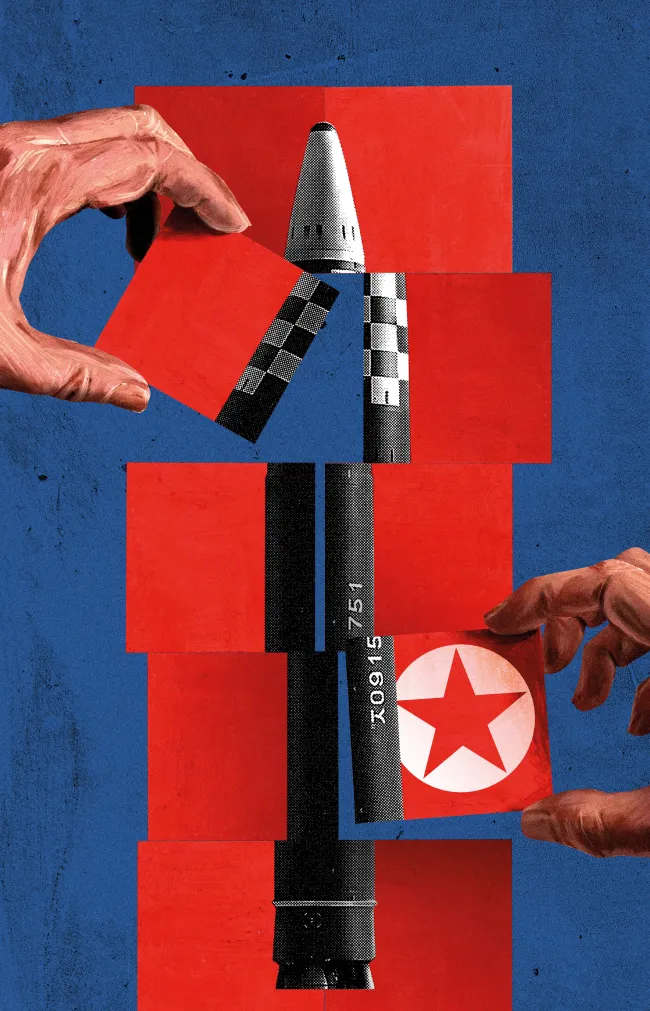
North Korea’s nuclear arsenal has grown far beyond early predictions, forcing a rethink of long-standing US strategy. With enough material for dozens of additional weapons and delivery systems capable of reaching the American homeland, Pyongyang now poses a direct threat that cannot be ignored. After decades of failed denuclearization efforts, Washington needs a pragmatic approach focused on immediate security rather than an unattainable ideal.
For over 30 years, American policy centered on complete, verifiable, and irreversible denuclearization. Successive administrations offered incentives like energy aid and sanctions relief in exchange for freezes or declarations of nuclear assets. Each agreement collapsed as Pyongyang continued covert work on uranium enrichment and missile development. The pattern repeated under multiple presidents, from the 1994 Agreed Framework to the 2018-2019 summits between Donald Trump and Kim Jong Un. North Korean leaders, from Kim Il Sung onward, viewed nuclear weapons as essential insurance against regime change, never intending to fully surrender them.
Today’s reality demands adjustment. North Korea possesses around 50 nuclear bombs and material for 40 to 50 more. It has tested long-range missiles capable of striking the continental United States and is developing submarine-launched systems that improve survivability. Ties with Russia, including troop deployments to Ukraine and technology exchanges, have accelerated progress. Insisting on total disarmament as a precondition risks missing opportunities to limit further growth and reduce escalation dangers.
Immediate Risks Require New Focus
The United States faces multiple threats from a nuclear North Korea. Pyongyang’s arsenal could overwhelm current missile defenses, and its willingness to use weapons first in a conventional conflict heightens the danger of rapid escalation. A cold peace strategy would prioritize practical steps: establishing crisis hotlines to prevent miscalculation, negotiating caps on missile production and testing, and exploring arms control measures that freeze or reduce certain capabilities. These talks would not abandon the long-term goal of denuclearization but would address urgent homeland security needs first.
Allies in Seoul and Tokyo would play vital roles. Strengthened trilateral cooperation on missile defense and intelligence sharing can bolster deterrence while negotiations proceed. The United States could reaffirm no-first-use principles in certain scenarios and encourage South Korea to adjust elements of its own posture that might provoke preemptive action from the North. Such measures signal resolve without triggering a “use or lose” mindset in Pyongyang.
Economic tools remain part of the mix, but sanctions alone have proven insufficient. North Korea has adapted through trade with China and Russia, and further isolation may only harden its resolve. Targeted incentives tied to verifiable limits on nuclear and missile activities could create leverage without demanding total capitulation upfront.
Managing Alliances in a Multipolar Era
This approach would also help manage relations with China and Russia. Both powers have deepened ties with North Korea, providing diplomatic cover and material support. By pursuing direct dialogue with Pyongyang, Washington can introduce friction into those relationships and reduce the risk of a fully aligned authoritarian bloc. Smaller steps toward stability on the Korean Peninsula could limit North Korea’s ability to export weapons or destabilize the region further.
Critics may argue that any engagement short of full denuclearization rewards bad behavior. Yet the alternative — continued pursuit of an unreachable goal — has already allowed North Korea to build a formidable arsenal. A cold peace does not mean acceptance of the status quo but recognition that immediate risk reduction serves US interests better than perpetual deadlock.
The coming months will test whether Washington can adapt its strategy to match North Korea’s reality. With nuclear weapons now a permanent feature of the landscape, pragmatic management offers the best path to protecting American security and regional stability. Ignoring this shift risks even greater dangers ahead.
Original analysis inspired by Victor Cha from Foreign Affairs. Additional research and verification conducted through multiple sources.