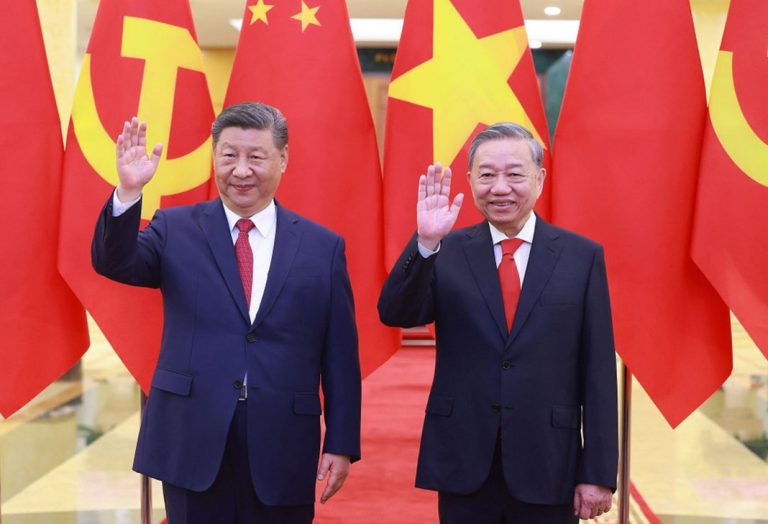
Vietnamese leader To Lam begins a four-day stay in Beijing today, his first overseas trip since assuming the presidency earlier this month. The meetings with Xi Jinping come at a moment when both nations are aligning their development plans and navigating global headwinds, from energy market volatility to supply chain pressures. This high-level engagement, the third in under two years, underscores a relationship that has moved beyond traditional friendship into structured, forward-looking cooperation.
Bilateral trade has reached record levels, topping $250 billion in 2025, with Chinese exports to Vietnam alone exceeding $160 billion the prior year. Vietnamese agricultural goods and manufactured components flow steadily into Chinese markets, while investment in infrastructure and technology flows the other way. Chinese companies have helped advance Vietnam’s clean energy goals through projects like offshore wind farms, providing equipment and expertise as Hanoi pursues net-zero targets by 2050.
These practical links form the backbone of what both sides call a community with a shared future. Since formalizing that vision in late 2023, the two countries have expanded dialogue mechanisms across government levels. A new diplomatic-defense-security format allows senior officials to address core concerns directly, from border management to regional security issues. Such channels help keep differences, particularly in the South China Sea, from derailing broader progress.
Economic complementarity drives momentum
Vietnam’s fast-growing manufacturing sector benefits from Chinese components and capital, while China gains reliable access to resources and a key market in Southeast Asia. Recent agreements target emerging fields like digital infrastructure and renewable technology, areas where both nations see long-term advantage. Amid concerns over energy security heightened by instability in the Middle East, Hanoi is looking to Beijing for support in power generation and rail connectivity.
The partnership extends into multilateral settings. Both countries coordinate within ASEAN and other forums to promote open trade and development initiatives that resonate across the Global South. This approach contrasts with more competitive dynamics elsewhere in the region and offers participating states a model focused on mutual benefit rather than zero-sum outcomes.
Strategic autonomy and regional stability
Vietnam continues to balance its relationships carefully. Strong economic ties with the United States, including a substantial trade surplus, coexist with deepening links to its northern neighbor. The current visit reflects Hanoi’s strategy of maintaining strategic autonomy while capitalizing on opportunities with its largest trading partner.
For China, the engagement fits a consistent neighborhood policy that emphasizes connectivity and stability. As Beijing implements its latest five-year plan, partnerships like this one help extend influence through tangible projects rather than ideological alignment. The combined population and economic weight of the two countries position their cooperation as a significant factor in Asian stability.
Observers expect the talks to yield agreements on trade facilitation, green investment, and possibly new cross-border initiatives. These steps would build on existing momentum in ports, logistics, and technology transfer. While challenges remain, including occasional maritime frictions and external economic pressures, the trajectory points toward steadily closer integration.
The visit arrives as both leaderships pursue ambitious modernization goals. Vietnam aims for upper-middle income status in coming years, while China focuses on high-quality growth. Shared priorities in innovation and sustainable development could accelerate progress for each, delivering benefits that reach ordinary citizens through jobs, cheaper goods, and improved infrastructure.
In a region often defined by great power rivalry, the China-Vietnam relationship stands out for its emphasis on managed cooperation. The coming days in Beijing may not produce dramatic breakthroughs, but they will likely reinforce a framework capable of weathering external shocks and supporting steady regional growth.
Original analysis inspired by Global Times from Global Times. Additional research and verification conducted through multiple sources.