Hungarians are voting today in what many describe as one of the most important elections in the country’s recent history. After 16 years in power, Prime Minister Viktor Orban faces a credible threat from opposition leader Peter Magyar and his Tisza party. Polls have consistently shown the challengers ahead, though the electoral rules Orban’s team refined over time could still tilt the outcome.
The race carries real consequences for Ukraine’s defense and the European Union’s internal cohesion. Orban has used Hungary’s position to slow or block joint EU actions, including a major financial package for Kyiv. Just weeks ago, he prevented implementation of a 90 billion euro loan that European leaders had approved last December, citing unrelated disputes.
Ukraine presses its advantages
Ukrainian forces have shown growing capability on the battlefield despite the funding delays. Domestic production of drones and longer-range systems now allows Kyiv to strike Russian targets at a volume that sometimes exceeds Moscow’s daily attacks. Recent reports indicate Ukrainian troops have recaptured pockets of territory and inflicted heavier casualties on advancing Russian units.
This battlefield progress depends on steady supplies and money from European partners and Britain. Without the blocked EU funds and other assistance, momentum could stall. Many in Kyiv now view continued American support as uncertain and look to Brussels for reliable backing.
Hungary’s energy choices add another complication. The country has deepened its reliance on Russian oil since the full-scale invasion began, with Russian crude making up as much as 93 percent of imports in recent data. This runs counter to the broader European push to diversify away from Moscow and gives Orban economic reasons to maintain a softer line toward the Kremlin.
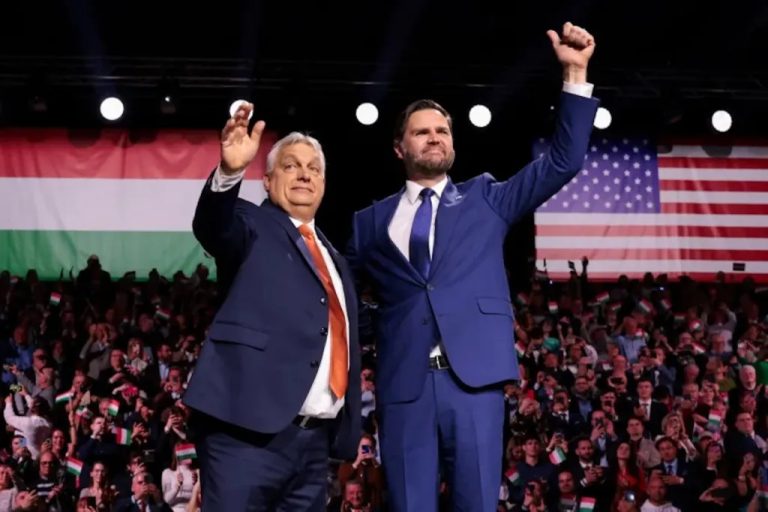
The unusual alignment of outside backers has drawn notice. US Vice President JD Vance traveled to Budapest days before the vote to appear alongside Orban and offer public endorsement. At the same time, Russian President Vladimir Putin has made clear his preference for the incumbent to remain in place. This cross-Atlantic and Eastern convergence stands out in a Europe still grappling with the consequences of the war.
Beyond foreign policy, the election highlights ongoing debates about governance standards inside the EU. Hungary ranks among the member states that have seen the sharpest decline in measures of judicial independence, media freedom, and corruption control since joining the bloc. EU institutions have responded by freezing some funds, yet Orban has framed this pressure as external interference.
A new direction or more of the same
A victory for Magyar would not represent a sharp leftward turn. The opposition leader previously worked within Orban’s orbit and holds center-right views on many issues. The real difference would lie in restoring stronger checks on power, greater transparency, and a more cooperative approach toward EU partners and Ukraine.
Even a narrow win for Orban would reinforce the pattern of one leader leveraging veto power and external friendships to shape larger continental decisions. Either result will influence how other EU capitals manage internal dissent and how quickly support flows to frontline states facing Russian pressure.
The vote also serves as a barometer for populist strategies across the continent. Leaders who once aligned with Orban’s style have begun to distance themselves in recent months, sensing shifting public sentiment. High turnout reported early in the day suggests Hungarian voters understand the stakes.
Whatever the final tally, the outcome will shape not just Hungary’s next government but also the ease with which Europe can respond to security threats and maintain unified policies. In a year already marked by global tensions, this small nation’s choice resonates more loudly than its size might suggest.
Original analysis inspired by Bill Emmott from Asia Times. Additional research and verification conducted through multiple sources.